
2000 Subaru Outback Engine 2.5 L 4 Cylinder
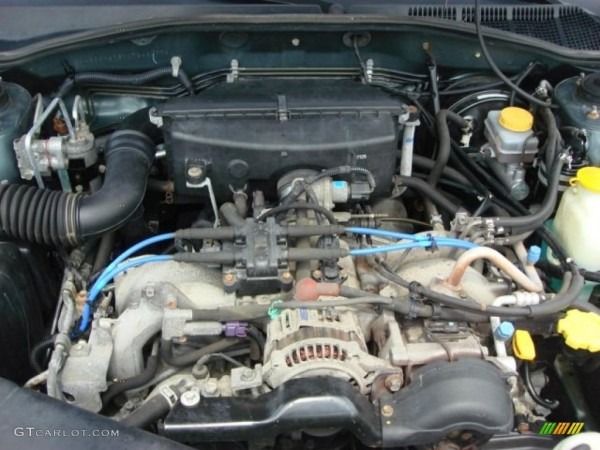
Alright, let's dive deep into the heart of many 2000 Subaru Outbacks: the 2.5-liter, four-cylinder engine. This is a workhorse of a motor, known for its reliability, but like any engine, it has its quirks and potential pitfalls. This article will give you a thorough understanding of its architecture, common issues, and maintenance tips to keep yours running smoothly. I’ll be speaking to the average DIY mechanic who understands the basics, so I will define the harder terms as they arise.
Engine Architecture & Key Components
The 2000 Outback's 2.5L engine is a horizontally opposed, four-cylinder, naturally aspirated (meaning it's not turbocharged or supercharged) engine. This configuration is often referred to as a "boxer" engine or a "flat-four." The key benefit of this design is its lower center of gravity, which contributes to improved handling and stability, especially in the Outback's all-wheel-drive system.
Engine Block and Internals
The engine block itself is typically made of cast aluminum, making it relatively lightweight. Inside the block, you'll find the crankshaft, which converts the reciprocating motion of the pistons into rotational motion to drive the wheels. Connected to the crankshaft via connecting rods are the pistons. These pistons move up and down within the cylinders, compressing the air-fuel mixture for combustion. Each cylinder has a cylinder bore, which is the machined hole in the block where the piston moves. The stroke of the piston is the distance it travels from top dead center (TDC) to bottom dead center (BDC). The bore and stroke determine the engine's displacement (2.5L in this case).
The 2.5L engine used in the 2000 Outback is generally an SOHC (Single Overhead Camshaft) engine. This means there's a single camshaft located above each cylinder bank. These camshafts control the opening and closing of the valves.
Cylinder Heads and Valve Train
The cylinder heads sit atop the engine block and house the valves (intake and exhaust), valve springs, and camshafts. The intake valves allow the air-fuel mixture to enter the cylinders, while the exhaust valves allow the combustion gases to escape. The camshaft has lobes that push on the valve lifters (also known as tappets or cam followers). These lifters then actuate the valves, opening and closing them at precise times determined by the engine's timing. The timing belt is crucial to the process.
Valve timing is crucial for optimal engine performance. Incorrect valve timing can lead to reduced power, poor fuel economy, and even engine damage. The timing belt (or chain, depending on the specific sub-model) synchronizes the rotation of the crankshaft and camshaft(s), ensuring that the valves open and close at the correct times relative to the piston's position. This engine is interference engine, meaning if the timing belt breaks, the pistons can collide with the valves, resulting in serious internal engine damage.
Fuel and Ignition Systems
The fuel system on the 2000 Outback 2.5L uses sequential multi-port fuel injection (MPFI). This means each cylinder has its own fuel injector that sprays fuel directly into the intake port, just before the intake valve. The amount of fuel injected is controlled by the engine control unit (ECU), which monitors various sensors, such as the mass airflow (MAF) sensor, oxygen (O2) sensors, and throttle position sensor (TPS), to determine the optimal air-fuel ratio.
The ignition system uses a distributorless ignition system (DIS), also known as coil-on-plug (COP). This means each cylinder has its own ignition coil that directly fires the spark plug. The ECU controls the timing of the spark, ensuring that it occurs at the optimal moment for efficient combustion. The crank position sensor (CKP) is essential to this process.
Common Issues and Troubleshooting
While the 2.5L engine is generally reliable, there are a few common issues that owners may encounter:
Head Gasket Failures
This is arguably the most well-known issue with this engine. The head gaskets, which seal the cylinder heads to the engine block, are prone to failure. This can result in coolant leaks, overheating, and loss of power. Symptoms of a blown head gasket include:
- Milky or frothy oil (coolant mixing with oil)
- Excessive coolant loss
- White smoke from the exhaust
- Overheating
- Bubbles in the coolant overflow reservoir
If you suspect a head gasket issue, it's crucial to address it promptly to prevent further engine damage. Aftermarket head gaskets, particularly multi-layer steel (MLS) gaskets, are often recommended as a more durable replacement.
Oil Leaks
Subaru engines, especially older ones, are known for developing oil leaks. Common leak locations include:
- Valve cover gaskets
- Camshaft seals
- Crankshaft seals
- Oil pan gasket
- Oil pump seal
Regularly inspecting your engine for oil leaks and addressing them promptly can prevent more serious problems. Oil leaks can lead to low oil levels, which can damage engine components. Also, always use an oil formulated for flat-four engines.
Timing Belt Issues
As mentioned earlier, the timing belt is crucial for the proper operation of the engine. It's essential to replace the timing belt according to the manufacturer's recommended interval (typically every 60,000-100,000 miles). A broken timing belt can cause catastrophic engine damage. When replacing the timing belt, it's also a good idea to replace the water pump, tensioner, and idler pulleys, as these components are often replaced together as a kit.
Oxygen Sensor Failures
The oxygen (O2) sensors monitor the oxygen content in the exhaust gases and provide feedback to the ECU to adjust the air-fuel ratio. Failed O2 sensors can lead to poor fuel economy, rough running, and a check engine light. There are typically two O2 sensors: an upstream sensor (before the catalytic converter) and a downstream sensor (after the catalytic converter). It is recommended to replace these in tandem.
Catalytic Converter Problems
The catalytic converter is responsible for reducing harmful emissions. Over time, it can become clogged or damaged, leading to reduced engine performance and a check engine light. Catalytic converter failure can be caused by various factors, including excessive oil consumption, coolant leaks, and improper air-fuel mixture.
Maintenance Tips
To keep your 2000 Outback's 2.5L engine running smoothly for years to come, follow these maintenance tips:
- Regular Oil Changes: Change the oil and filter every 3,000-5,000 miles, depending on your driving conditions. Use a high-quality oil specifically formulated for flat-four engines.
- Timing Belt Replacement: Replace the timing belt, water pump, tensioner, and idler pulleys according to the manufacturer's recommended interval.
- Coolant Flush: Flush the cooling system every 2-3 years to prevent corrosion and maintain proper cooling efficiency. Use Subaru's specialized coolant.
- Spark Plug Replacement: Replace the spark plugs according to the manufacturer's recommended interval.
- Air Filter Replacement: Replace the air filter regularly to ensure proper airflow to the engine.
- Inspect and Replace Hoses and Belts: Regularly inspect hoses and belts for cracks, leaks, or wear. Replace them as needed.
- Monitor for Leaks: Regularly inspect the engine for oil and coolant leaks and address them promptly.
By understanding the architecture, common issues, and maintenance requirements of the 2000 Subaru Outback's 2.5L engine, you can keep it running reliably for many years. Remember, preventative maintenance is key to avoiding costly repairs down the road. Happy wrenching!