
At What Temperature Does Diesel Fuel Gel Up
For decades, drivers in colder climates have faced the annual rite of winterization, particularly those relying on diesel-powered vehicles. The dreaded question looms: at what temperature does diesel fuel actually gel up? The answer, while seemingly simple, unlocks a deeper conversation about the evolving landscape of mobility and the technologies poised to mitigate the challenges of cold-weather operation, even as the internal combustion engine (ICE) slowly gives way to electric and hybrid solutions.
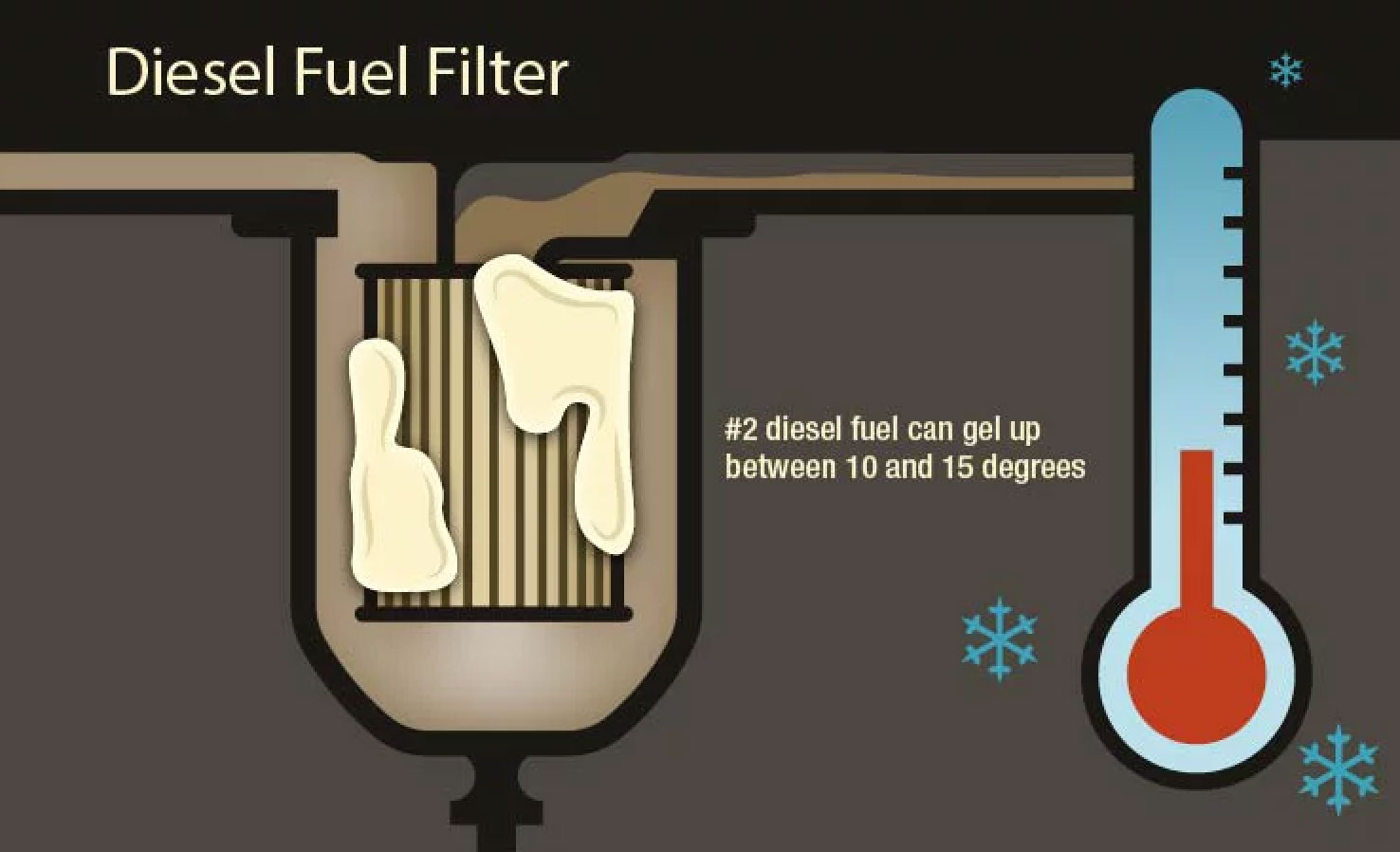
The gelling point of diesel fuel isn't a fixed number. It varies depending on the blend of fuel and the presence of additives. Standard diesel fuel typically starts to cloud around 10-15°F (-12 to -9°C) as paraffin waxes begin to crystallize. As temperatures drop further, these crystals grow larger, eventually gelling the fuel and clogging fuel filters, preventing the engine from starting or running properly. This is especially problematic for heavy-duty trucks, construction equipment, and agricultural vehicles that rely on diesel power for their torque and efficiency.
The Winterization Arsenal: Current Solutions and Limitations
Currently, a range of strategies exist to combat diesel fuel gelling. Fuel additives, such as anti-gel agents, depress the pour point of the fuel, allowing it to flow more freely at lower temperatures. Winterized diesel blends, often sold seasonally in colder regions, contain kerosene or other lighter hydrocarbons that lower the gelling temperature. Block heaters, fuel filter heaters, and tank heaters provide external warmth to maintain fuel fluidity. However, these solutions are not without their drawbacks. Additives require proper dosage and can sometimes negatively impact fuel economy or engine performance. Winterized blends may offer reduced energy density compared to standard diesel. And relying on external heating introduces energy consumption, potentially offsetting some of the fuel efficiency benefits of diesel.
The Electrification Shift: A Cold Weather Conundrum
The accelerating transition to electric vehicles (EVs) and hybrid electric vehicles (HEVs) presents both opportunities and challenges in the context of cold-weather operation. While EVs eliminate the problem of diesel fuel gelling altogether, their performance can be significantly impacted by frigid temperatures. Battery capacity can decrease, reducing driving range, and cabin heating can drain battery power even further. Hybrid systems, while retaining an ICE, can still be vulnerable to diesel gelling if the ICE is used for extended periods, particularly in plug-in hybrid electric vehicles (PHEVs) relying primarily on electric power.
However, innovation is rapidly addressing these limitations. Advanced battery thermal management systems are being developed to maintain optimal battery temperature, mitigating range loss. Heat pump technology offers a more energy-efficient way to heat the cabin compared to resistive heating. And smart charging algorithms can pre-condition the battery while plugged in, maximizing range from the moment the vehicle is driven. Companies like Tesla, Rivian, and GM are investing heavily in cold-weather testing and optimization of their electric platforms.
Smart Automotive Solutions: The Future of Cold Weather Mobility
Beyond battery technology, the future of cold-weather mobility lies in the convergence of smart automotive solutions. Predictive algorithms can analyze weather patterns and driving habits to proactively adjust vehicle settings, optimizing energy consumption and maximizing range. Connected vehicle technology allows for real-time monitoring of battery temperature and fuel system performance, enabling drivers to take preventative measures before problems arise. Over-the-air (OTA) software updates can deliver improvements to battery management systems and heating controls, continuously optimizing performance in response to changing conditions. Furthermore, advancements in alternative fuels like renewable diesel and biodiesel, coupled with optimized fuel formulations, promise to offer enhanced cold-weather performance with a reduced environmental footprint.
The development of advanced driver-assistance systems (ADAS) also plays a crucial role. Features like traction control, electronic stability control, and anti-lock braking systems become even more critical in icy and snowy conditions, ensuring safe and controlled vehicle operation. As autonomous driving technology matures, self-driving vehicles will need to be equipped with sophisticated sensor suites and algorithms capable of navigating safely and reliably in adverse weather conditions. This requires robust sensor fusion techniques that combine data from cameras, radar, and lidar to create a comprehensive picture of the surrounding environment, even when visibility is limited.
One realistic challenge is the infrastructure needed to support these advancements. Widespread availability of high-power charging stations, particularly in rural areas and along long-distance routes, is crucial for widespread EV adoption. And continued investment in research and development is essential to further improve battery technology, heating systems, and autonomous driving capabilities.
A Vision for the Future
Looking ahead, the question of "at what temperature does diesel fuel gel up" may become less relevant as the automotive industry undergoes a profound transformation. We envision a future where vehicles are seamlessly integrated into a smart mobility ecosystem, capable of adapting to changing weather conditions and optimizing performance in real-time. Electric vehicles will offer comparable range and performance in all climates, powered by advanced battery technology and supported by a ubiquitous charging infrastructure. Hybrid systems will leverage intelligent energy management strategies to minimize reliance on the ICE in cold weather. And self-driving vehicles will navigate safely and efficiently, regardless of the conditions. This future demands collaboration between automakers, technology companies, policymakers, and infrastructure providers. It demands a commitment to innovation and a willingness to embrace new technologies. But most importantly, it demands a shared vision of a sustainable, safe, and accessible future for mobility.