
How Much Does A Turbocharger Add Horsepower
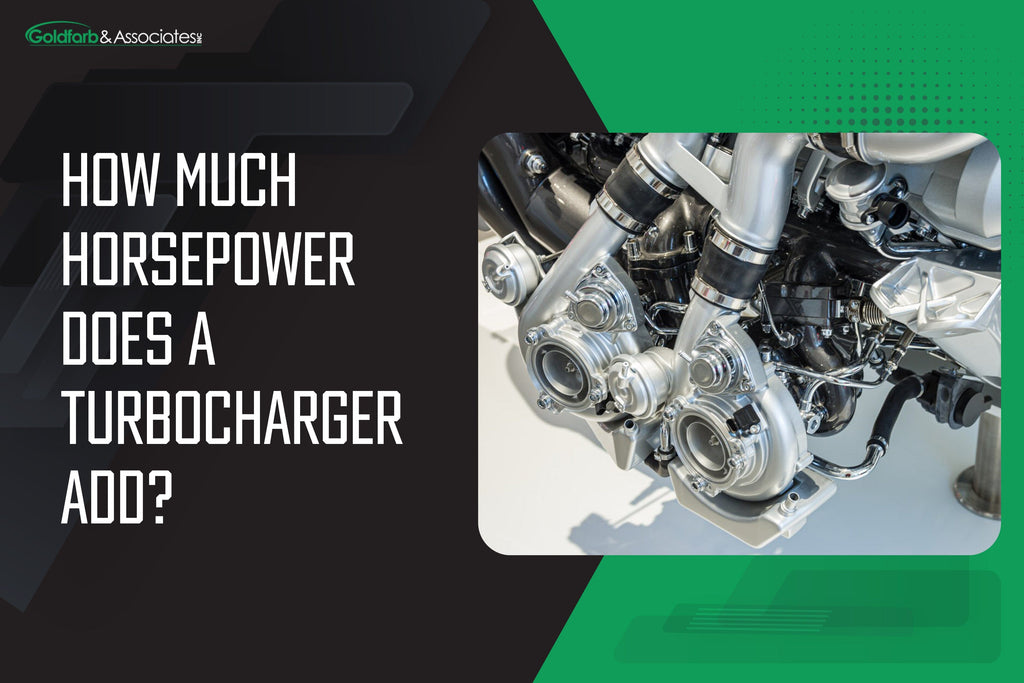
The burning question on every gearhead's mind: how much horsepower does a turbocharger add? The answer, unfortunately, isn't a simple number. It's a complex equation influenced by a multitude of factors, ranging from the engine's initial displacement and internal components to the turbocharger's size and efficiency, and crucially, the skill of the tuner responsible for calibrating the system.
Understanding the Turbocharging Principle
First, a quick refresher. A turbocharger is essentially an air compressor driven by exhaust gases. Instead of relying solely on the engine's vacuum to draw air into the cylinders (as in a naturally aspirated engine), the turbo forces significantly more air in. More air allows for the combustion of more fuel, resulting in a bigger, more powerful explosion and ultimately, more horsepower and torque. This forced induction allows smaller engines to produce power figures comparable to, or even exceeding, larger displacement engines.
Factors Influencing Horsepower Gains
Several key factors determine the extent of the horsepower boost:
- Engine Size and Configuration: A larger engine will generally see a larger absolute horsepower increase than a smaller engine when fitted with a turbo. However, the percentage increase might be similar. A 2.0-liter engine might gain 100 horsepower, while a 5.0-liter engine might gain 200 horsepower with similar turbo setups. The underlying architecture (inline, V-configuration, etc.) also plays a role in turbocharger placement and potential airflow.
- Turbocharger Size and Type: This is crucial. A small turbocharger will spool up quickly, providing good low-end torque and a responsive feel. However, it might run out of breath at higher RPMs, limiting peak horsepower. A larger turbocharger will offer significantly more top-end power, but will suffer from turbo lag (a delay between throttle input and boost delivery) if not properly matched to the engine. Different turbocharger designs, such as ball-bearing turbos or variable geometry turbos (VGTs), offer improved efficiency and responsiveness.
- Boost Pressure: This is the amount of pressure the turbocharger is forcing into the engine, measured in PSI (pounds per square inch) or Bar. Higher boost pressure equals more air, more fuel, and more power… but also greater stress on engine components. Increasing boost significantly without addressing other factors can lead to catastrophic engine failure.
- Fuel System: The fuel system must be able to deliver enough fuel to match the increased air intake. Upgrading the fuel injectors, fuel pump, and fuel pressure regulator is often necessary when adding a turbocharger or significantly increasing boost. Insufficient fuel can lead to a lean condition, which can cause engine damage.
- Engine Management System (ECU): The ECU controls all aspects of engine operation, including fuel injection, ignition timing, and boost control (if applicable). The ECU needs to be properly tuned to optimize performance and ensure engine safety. This might involve a simple re-flash of the factory ECU, or a more comprehensive standalone ECU upgrade. ECU tuning is paramount for reliable horsepower gains.
- Intercooler: Compressing air creates heat. Hot air is less dense, reducing the effectiveness of the turbocharger. An intercooler cools the compressed air before it enters the engine, improving density and power output. A larger, more efficient intercooler will result in cooler air, higher power, and reduced risk of knock (detonation).
- Engine Internals: The strength of the engine's internal components (pistons, connecting rods, crankshaft, etc.) dictates how much boost and power it can safely handle. For high-boost applications, upgrading to forged pistons, stronger connecting rods, and a balanced crankshaft is essential.
Estimating Horsepower Gains
While a precise figure is impossible to provide without specific details, we can offer some general guidelines. A well-designed, properly tuned turbocharger system can realistically increase horsepower by 30% to over 100%, depending on the factors outlined above. A relatively mild, low-boost setup on a stock engine might yield a 30-50% increase. A more aggressive setup with upgraded internals and a larger turbocharger could easily double the engine's original horsepower output.
The Importance of Professional Installation and Tuning
Installing a turbocharger is not a weekend project for the uninitiated. It requires specialized knowledge, tools, and experience. Improper installation can lead to poor performance, engine damage, and even safety hazards. Similarly, ECU tuning is best left to professionals with expertise in forced induction. A poorly tuned engine can suffer from detonation, overheating, and other problems that can quickly lead to expensive repairs. Investing in professional installation and tuning is crucial for maximizing performance, ensuring reliability, and protecting your investment.