
How To Fill A Hydraulic Floor Jack With Oil
Hydraulic floor jacks are ubiquitous tools in automotive repair shops and garages, providing a reliable and relatively safe method for lifting vehicles. A critical aspect of their functionality lies in the hydraulic system, and maintaining the correct oil level is paramount for optimal performance and longevity. This article delves into the intricacies of filling a hydraulic floor jack with oil, focusing on technical specifications, engineering considerations, and real-world implications for automotive professionals.
Understanding Hydraulic Jack Oil Systems
The fundamental principle behind a hydraulic jack is Pascal's Law, which states that pressure applied to a confined fluid is transmitted equally in all directions. In a floor jack, the user pumps a handle, which actuates a piston within a master cylinder. This piston displaces hydraulic fluid, forcing it through a check valve into a larger cylinder containing the lifting ram. The increased surface area of the ram cylinder, coupled with the transmitted pressure, generates the force necessary to lift the vehicle. The return path, controlled by a release valve, allows the fluid to flow back from the ram cylinder to the reservoir, lowering the jack.
The choice of hydraulic fluid is crucial. ISO viscosity grade 32 (ISO VG 32) hydraulic oil is commonly recommended for floor jacks. This viscosity strikes a balance between providing adequate lubrication and minimizing internal friction within the system. Using heavier oils can lead to sluggish performance, particularly in colder temperatures, while lighter oils may not provide sufficient lubrication, potentially causing wear and reducing lifting capacity. Check the manufacturer's specifications for your specific jack model, as some may require different viscosity grades.
Procedure for Filling Hydraulic Oil
- Safety First: Always wear safety glasses and gloves to prevent skin contact with hydraulic fluid. Ensure the jack is on a level surface and securely supported.
- Locate the Fill Plug: The fill plug is typically a rubber or plastic stopper located on the reservoir, often near the base of the jack. Consult your jack's manual if you are unsure of its location.
- Prepare the Jack: Fully lower the jack by opening the release valve. This allows any air trapped in the system to escape. Securely close the release valve once the ram is fully retracted.
- Clean the Area: Wipe the area around the fill plug with a clean, lint-free cloth to prevent contaminants from entering the hydraulic system.
- Remove the Fill Plug: Carefully remove the fill plug. Avoid using sharp objects that could damage the plug or the reservoir.
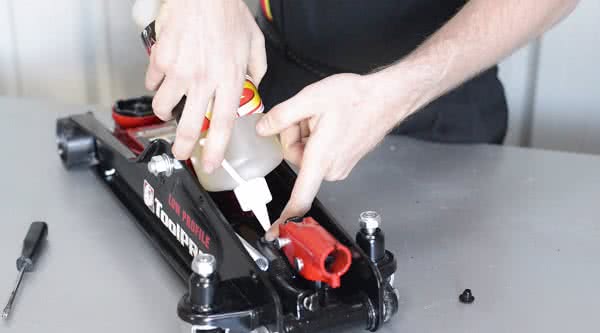
- Fill with Hydraulic Oil: Using a funnel, slowly add hydraulic oil to the reservoir. Do not overfill. The correct oil level is typically just below the fill plug opening. Some jacks have a level indicator inside the reservoir.
- Bleed the System (If Necessary): Some jacks may require bleeding to remove trapped air after filling. Consult your jack's manual for specific bleeding instructions. This often involves raising and lowering the jack several times while opening the release valve slightly.
- Replace the Fill Plug: Securely replace the fill plug.
- Test the Jack: Test the jack by raising and lowering it several times to ensure it operates smoothly and reaches its full lifting height. Check for leaks around the fill plug and other connections.
Troubleshooting Common Issues
- Jack Not Lifting: This can be caused by low oil level, air in the system, or a faulty check valve. Ensure the oil level is correct and bleed the system. If the problem persists, the check valve may need to be replaced.
- Jack Leaking Oil: Leaks can occur at the fill plug, ram seal, or other connections. Tighten any loose connections. If the leak persists, the seal may need to be replaced.
- Jack Lifting Slowly: This can be caused by low oil level, incorrect oil viscosity, or a worn pump piston. Check the oil level and viscosity. If the problem persists, the pump piston may need to be inspected and replaced.
Alternatives to Hydraulic Floor Jacks
While hydraulic floor jacks are the most common type, alternatives exist, each with its own pros and cons:
- Scissor Jacks: These are typically included with vehicles for emergency tire changes. They are lightweight and compact but offer limited lifting capacity and stability compared to floor jacks. Pros: Inexpensive, compact. Cons: Low lifting capacity, unstable.
- Bottle Jacks: These are vertical hydraulic jacks that offer high lifting capacity in a small footprint. However, they can be less stable than floor jacks. Pros: High lifting capacity, compact. Cons: Less stable than floor jacks.
- Air Jacks: These utilize compressed air to lift vehicles. They offer rapid lifting and are often used in racing applications. However, they require a source of compressed air and can be more expensive than hydraulic jacks. Pros: Fast lifting, high capacity. Cons: Requires compressed air, expensive.
- Electric Jacks: These utilize an electric motor to power the hydraulic pump. They offer convenience and ease of use. Pros: Easy to use, convenient. Cons: Requires a power source, potentially less reliable than manual jacks.
Reliability, Maintenance, and Future Trends
The reliability of a hydraulic floor jack depends heavily on proper maintenance. Regularly checking the oil level, inspecting for leaks, and keeping the jack clean are essential. Additionally, avoid overloading the jack beyond its rated capacity, as this can damage the hydraulic system and compromise safety.
Future trends in hydraulic jack technology may include the incorporation of more advanced materials, such as high-strength alloys, to reduce weight and increase lifting capacity. Smart features, such as integrated load sensors and digital displays, could also be implemented to enhance safety and provide real-time feedback to the user. The integration of electric power and wireless control systems could further improve convenience and ease of use.
Conclusion
Maintaining a hydraulic floor jack by ensuring it has the correct oil level is a relatively simple task that significantly impacts its performance and lifespan. Understanding the principles of hydraulic systems, following proper filling procedures, and addressing common issues promptly are essential for automotive professionals. As the automotive industry evolves, focusing on preventative maintenance and embracing technological advancements in tools like the hydraulic floor jack will be crucial for efficiency and safety in the workshop.