
Where Should The Oil Level Be On A Dipstick
Understanding your engine's oil level is paramount to its health and longevity. While modern cars boast increasingly sophisticated warning systems, the humble dipstick remains the most reliable and direct way to gauge this crucial metric. But simply pulling it out isn't enough; knowing where the oil should be on that stick is key. This guide delves into the proper interpretation of your dipstick, covering the 'why' and 'how' for enthusiasts, owners, and professionals alike.
Understanding the Dipstick's Markings
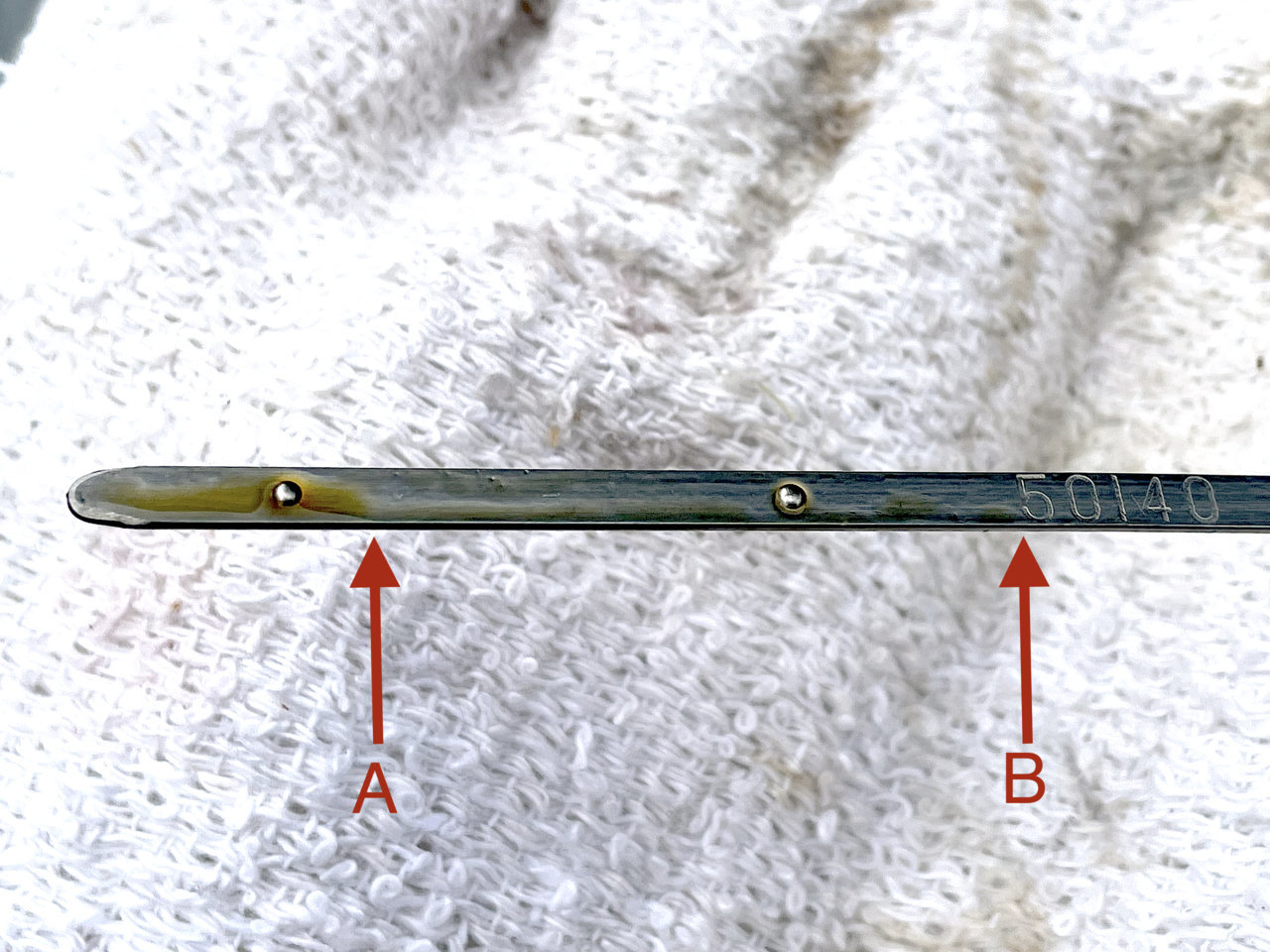
The dipstick, typically a long, thin metal rod with a handle, is designed to be inserted into the engine's oil pan, directly measuring the oil level. The business end, the part that goes into the oil, features markings indicating the minimum and maximum acceptable oil levels. These markings usually consist of two lines, notches, or letters – often labeled 'MIN' and 'MAX', 'LOW' and 'HIGH', or even 'L' and 'H'. Sometimes, a cross-hatched area sits between these marks.
The crucial takeaway is that the ideal oil level sits between these minimum and maximum markings. This range represents a safe operating zone, providing adequate lubrication without overfilling. Overfilling, contrary to popular belief, can be just as damaging as underfilling, leading to issues such as oil aeration and potential damage to seals and the catalytic converter.
Think of it like this: the 'MIN' mark is the absolute lowest safe level. Running at or below this mark means your engine isn't getting adequate lubrication, risking accelerated wear and potential catastrophic failure. The 'MAX' mark is the upper limit. Exceeding this can cause excessive oil pressure, forcing oil past seals and into places it shouldn't be. The cross-hatched area (if present) often represents approximately one quart of oil, giving you a visual gauge of how much to add if you're low.
The Correct Procedure for Checking Your Oil
Accuracy is paramount when checking your oil level. Here's the recommended procedure:
- Park on Level Ground: A sloped surface will skew the oil level reading.
- Warm Engine (Ideally): While a cold reading is possible, a slightly warmed engine provides a more accurate indication of the oil's operating viscosity. However, ensure the engine is off and has had time to settle (around 5-10 minutes) after running to allow the oil to drain back into the pan.
- Locate and Remove the Dipstick: Consult your owner's manual for the dipstick's exact location. Typically, it's brightly colored and easily accessible. Wipe the dipstick clean with a lint-free cloth or paper towel.
- Reinsert the Dipstick Fully: Push the dipstick all the way back into its tube until it's fully seated.
- Remove and Read: Pull the dipstick out again, holding it horizontally. Observe the oil level on the dipstick. Where does the oil film stop in relation to the MIN and MAX markings?
Interpreting the Results and Taking Action
If the oil level is between the MIN and MAX marks, you're good to go. However, if the level is closer to the MIN mark, it's wise to add some oil to bring it closer to the MAX mark, but don't exceed it. If the level is below the MIN mark, add oil immediately, checking the level frequently as you add small amounts to avoid overfilling. Consult your owner's manual for the correct oil type and viscosity for your engine.
What if the oil is above the MAX mark? This requires immediate attention. Driving with an overfilled engine can cause serious damage. If you've recently had an oil change, contact the shop that performed the service. If you overfilled it yourself, you may need to drain some oil. This can be a messy process, and if you're not comfortable doing it yourself, it's best to consult a mechanic.
Beyond the Level: Oil Condition and Considerations
While the oil level is critical, don't neglect the oil's condition. Clean oil should be translucent and golden or amber in color. Dark, sludgy oil indicates it's time for an oil change. Milky or frothy oil can indicate a coolant leak into the engine, a serious problem requiring immediate attention.
Furthermore, be aware of your vehicle's oil consumption habits. Some engines, particularly older or high-performance ones, are known to consume oil. Regularly checking the oil level, especially before long trips, is essential in these cases. Keeping a record of your oil changes and consumption can help you identify potential problems early on.
In conclusion, understanding and accurately interpreting your dipstick is a fundamental aspect of vehicle maintenance. By following the procedures outlined above and paying attention to both the oil level and condition, you can help ensure your engine receives the proper lubrication it needs for years of reliable service. Remember that consistent monitoring and prompt action when needed can save you from costly repairs down the road.