
2003 Toyota 4runner Vsc Trac Abs Light
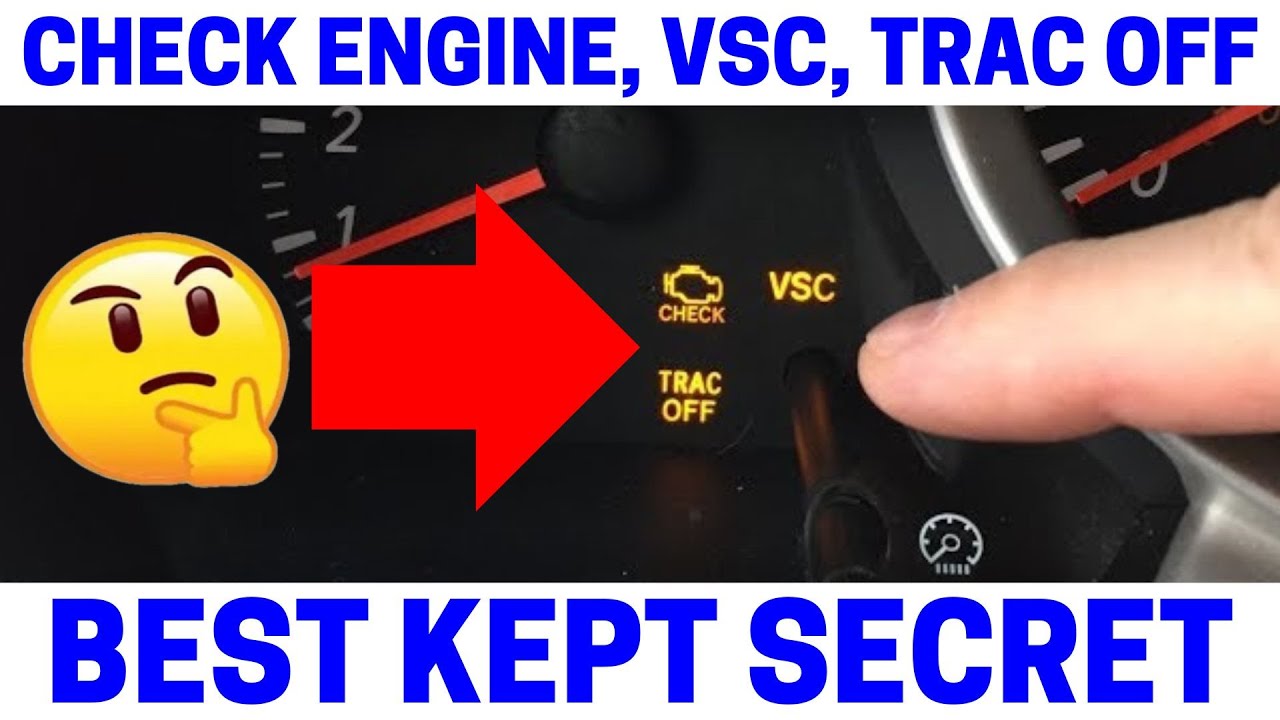
The dreaded trio: VSC, TRAC, and ABS lights glowing on your 2003 Toyota 4Runner's dashboard. It's a common sight, and one that can send shivers down the spine of any 4Runner owner. But don't panic just yet. While it indicates a problem within your vehicle's safety systems, understanding the cause can help you diagnose and potentially resolve the issue yourself or at least be armed with information when you visit a mechanic.
Understanding the Systems
Let's break down what each of these systems does individually before exploring how they interconnect:
ABS (Anti-lock Braking System)
ABS is perhaps the most well-known of the three. Its primary function is to prevent your wheels from locking up during hard braking. When your wheels lock, you lose steering control. ABS modulates brake pressure, rapidly pulsing the brakes to allow the wheels to maintain grip and allow you to steer and stop effectively.
Think of it like this: imagine trying to stop a sled on ice. If you slam on the brakes, the sled just slides straight. But if you pump the brakes, you can maintain some control and steer. ABS does this much faster and more efficiently than any human could.
Similar systems are found in virtually all modern vehicles, from a Ford F-150 to a Honda Civic. The underlying principles are the same: prevent wheel lockup and maintain steering control.
TRAC (Traction Control)
TRAC, or Traction Control, works to prevent wheel spin, especially when accelerating on slippery surfaces. It uses wheel speed sensors to detect when one or more wheels are spinning faster than the others. When this occurs, TRAC intervenes by either applying brake pressure to the spinning wheel(s) or reducing engine power, or sometimes both. This helps to transfer power to the wheels with better grip and maintain traction.
Consider a rear-wheel-drive car like a Chevrolet Camaro trying to accelerate on snow. Without TRAC, the rear wheels would likely just spin. TRAC would detect this and reduce engine power, allowing the wheels to regain grip and move the car forward more effectively.
VSC (Vehicle Stability Control)
VSC is the most sophisticated of the three systems. It builds upon ABS and TRAC to prevent skidding and maintain vehicle stability during cornering. VSC uses sensors to monitor steering angle, yaw rate (how much the car is rotating), and lateral acceleration (how much the car is sliding sideways). If VSC detects that the car is not responding as the driver intended (e.g., the car is starting to understeer or oversteer), it will selectively apply brakes to individual wheels and/or reduce engine power to help steer the car back onto the intended path.
Imagine driving a BMW 3 Series around a sharp turn in wet conditions. If the rear end starts to slide out (oversteer), VSC will apply the brake to the outside front wheel, helping to pull the car back into line and prevent a spin.
The Interconnectedness and the 2003 4Runner
In the 2003 Toyota 4Runner, these three systems are deeply interconnected. They share sensors, control modules, and even the same hydraulic pump for brake actuation. This means that a problem in one system can often trigger warnings in the others. The ABS system is often the foundation, with TRAC and VSC relying on its data and functionality.
The 2003 4Runner is particularly susceptible to issues that cause all three lights to illuminate due to the age of the vehicle and potential wear and tear on its components. Common culprits include:
- Wheel Speed Sensors: These sensors monitor the speed of each wheel and provide crucial data for all three systems. A faulty sensor, damaged wiring, or even excessive brake dust buildup can disrupt the signal and trigger the warning lights.
- Brake Actuator Assembly: This assembly contains the hydraulic pump and solenoids that control brake pressure for ABS, TRAC, and VSC. Problems within this assembly are a frequent cause of these lights.
- Yaw Rate and Lateral Acceleration Sensor: This sensor, usually located under the center console, measures the vehicle's rotation and sideways acceleration. A faulty sensor can lead to VSC malfunctions, which then cascade into ABS and TRAC warnings.
- Steering Angle Sensor: Located near the steering wheel, this sensor tells the computer the position of the steering wheel. Faulty data will impact the VSC system's ability to determine the driver's intended path.
- Brake Light Switch: A seemingly simple component, a faulty brake light switch can send incorrect signals to the ABS system, leading to the illumination of all three lights.
- Low Brake Fluid: While seemingly unrelated, low brake fluid can sometimes trigger these lights. It's always a good idea to check the brake fluid reservoir first.
Diagnosing the Issue
When these lights come on, the first step is to connect an OBD-II scanner to your 4Runner's diagnostic port. This will allow you to retrieve Diagnostic Trouble Codes (DTCs) that provide valuable clues about the source of the problem. A basic code reader can retrieve generic ABS codes, but a more advanced scanner that can read manufacturer-specific codes (Toyota-specific codes) will be more helpful.
Here's a basic troubleshooting approach:
- Read the Codes: Use an OBD-II scanner to retrieve the DTCs. Write them down.
- Research the Codes: Use online resources, repair manuals, or forums to research the meaning of the codes. This will help you narrow down the potential causes.
- Inspect Wheel Speed Sensors: Check the wiring and connectors for damage. Clean the sensors if they are covered in brake dust. You can also use a multimeter to test the sensor's resistance or output voltage.
- Check Brake Fluid Level: Ensure that the brake fluid reservoir is filled to the appropriate level.
- Inspect Brake Light Switch: Visually inspect the brake light switch and its wiring. You can also test the switch with a multimeter to ensure it is functioning correctly.
Important Note:Clearing the codes without addressing the underlying problem will only temporarily turn off the lights. They will likely return shortly after.
Addressing Common Problems
- Wheel Speed Sensor Replacement: Replacing a faulty wheel speed sensor is a relatively straightforward repair. However, be sure to use a high-quality replacement sensor to ensure accurate readings.
- Brake Actuator Assembly Repair/Replacement: Repairing or replacing the brake actuator assembly is a more complex and expensive repair. It often requires specialized tools and knowledge. In some cases, it may be more cost-effective to replace the entire assembly.
- Yaw Rate/Lateral Acceleration Sensor Replacement: Replacing this sensor typically involves removing the center console. Be sure to follow the manufacturer's instructions carefully to avoid damaging other components.
Practical Takeaways
Here's what you should remember from all of this:
- Don't Ignore the Lights: The VSC, TRAC, and ABS lights are warning signs of a potentially serious problem. Ignoring them could compromise your safety.
- Get the Codes: The DTCs are your best friend when diagnosing these issues. Invest in a good OBD-II scanner or visit a mechanic to retrieve the codes.
- Start with the Basics: Check the brake fluid level and inspect the wheel speed sensors before tackling more complex repairs.
- Be Careful When Working on Brake Systems: Brake systems are critical to your safety. If you are not comfortable working on them, consult a qualified mechanic.
- Use Quality Parts: When replacing components, use high-quality parts that meet or exceed OEM specifications. This will help ensure the long-term reliability of your vehicle.
- Consider Professional Help: If you are unable to diagnose or repair the problem yourself, don't hesitate to seek professional help from a qualified mechanic. Especially when dealing with the brake actuator assembly, which often requires specialized tools and knowledge, professional intervention might be necessary.
By understanding the function of these systems and following a systematic troubleshooting approach, you can effectively diagnose and address VSC, TRAC, and ABS light issues in your 2003 Toyota 4Runner. Remember, safety should always be your top priority.