
2007 Ford Edge Tire Pressure Sensor Fault
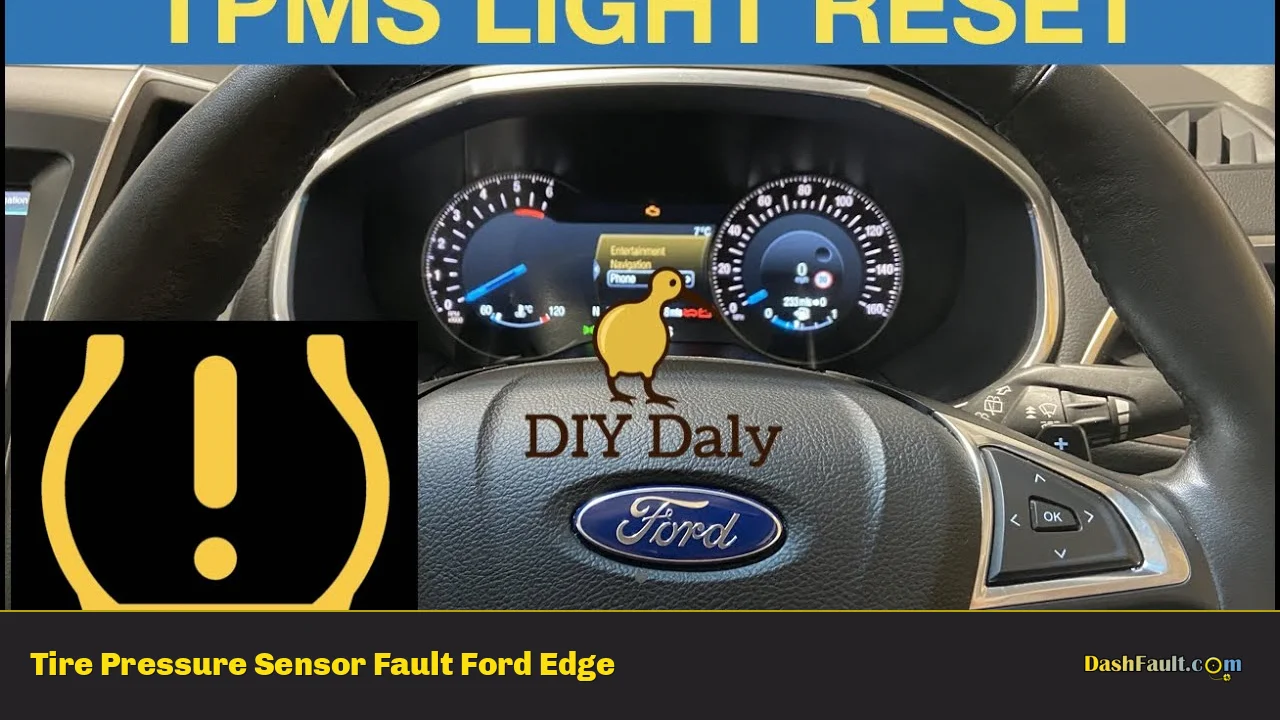
Alright, let's dive into a common headache for 2007 Ford Edge owners: the dreaded Tire Pressure Sensor (TPS) fault. It's that annoying light on your dashboard that just won't go away, even when your tires are seemingly inflated correctly. We'll break down the system, common issues, troubleshooting steps, and potential solutions. This isn't just about turning off the light; it's about ensuring the system functions as it should for safety and optimal fuel economy.
Understanding the TPMS System
The 2007 Ford Edge employs a direct Tire Pressure Monitoring System (TPMS). This means that each wheel has a sensor inside the tire that directly measures the tire pressure and transmits that data wirelessly to the vehicle's computer, specifically the Restraint Control Module (RCM), which also handles airbag deployment. Unlike indirect TPMS which relies on wheel speed sensors (used for ABS), direct TPMS offers more accurate and real-time pressure readings.
Here's a simplified breakdown of the system components:
- Tire Pressure Sensors: These are the actual units inside your tires. They contain a pressure sensor, a transmitter, and a battery. They’re usually attached to the valve stem inside the tire.
- Antennas/Receiver: The Edge has multiple antennas (often integrated into the wheel wells) that receive the radio frequency (RF) signal from the tire sensors. The signals are sent to the RCM.
- Restraint Control Module (RCM): This is the "brain" of the TPMS. It receives data from the sensors, processes it, and triggers the warning light on the instrument cluster when a pressure is outside the pre-set range (typically 28-35 PSI, but check your door jamb sticker for the recommended pressure).
- Instrument Cluster: This is where the low tire pressure warning light illuminates, alerting the driver to a problem.
Common Causes of TPMS Faults on the 2007 Ford Edge
Several things can trigger a TPMS fault on your 2007 Edge. Knowing the potential culprits is half the battle:
Sensor Failures
This is probably the most common cause. The sensors have a limited lifespan, primarily due to battery depletion. The batteries typically last between 5-7 years, depending on usage and environmental conditions. Heat is a battery killer! Other potential sensor failures include physical damage (from tire changes or road hazards), and internal electronic malfunction.
Low Sensor Battery
As mentioned above, the sensor batteries eventually die. A typical symptom of a low battery is an intermittent warning light. The sensor might transmit data initially, but then drop out as the battery weakens. The TPMS might report the correct pressure some of the time and not at all at other times.
Physical Damage to Sensors
During tire rotations or replacements, sensors can be accidentally damaged. A careless tire technician can crack the sensor housing or damage the valve stem. Always make sure your tire shop is experienced with TPMS systems.
RCM Issues
While less common than sensor failures, the RCM itself can malfunction. This could be due to a software glitch, corrosion on the connector pins, or internal component failure. This is typically diagnosed after ruling out sensor and antenna issues.
Antenna Problems
Damaged or disconnected antennas can prevent the RCM from receiving signals from the sensors. Check for loose connections, corroded wiring, or physical damage to the antennas, particularly if you've recently had any body work done.
Incorrect Tire Pressure
This seems obvious, but it's worth mentioning. Make sure your tires are inflated to the correct pressure, as specified on the sticker on your driver's side doorjamb. Even a slight deviation can trigger the warning light, especially in colder weather when pressure naturally decreases. The TPMS has a specified pressure threshold it must meet before indicating "OK".
Aftermarket Wheels or Tire Changes
If you've recently changed your wheels or tires, the sensors might not be compatible with the system. Some aftermarket sensors might not transmit on the correct frequency, or the RCM might not be properly programmed to recognize them.
Interference
Rare, but possible. Strong radio frequency interference from other devices can sometimes block the sensor signals. This is usually a temporary issue.
Troubleshooting the TPMS Fault
Now, let's get down to troubleshooting. Here's a step-by-step approach:
- Check Tire Pressures Manually: Use a reliable tire pressure gauge to verify the pressure in all four tires, including the spare (if equipped with a sensor). Inflate or deflate as necessary to match the recommended pressure on the doorjamb sticker.
- Visual Inspection of Sensors: If possible, visually inspect the sensors for any obvious damage, particularly around the valve stem. This might require removing the tires.
- OBDII Scan: Use an OBDII scanner to check for any TPMS-related Diagnostic Trouble Codes (DTCs). Common codes include C151, C152, C153, C154, related to specific sensor faults, and C1963 which commonly references a TPMS system fault.
Important: Not all OBDII scanners can read TPMS-specific codes. You might need a more advanced scanner or consult a tire shop with specialized TPMS diagnostic equipment.
- TPMS Reset Procedure: Try resetting the TPMS system. This can sometimes clear temporary glitches. The procedure varies slightly depending on the specific year and trim of the Edge, but typically involves inflating all tires to the recommended pressure, driving for a certain distance at a certain speed (e.g., 20 minutes above 25 mph), and then parking the vehicle. Refer to your owner's manual for the exact procedure. Ford scan tools can also be used to initiate a TPMS relearn procedure.
- Sensor Activation Tool: A TPMS activation tool can be used to "wake up" the sensors and verify that they are transmitting a signal. This tool essentially sends a radio frequency signal to the sensor, causing it to transmit its data. If a sensor doesn't respond to the activation tool, it's likely faulty. These tools can also read the sensor ID.
- Check Antenna Connections: Locate the TPMS antennas (refer to a service manual for their exact location – often near the wheel wells) and check for loose connections, corrosion, or damage to the wiring.
- Consult a Professional: If you've exhausted all other options, it's time to consult a qualified mechanic or tire shop with TPMS diagnostic expertise. They can use specialized equipment to pinpoint the problem and perform necessary repairs or replacements.
Repairing a TPMS Fault
Once you've identified the source of the problem, you can take steps to repair it:
Sensor Replacement
If a sensor is faulty, the most common solution is to replace it. When replacing sensors, it's generally recommended to replace all four sensors at the same time, as the other sensors are likely nearing the end of their battery life as well. After replacing the sensors, you'll need to have the TPMS system reprogrammed (relearned) to recognize the new sensors. This can usually be done with a TPMS relearn tool or by a qualified technician.
RCM Repair or Replacement
If the RCM is faulty, it may need to be repaired or replaced. This is a more complex repair that should be performed by a qualified mechanic.
Antenna Repair
If an antenna is damaged, it may need to be repaired or replaced. This is usually a relatively straightforward repair that can be done by a mechanic or a skilled DIYer.
Programming
After replacing sensors (or sometimes even just after rotating tires), the TPMS system needs to be "relearned" or "reprogrammed" to recognize the new sensor locations. This is typically done using a TPMS relearn tool. Some vehicles have an automatic relearn procedure, while others require manual programming.
Preventative Measures
While TPMS faults can be frustrating, there are steps you can take to minimize their occurrence:
- Regular Tire Pressure Checks: Check your tire pressure at least once a month, and adjust as necessary.
- Proper Tire Maintenance: Rotate your tires regularly and have them balanced to prevent uneven wear.
- Careful Tire Changes: Choose a reputable tire shop that is experienced with TPMS systems.
- Consider Replacing Sensors in Sets: When replacing one sensor, consider replacing all four to avoid future issues.
By understanding the TPMS system, troubleshooting potential problems, and taking preventative measures, you can keep your 2007 Ford Edge running smoothly and safely. Remember to consult a qualified professional if you're not comfortable performing any of these repairs yourself. Good luck!