
2008 Toyota Sienna 3.5 L Firing Order
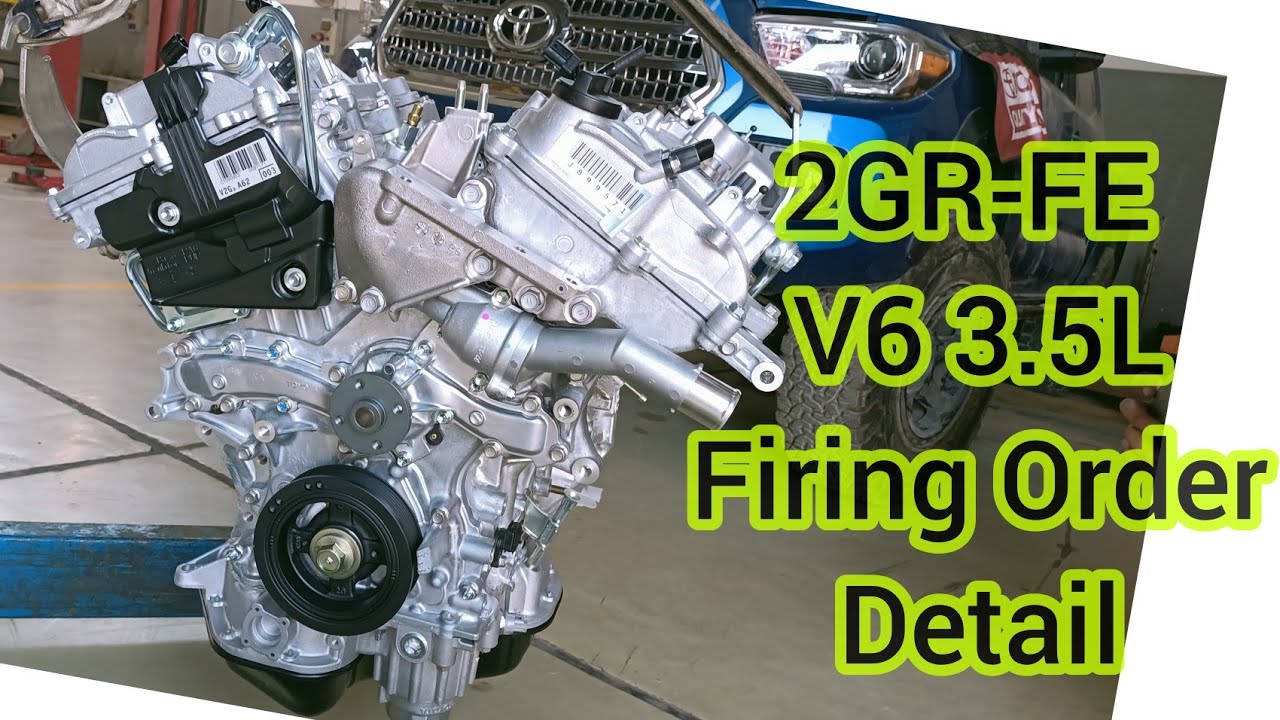
The 2008 Toyota Sienna, particularly models equipped with the 3.5L V6 engine, is a popular and reliable minivan. When performing maintenance or troubleshooting engine problems, knowing the correct firing order is crucial. This article provides a detailed overview of the 2008 Toyota Sienna 3.5L firing order, along with related information to assist you in your repair endeavors.
Understanding Firing Order
The firing order is the sequence in which the cylinders of an internal combustion engine ignite. It's carefully determined by the engine's design to optimize balance, reduce vibration, and improve overall performance. Incorrect firing order can lead to a multitude of issues, including:
- Engine misfires
- Reduced power
- Rough idling
- Poor fuel economy
- Potential engine damage
Therefore, ensuring the correct firing order when replacing spark plugs, distributor components (though the 2008 Sienna 3.5L doesn't have a traditional distributor), or performing other engine work is absolutely essential.
2008 Toyota Sienna 3.5L Firing Order: The Answer
The firing order for the 2008 Toyota Sienna with the 3.5L (2GR-FE) V6 engine is:
1-2-3-4-5-6
This means that cylinder number 1 fires first, followed by cylinder number 2, then 3, and so on, until all six cylinders have fired in that sequence.
Cylinder Location and Bank Identification
Knowing the firing order is only half the battle. You also need to know which cylinder is which. The 2GR-FE engine in the 2008 Sienna is a V6, meaning it has two banks of three cylinders. Here's how to identify the cylinder locations:
Facing the engine from the front of the vehicle (assuming the exhaust manifold is in the rear), imagine the engine as two rows, or banks, of cylinders.
- Bank 1: This is typically the rear bank closest to the firewall (the partition separating the engine compartment from the passenger compartment). Cylinders on Bank 1 are numbered 1, 3, and 5 (from right to left).
- Bank 2: This is the front bank closest to the radiator. Cylinders on Bank 2 are numbered 2, 4, and 6 (from right to left).
In simpler terms:
- Cylinder 1: Rear bank, passenger side.
- Cylinder 2: Front bank, passenger side.
- Cylinder 3: Rear bank, middle cylinder.
- Cylinder 4: Front bank, middle cylinder.
- Cylinder 5: Rear bank, driver side.
- Cylinder 6: Front bank, driver side.
It's crucial to verify this information with a repair manual or reliable online resource specific to the 2008 Toyota Sienna. While this is generally accurate, variations can occur.
Ignition System: Coil-on-Plug (COP)
The 2008 Toyota Sienna 3.5L engine utilizes a coil-on-plug (COP) ignition system. This means that each cylinder has its own ignition coil directly attached to the spark plug. This eliminates the need for a traditional distributor and spark plug wires.
With a COP system, the Engine Control Unit (ECU) precisely controls the firing of each coil, ensuring optimal ignition timing and performance. Because there are no physical wires connecting to a distributor, the firing order is dictated entirely by the ECU programming.
Troubleshooting Misfires and Ignition Problems
If you're experiencing engine misfires or other ignition-related problems with your 2008 Toyota Sienna 3.5L, here are some steps you can take:
- Check for Diagnostic Trouble Codes (DTCs): Use an OBD-II scanner to retrieve any stored DTCs from the ECU. Codes related to misfires (e.g., P0300, P0301, P0302, etc.) can provide valuable clues about the affected cylinder(s).
- Inspect Spark Plugs: Examine the spark plugs for wear, damage, or fouling. Replace them if necessary, using the correct type and gap specified for the 2008 Toyota Sienna 3.5L.
- Inspect Ignition Coils: Test the ignition coils using a multimeter to check their resistance and continuity. A faulty coil can cause misfires. Consider swapping coils between cylinders to see if the misfire follows the coil.
- Check Fuel Injectors: A clogged or malfunctioning fuel injector can also cause misfires. You can test fuel injectors using a multimeter or listen for their clicking sound with a stethoscope. Fuel injector cleaner might help resolve minor clogs.
- Inspect Wiring and Connectors: Carefully inspect the wiring harnesses and connectors for the ignition coils and fuel injectors. Look for signs of damage, corrosion, or loose connections.
- Check Compression: Perform a compression test on each cylinder to check for engine mechanical problems such as worn piston rings or leaking valves. Low compression can cause misfires.
- Vacuum Leaks: Check for vacuum leaks, as these can also cause misfires and rough idling. Inspect vacuum hoses for cracks or disconnections.
- PCV Valve: A faulty PCV valve can also contribute to engine performance issues.
Importance of Proper Maintenance
Regular maintenance is key to preventing ignition problems and ensuring the longevity of your 2008 Toyota Sienna 3.5L. This includes:
- Replacing spark plugs at the recommended intervals.
- Changing the engine oil regularly.
- Keeping the air filter clean.
- Inspecting and maintaining the ignition system components.
Resources and Further Assistance
For more detailed information and specific repair procedures for your 2008 Toyota Sienna 3.5L, consult the following resources:
- Factory Service Manual: The official Toyota service manual is the most comprehensive resource available.
- Online Repair Databases: Websites like AlldataDIY and Mitchell OnDemand provide access to repair information, diagrams, and troubleshooting guides.
- Toyota Forums: Online forums dedicated to Toyota vehicles can be a valuable source of information and support from other owners and experienced mechanics.
- Qualified Mechanic: If you're not comfortable performing the repairs yourself, consult a qualified mechanic who specializes in Toyota vehicles.
Conclusion
Knowing the 2008 Toyota Sienna 3.5L firing order (1-2-3-4-5-6), understanding cylinder location, and having a grasp of the COP ignition system are all essential for diagnosing and resolving engine performance issues. By following the troubleshooting steps outlined in this article and consulting reliable resources, you can keep your Sienna running smoothly for years to come. Remember to prioritize safety and seek professional assistance if you're unsure about any aspect of the repair process.