
2013 Nissan Rogue Ac Relay Location
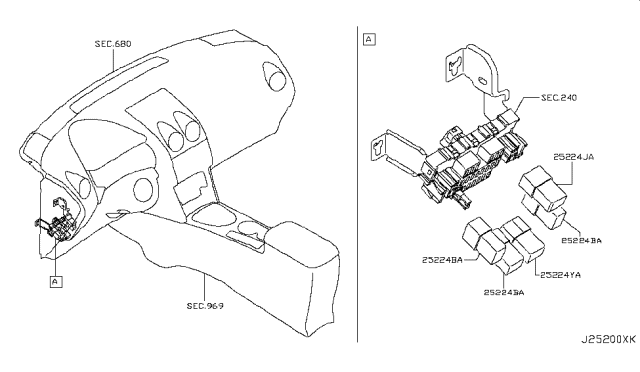
Alright, let's dive into locating the AC relay in your 2013 Nissan Rogue. It's a common enough question, and while it's not rocket science, knowing exactly where to look and what you're looking for will save you a lot of time and frustration. We'll cover its general function, possible symptoms of a failing relay, and, most importantly, the specific locations you need to check.
Understanding the AC Relay’s Role
First, a quick refresher on what the AC relay actually does. An automotive relay is essentially an electrically operated switch. It allows a low-current circuit (controlled by the AC request from inside the cabin) to control a high-current circuit (powering the AC compressor clutch). Think of it like a tiny messenger: the AC switch inside your car sends a small signal to the relay, and the relay, in turn, throws the switch that allows the high-amperage electricity to flow to your AC compressor clutch. Without the relay, you’d either need a massive switch inside your car, or the low-current circuit wouldn’t be able to handle the load required to activate the compressor. Relays protect smaller circuits from being damaged by higher voltage electrical components.
The AC compressor clutch is what engages the compressor, the heart of your AC system. When the clutch engages, it mechanically links the engine to the compressor, allowing the compressor to circulate refrigerant throughout the system. If the relay fails, the clutch won't engage, and you'll get no cold air. A faulty AC relay is one of the most common reasons for AC failure, so it's a good place to start your troubleshooting.
Symptoms of a Failing AC Relay
Before tearing into your car, it's helpful to identify if the relay is actually the culprit. Here are some common symptoms of a failing AC relay:
- No Cold Air: This is the most obvious symptom. If the AC system is blowing warm air, and you've already checked the refrigerant level, a faulty relay could be the issue.
- Intermittent AC Function: Sometimes, the relay might work intermittently, especially when hot. You might get cold air for a few minutes, then it cuts out, only to return later. This indicates a relay on its way out.
- Clicking Sounds: You might hear a clicking sound coming from the relay when you try to turn on the AC. This is the relay attempting to engage, but failing.
- Blown Fuse: A shorted relay can sometimes cause the AC fuse to blow. If you keep replacing the fuse and it keeps blowing, the relay might be the problem. Always address the root cause of a blown fuse, don't just keep replacing it!
- No AC Compressor Clutch Engagement: This is the most definitive test (requires a bit more technical know-how). You can visually inspect the AC compressor clutch (the front part of the AC compressor). When the AC is turned on, the clutch should engage and spin along with the pulley. If it's not engaging, the relay is a likely suspect.
Locating the AC Relay in Your 2013 Nissan Rogue
Now, the moment you've been waiting for: where is the AC relay hiding in your 2013 Rogue? There are typically two locations you need to check. It's crucial to consult your Rogue's owner's manual for the precise relay layout, as there can be slight variations depending on trim level and specific build date. However, I will provide the generally correct locations based on a 2013 Nissan Rogue and then instruct on how to confirm with your owner's manual.
1. The Engine Compartment Fuse and Relay Box
This is the most likely location. Open your hood. On most 2013 Rogues, you'll find a black plastic fuse and relay box located on the driver's side, near the battery. It's typically rectangular and has a cover that can be unclipped or unscrewed.
Once you've located the box:
- Remove the Cover: Carefully remove the cover of the fuse and relay box. There's usually a diagram printed on the underside of the cover, indicating what each fuse and relay controls. This diagram is your best friend!
- Identify the AC Relay: Look for the relay labeled "A/C," "AC Compressor," "MG CLT" (for magnetic clutch) or something similar. The exact label can vary. Refer to the diagram on the fuse box cover to confirm the correct relay. Also, the correct fuse is often near the relay. Common fuse ratings are 10A or 15A.
- Relay Type: The AC relay is usually a standard 4 or 5-pin mini relay. It's typically black, but it can sometimes be a different color depending on the manufacturer.
What if you can't find it with the A/C or Compressor labels? Look for a relay associated with the Magnetic Clutch, often abbreviated as MG CLT. This will very likely control the voltage to the compressor clutch.
2. The Interior Fuse Box
Less commonly, but still possible, the AC relay (or a relay involved in the AC system's control circuit) might be located in the interior fuse box. This fuse box is usually located under the dashboard, on the driver's side.
To access it:
- Locate the Fuse Box: You might need to remove a small panel or trim piece to access the fuse box. It's usually secured with clips or screws.
- Check the Diagram: Just like the engine compartment fuse box, the interior fuse box should have a diagram on the inside of the cover.
- Identify the Relay: Look for any relays related to the AC system, blower motor, or climate control system. Sometimes, a relay controls the power supply to the AC control panel itself.
Important Note: Even if you don't find the main AC compressor relay here, you might find a relay controlling other aspects of the AC system, such as the blower motor. A faulty blower motor relay can also cause AC problems.
Confirmation using the Owner's Manual
As previously stated, your owner's manual is the definitive source of information about fuse and relay locations in your specific 2013 Nissan Rogue. Here's how to use it effectively:
- Locate the Fuse and Relay Section: Look for a section in the owner's manual specifically dedicated to fuses and relays. It's usually in the "Maintenance" or "Electrical System" section.
- Find the Fuse and Relay Charts: The manual will contain charts listing each fuse and relay, its amperage rating, and the system it controls. These charts are usually divided by location (engine compartment fuse box and interior fuse box).
- Identify the AC Relay: Look for the relay associated with the AC compressor or magnetic clutch. The manual will specify the exact location of the relay within the fuse box. Pay attention to the diagram provided!
Testing and Replacing the AC Relay
Once you've located the AC relay, you can test it to confirm whether it's faulty. The easiest method is to swap it with an identical relay from another non-critical system (like the horn relay or fog light relay, if equipped). If your AC starts working after the swap, you've confirmed that the original relay was the problem.
If you don't have a spare relay to swap:
- Visual Inspection: Check the relay for any signs of damage, such as cracks, burns, or corrosion.
- Multimeter Test: You can use a multimeter to test the relay's continuity and resistance. There are numerous online tutorials that detail how to perform this test. You’ll need to know the pin configuration of your relay to test it effectively.
Replacement: Replacing the relay is straightforward. Simply unplug the old relay and plug in the new one. Make sure the replacement relay has the same part number or specifications as the original.
Final Thoughts
Locating the AC relay in your 2013 Nissan Rogue might seem daunting at first, but by following these steps and consulting your owner's manual, you should be able to find it and diagnose any potential issues. Remember to always prioritize safety when working on your car's electrical system. Disconnect the negative battery terminal before starting any work, and be careful when handling electrical components. If you're not comfortable working on your car's electrical system, it's always best to consult a qualified mechanic. Good luck!