
2019 F150 5.0 Camshaft Position Sensor
The 2019 Ford F-150, particularly those equipped with the robust 5.0L Coyote V8 engine, remains a popular choice for its power, capability, and overall reliability. However, like any vehicle, it's susceptible to component failures. One such component, the camshaft position sensor (CMP sensor), plays a critical role in engine operation. This article delves into the CMP sensor in the 2019 F-150 5.0L, exploring its function, common failure symptoms, troubleshooting, and replacement considerations.
Understanding the Camshaft Position Sensor
The CMP sensor is a crucial component of the engine management system. Its primary function is to monitor the position of the camshaft, relaying this information to the powertrain control module (PCM). The PCM uses this data, along with information from the crankshaft position sensor, to precisely control fuel injection timing and ignition timing. Accurate timing is paramount for optimal engine performance, fuel efficiency, and emissions control.
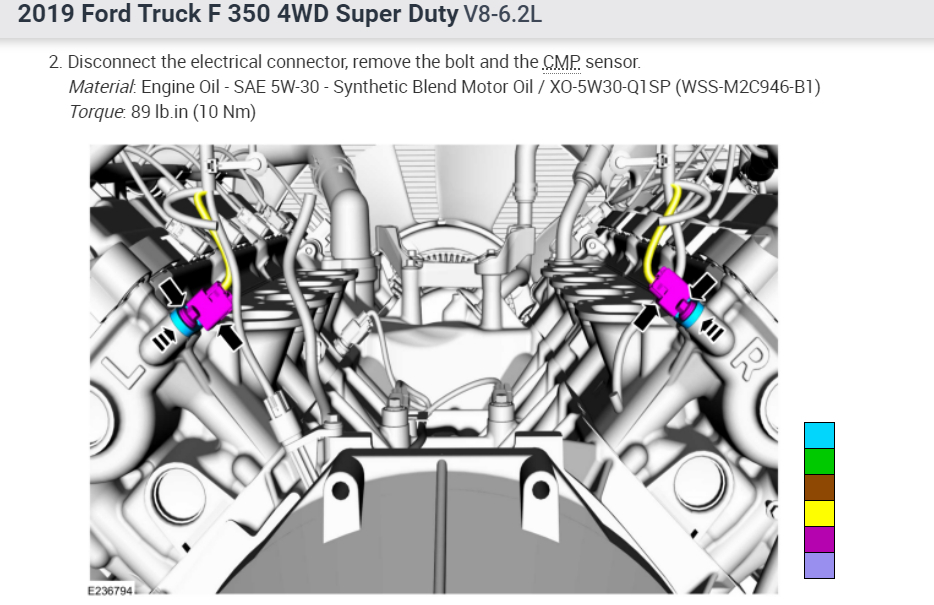
In the 2019 F-150 5.0L, the CMP sensors are typically located near the front of the engine, often near the valve covers. There are usually two CMP sensors, one for each cylinder bank (Bank 1 and Bank 2), as the 5.0L is a V8 engine. This allows the PCM to monitor each camshaft independently, allowing for finer control over the engine.
Symptoms of a Failing CMP Sensor
When a CMP sensor begins to fail, it can manifest in various ways, ranging from subtle performance issues to complete engine breakdowns. Common symptoms include:
- Check Engine Light: This is the most common indicator. The PCM will store a diagnostic trouble code (DTC) related to the CMP sensor, triggering the light. Common codes include P0340, P0341, P0345, and P0349, indicating circuit malfunctions or signal issues.
- Rough Idle: A faulty CMP sensor can disrupt the engine's timing, leading to a rough or unstable idle.
- Stalling: The engine may stall, especially at low speeds or during deceleration.
- Hard Starting or No Start: In severe cases, a failing CMP sensor can prevent the engine from starting altogether, as the PCM lacks the necessary information for proper fuel injection and ignition timing.
- Reduced Fuel Efficiency: Incorrect timing can lead to inefficient combustion, resulting in lower fuel economy.
- Hesitation or Lack of Power: The engine may hesitate during acceleration or lack its usual power.
Diagnosing a CMP Sensor Issue
Diagnosing a CMP sensor problem requires a systematic approach. Start by retrieving the DTCs stored in the PCM using an OBD-II scanner. This will provide valuable clues about the specific issue. However, a DTC doesn't always guarantee a faulty sensor; further investigation is often necessary.
Next, visually inspect the sensor and its wiring for any signs of damage, such as frayed wires, corrosion, or loose connections. Use a multimeter to check the sensor's resistance and voltage, comparing the readings to the manufacturer's specifications. You can usually find the correct values in the Ford service manual for the 2019 F-150 5.0L.
If the wiring and sensor appear to be functioning correctly, consider other potential causes, such as a faulty PCM, timing chain issues, or problems with the crankshaft position sensor. Keep in mind that a stretched timing chain can alter the relationship between the crankshaft and camshaft positions, potentially triggering CMP sensor codes.
CMP Sensor Replacement
Replacing a CMP sensor is a relatively straightforward process, but it requires some basic mechanical skills and tools. Disconnect the negative battery cable before starting. Locate the CMP sensor (refer to your vehicle's service manual). Disconnect the electrical connector and remove the sensor from its mounting. Install the new sensor, ensuring it's properly seated and torqued to the correct specification. Reconnect the electrical connector and the negative battery cable. Clear the DTCs from the PCM using an OBD-II scanner.
When selecting a replacement CMP sensor, choose a reputable brand, such as Motorcraft (Ford's OEM supplier) or a well-known aftermarket manufacturer like Delphi or Bosch. Using a high-quality sensor ensures proper fit, function, and longevity. Expect to pay between $30 and $100 for a quality replacement sensor. Labor costs for professional installation can vary, but typically range from $100 to $200, depending on the shop's hourly rate.
Preventative Maintenance
While CMP sensor failures can occur unexpectedly, proper maintenance can help minimize the risk. Regular oil changes are crucial, as clean oil helps lubricate the engine and prevent wear on the timing chain. Inspect the engine's wiring harness periodically for any signs of damage. Addressing minor issues promptly can prevent them from escalating into more significant problems. Additionally, consider performing a visual inspection of the CMP sensor during routine maintenance tasks, such as spark plug replacements.
In conclusion, the camshaft position sensor is a vital component in the 2019 Ford F-150 5.0L engine. Understanding its function, recognizing the symptoms of failure, and performing proper diagnosis and replacement are essential for maintaining optimal engine performance and reliability. By following the guidelines outlined in this article, owners and technicians can effectively address CMP sensor issues and keep their F-150s running smoothly for years to come.