
2019 Nissan Rogue Dash Symbols
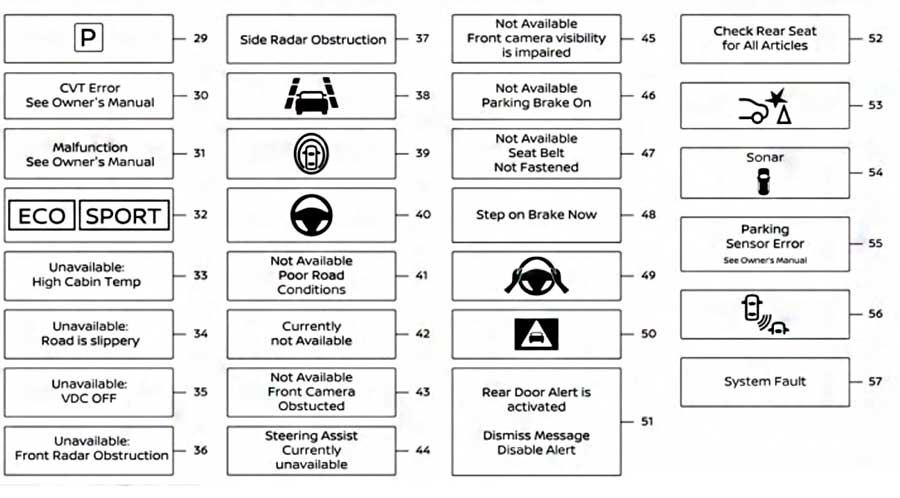
Understanding the dashboard symbols in your 2019 Nissan Rogue is crucial for safe and informed driving. These seemingly cryptic icons provide vital information about your vehicle's health, safety systems, and operational status. Ignoring them can lead to serious mechanical issues or even accidents. This article will demystify the common dash symbols in your 2019 Rogue, helping you understand what they mean and what actions to take when they illuminate.
Understanding the Color Coding
Before diving into specific symbols, it's essential to understand the color-coding system used by Nissan (and most other automakers). Think of it like traffic lights:
- Green/Blue: These indicate that a system is active and functioning normally. For example, the green headlight symbol simply means your headlights are on.
- Yellow/Amber: This indicates a potential issue that needs attention. It might not be critical enough to stop immediately, but it warrants further investigation and possibly a trip to the mechanic. Think of this as a "proceed with caution" signal.
- Red: This is a serious warning. It indicates a critical problem that requires immediate attention. Continuing to drive with a red warning light illuminated could cause significant damage to your vehicle or pose a safety risk. Stop as soon as it is safe to do so and address the issue.
Common Warning Lights and Their Meanings
Engine-Related Lights
These lights often signal problems that need professional diagnosis.
Check Engine Light (CEL)
This is perhaps the most infamous dash symbol. Depicted as an engine outline, the CEL can indicate a wide range of issues, from a loose gas cap to a serious engine malfunction. While many associate it with emissions problems, it's essentially a catch-all for engine-related faults detected by the car's onboard diagnostics (OBD) system.
Action: While a loose gas cap is a common culprit (try tightening it and see if the light goes off after a few driving cycles), it's best to have the car scanned by a mechanic to determine the underlying issue. Auto parts stores often offer free OBD-II scans that can provide a code indicating the problem area. For example, a code like "P0420" could indicate a catalytic converter issue, similar to problems that might plague older BMW 3-Series models with worn-out emission control systems.
Oil Pressure Warning Light
This light, resembling an oil can, indicates critically low oil pressure. Low oil pressure means the engine isn't getting the lubrication it needs, which can lead to catastrophic engine damage.
Action: Stop the car immediately and check the oil level. If the oil level is low, add oil. If the light persists, do not drive the car. Have it towed to a mechanic. Ignoring this light is like running a marathon without water - the engine will quickly overheat and seize.
Coolant Temperature Warning Light
This light, often depicted as a thermometer submerged in liquid, indicates that the engine is overheating. Overheating can be caused by low coolant levels, a faulty thermostat, or a malfunctioning water pump.
Action: Pull over to a safe location and allow the engine to cool down. Check the coolant level. If it's low, add coolant (but only after the engine has cooled down completely!). If the problem persists, have the car towed to a mechanic. Continuing to drive with an overheating engine can cause severe damage, like a cracked cylinder head, which is a costly repair common in older cars that haven't had regular cooling system maintenance.
Braking System Lights
These lights are critical for safe operation of your vehicle and require prompt attention.
Brake Warning Light
This light, often the word "BRAKE" or an exclamation point inside a circle, can indicate several issues, including low brake fluid, a problem with the parking brake, or a malfunction in the Anti-lock Braking System (ABS).
Action: First, make sure the parking brake is fully released. If the light remains on, check the brake fluid level. If it's low, add brake fluid (use the correct type specified in your owner's manual). If the light still persists, or if the brake pedal feels spongy, have the brake system inspected immediately. Driving with a faulty brake system is incredibly dangerous.
ABS Warning Light
This light, often the letters "ABS," indicates a malfunction in the Anti-lock Braking System. While your regular brakes will still function, the ABS system, which prevents wheel lockup during hard braking, will be disabled.
Action: You can still drive the car, but exercise extra caution, especially in wet or slippery conditions. Have the ABS system diagnosed and repaired as soon as possible. A malfunctioning ABS system is like having a safety net with holes - it might offer some protection, but it's not reliable.
Safety System Lights
Airbag Warning Light
This light, often a silhouette of a person with a round circle in front of them, indicates a problem with the airbag system. This means the airbags may not deploy in the event of a collision.
Action: Have the airbag system inspected by a qualified mechanic immediately. A malfunctioning airbag system significantly increases the risk of injury in an accident.
Tire Pressure Monitoring System (TPMS) Light
This light, often a horseshoe-shaped symbol with an exclamation point inside, indicates that one or more of your tires has significantly low tire pressure. This is a common light, especially during temperature changes.
Action: Check the tire pressure of all four tires and inflate them to the recommended pressure (found on the sticker inside the driver's side door jamb). After inflating the tires, the light may go off after a short drive. If the light persists, there may be a problem with one of the TPMS sensors in the wheels. Consider that some older models, like certain Jeep Wranglers, are notorious for TPMS sensor failures, so regular checks are even more crucial.
Other Important Lights
Battery Warning Light
This light, resembling a battery, indicates a problem with the charging system. This could be a faulty alternator, a loose or corroded battery cable, or a failing battery.
Action: If the light comes on while driving, the car may eventually stall. Try to minimize electrical load (turn off the radio, air conditioning, etc.). Have the charging system inspected as soon as possible. Ignoring this light could leave you stranded.
Power Steering Warning Light
Some 2019 Nissan Rogues may have an electric power steering system. If this light (usually a steering wheel icon with an exclamation point) illuminates, it indicates a problem with the power steering system. Steering may become significantly harder.
Action: While you can still steer the car, it will require considerably more effort, especially at low speeds. Have the power steering system inspected and repaired promptly.
Practical Takeaways
- Consult Your Owner's Manual: The 2019 Nissan Rogue owner's manual is your best resource for understanding the specific meanings of all the dash symbols in your vehicle. It will provide detailed explanations and recommended actions.
- Don't Ignore Warning Lights: Addressing warning lights promptly can prevent minor issues from escalating into major (and expensive) repairs.
- Regular Maintenance is Key: Regular oil changes, fluid checks, and tire rotations can help prevent many warning lights from ever appearing in the first place. Preventative maintenance is significantly cheaper than repairs.
- Invest in an OBD-II Scanner: Purchasing an inexpensive OBD-II scanner allows you to read the trouble codes yourself, giving you a better understanding of the problem before taking your car to a mechanic.
- Know Your Limits: While some minor issues can be addressed yourself, don't hesitate to seek professional help for complex problems. Knowing when to call a mechanic can save you time, money, and potential damage to your vehicle.
- Document everything: Keep a record of when lights appear, what actions you take, and the results. This helps with diagnostics and tracking recurring problems.
By understanding the meaning of the 2019 Nissan Rogue's dash symbols and taking appropriate action, you can ensure the longevity, safety, and reliability of your vehicle.