
2023 Nissan Frontier Bed Dimensions
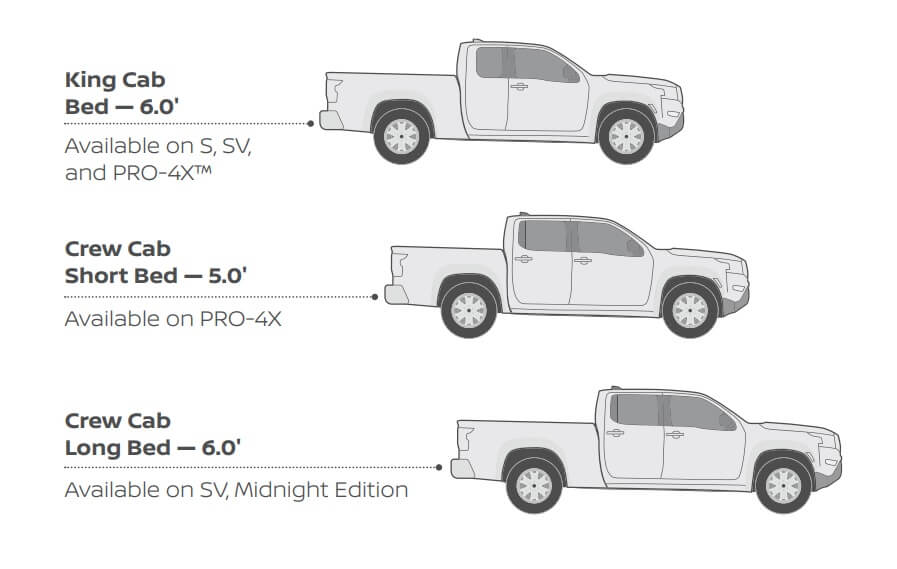
Let's dive deep into the bed dimensions of the 2023 Nissan Frontier. As an intermediate car owner or DIY mechanic, understanding these measurements is crucial for everything from hauling cargo safely to planning custom modifications. We’ll cover the key specs, explore how they impact your choices, and equip you with the knowledge to make informed decisions about your Frontier.
2023 Nissan Frontier Bed Configurations: A Tale of Two Sizes
The 2023 Frontier comes in two primary bed configurations, determined by the cab style you choose: the King Cab and the Crew Cab. The King Cab is only available with a longer bed, while the Crew Cab gives you a choice, though the standard bed is more common. This affects the overall wheelbase and turning radius of the truck, so it's a vital initial consideration.
The 5-Foot Bed (Crew Cab)
The 5-foot bed, primarily paired with the Crew Cab, offers a balance of passenger space and cargo capacity. It's ideal for everyday tasks and occasional hauling where maximizing rear seating is a priority. Let's break down the critical dimensions:
- Nominal Length: Approximately 59.5 inches (roughly 5 feet). It's important to understand that this is a nominal dimension – a stated or advertised length. The actual usable space can vary slightly due to the bed's design and the presence of bed liners or other accessories.
- Width Between Wheel Wells: This is the narrowest point in the bed and a critical measurement for determining what you can haul flat. The distance between the wheel wells is approximately 44.5 inches. This means that standard 4'x8' sheets of plywood or drywall will *not* lay flat unless placed on top of the wheel wells (using dunnage or supports).
- Bed Depth: This refers to the height of the bed sides. The 2023 Frontier features a bed depth of around 19.4 inches. This is enough to secure cargo with tie-downs and prevent smaller items from easily spilling out.
- Volume: The cargo volume of the 5-foot bed is about 31.0 cubic feet. This measurement represents the total usable space within the bed when filled to the top of the bed sides.
When considering this bed size, think about what you typically haul. Furniture, landscaping materials, and recreational equipment will fit comfortably, but larger items may require more strategic loading or the use of a bed extender.
The 6-Foot Bed (King Cab & Crew Cab)
The 6-foot bed, available with both the King Cab and some Crew Cab models, provides significantly more cargo-carrying capability. It is well-suited for those who regularly haul larger or longer items, such as lumber, motorcycles, or ATVs. Here’s the breakdown:
- Nominal Length: Approximately 73.3 inches (roughly 6 feet). Again, remember this is a nominal dimension. Always double-check before assuming a perfect 6-foot length, especially when pre-cutting materials to fit.
- Width Between Wheel Wells: The width between the wheel wells remains the same as the 5-foot bed, at approximately 44.5 inches. This is a consistent design feature across both bed sizes to maintain chassis integrity and suspension geometry.
- Bed Depth: Like the 5-foot bed, the 6-foot bed has a depth of around 19.4 inches. This standardization simplifies the design and manufacturing processes.
- Volume: The cargo volume of the 6-foot bed increases to approximately 37.9 cubic feet. That's a significant jump in usable space compared to the shorter bed.
The extra foot of length can make a huge difference. You're far more likely to be able to carry longer items without resorting to bed extenders or creative securing methods. Also, consider the impact on departure angle if you plan on doing any off-roading. A longer bed slightly reduces your departure angle, meaning you may be more prone to scraping the rear of the truck when navigating steep inclines.
Practical Implications and Considerations
Beyond the raw numbers, several practical considerations come into play when selecting the right bed size:
- Payload Capacity: Payload refers to the maximum weight you can safely carry in the truck's bed and cab. While the bed size doesn't directly determine payload capacity, it certainly influences what you *can* carry. Overloading your truck is dangerous and can damage the suspension, brakes, and frame. Always consult the sticker on your driver's side door jamb for your vehicle's specific payload rating.
- Bed Liners: Bed liners protect the metal bed from scratches, dents, and corrosion. They come in various forms, including spray-in liners, drop-in liners, and bed mats. The choice is yours, but remember that drop-in liners can sometimes trap moisture and lead to rust underneath. Spray-in liners are a more permanent solution, but can be more difficult and expensive to repair if damaged.
- Bed Extenders: A bed extender is a hinged gate that flips out from the bed, effectively extending its length when the tailgate is down. This is a valuable accessory for those who occasionally need to haul items longer than their bed length. Always ensure the extender is securely attached and that your cargo is properly tied down.
- Tonneau Covers: Tonneau covers provide security and weather protection for your cargo. They come in various styles, including soft folding covers, hard folding covers, and retractable covers. Choose a cover that fits your needs and budget. Remember to consider the cover's weight when calculating your payload.
- Tie-Down Points: The 2023 Frontier comes standard with multiple tie-down points in the bed. These are crucial for securing your cargo and preventing it from shifting during transport. Inspect these regularly to ensure they are in good condition and not corroded. Consider adding aftermarket tie-down points if you need more flexibility.
Modifications and Customization
Understanding the bed dimensions is essential if you plan to modify or customize your Frontier. Here are some common modifications that rely on accurate bed measurements:
- Aftermarket Bed Racks: Bed racks provide a platform for mounting rooftop tents, cargo carriers, and other accessories. They typically attach to the bed rails and require precise measurements to ensure a proper fit. Pay close attention to the rack's weight capacity to avoid exceeding your truck's payload.
- Custom Toolboxes: Toolboxes are a popular addition for storing tools and equipment. They come in various sizes and configurations, including cross-bed toolboxes and side-mount toolboxes. Measure the width of your bed carefully to ensure the toolbox fits without interfering with the bed rails or tailgate.
- DIY Bed Dividers: Building your own bed dividers can help organize your cargo and prevent it from sliding around. Using plywood or other materials, you can create custom dividers that fit snugly within the bed. Accurate measurements are crucial for achieving a professional-looking and functional result.
- Camper Shells: For the ultimate in protection and usability, camper shells (also known as truck caps) can provide enclosed storage and even sleeping quarters. They come in various heights and window configurations. Critically, ensure the shell you are looking at is designed for your cab and bed configuration, paying special attention to models with different roof heights than the cab for proper fit.
Conclusion
The 2023 Nissan Frontier offers a capable and versatile truck, and understanding its bed dimensions is key to maximizing its utility. Whether you opt for the 5-foot or 6-foot bed, consider your typical hauling needs, planned modifications, and payload capacity to make the right choice. Armed with this knowledge, you'll be well-equipped to tackle any task, from weekend DIY projects to serious off-road adventures.
Remember to always consult your owner's manual for the most accurate and up-to-date information on your specific vehicle. Happy hauling!