
Abs Wheel Speed Sensor Diagram
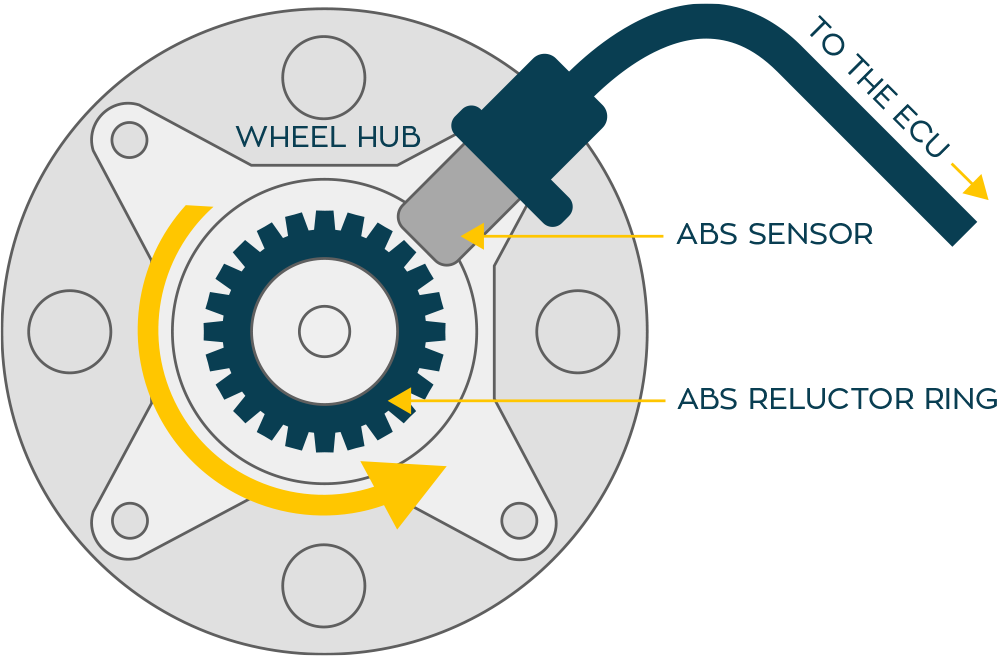
The Anti-lock Braking System (ABS) is a crucial safety feature in modern vehicles, preventing wheel lock-up during hard braking and allowing the driver to maintain steering control. At the heart of the ABS lies the wheel speed sensor, a small but vital component that constantly monitors the rotational speed of each wheel. Understanding the wheel speed sensor, its function, and potential issues is essential for both car owners and mechanics alike. This article dives into the intricacies of ABS wheel speed sensors, providing practical information on maintenance, troubleshooting, and real-world problems.
Understanding ABS Wheel Speed Sensors
An ABS wheel speed sensor, also often called an ABS sensor, is an electromagnetic device located near each wheel hub. Its primary function is to measure the speed at which the wheel is rotating and relay this information to the ABS control module (also called the ABS ECU). The ABS ECU then uses this data to determine if a wheel is about to lock up during braking. If a wheel is decelerating too rapidly compared to the others, the ABS ECU will modulate the braking pressure to that wheel, preventing it from locking and allowing the driver to maintain steering control.
There are primarily two types of ABS wheel speed sensors:
- Hall Effect Sensors: These sensors use a toothed reluctor ring attached to the wheel hub and a magnetic sensor. As the teeth of the reluctor ring pass by the sensor, they interrupt a magnetic field, generating a pulsed signal. The frequency of the pulses corresponds to the wheel speed.
- Variable Reluctance Sensors: These sensors also use a toothed reluctor ring and a magnetic sensor, but instead of interrupting a magnetic field, they generate an alternating current (AC) voltage as the teeth pass by. The voltage frequency is proportional to the wheel speed.
While the internal workings differ, both types of sensors perform the same fundamental task: accurately measuring wheel speed and transmitting that data to the ABS ECU.
Common Symptoms of ABS Wheel Speed Sensor Problems
A faulty ABS wheel speed sensor can manifest in several ways, impacting the vehicle's braking performance and triggering warning lights on the dashboard. Recognizing these symptoms early can prevent more serious issues.
- ABS Warning Light: This is often the most obvious sign of an ABS problem, including a faulty wheel speed sensor. The light typically illuminates on the dashboard and remains on, indicating that the ABS system is not functioning correctly.
- Traction Control Light: In many vehicles, the ABS and traction control systems are integrated. A faulty wheel speed sensor can also trigger the traction control light, as the system relies on wheel speed data for proper operation.
- Erratic ABS Activation: The ABS might engage unnecessarily, even during normal braking conditions. This can feel like a pulsating pedal or a grinding noise coming from the brakes.
- Loss of ABS Function: The ABS system may not engage at all during hard braking, potentially leading to wheel lock-up and loss of steering control.
- Speedometer Problems: In some vehicles, the wheel speed sensors also provide data to the speedometer. A faulty sensor can cause the speedometer to display inaccurate readings or to fluctuate erratically.
For example, on a Toyota Camry (model years 2007-2011), a common issue is the rear wheel speed sensor failing due to corrosion. This would trigger the ABS and Traction Control lights, and the driver might notice the ABS engaging prematurely. Similarly, on a Ford F-150 (model years 2015-2020), debris accumulation around the front wheel speed sensors can cause intermittent ABS activation and error codes.
Troubleshooting ABS Wheel Speed Sensors
Diagnosing ABS wheel speed sensor problems typically involves a systematic approach, starting with a visual inspection and progressing to more advanced diagnostic techniques.
Visual Inspection
Begin by visually inspecting the wheel speed sensors and their wiring. Look for the following:
- Damaged Wiring: Check for cuts, abrasions, or corrosion in the wiring harness leading to the sensor.
- Loose Connections: Ensure that the sensor connector is securely attached to the wiring harness.
- Debris Accumulation: Clean any dirt, grime, or debris that may be interfering with the sensor's operation. Pay close attention to the reluctor ring and ensure it is free from damage and obstructions.
Problem: A mechanic is working on a Honda Civic (2012-2015) and notices the ABS light is on. During the visual inspection, they find a small rock lodged between the reluctor ring and the wheel speed sensor on the front passenger side.
Solution: Carefully remove the rock, clean the area around the sensor and reluctor ring, and test the system. The ABS light may turn off after clearing the diagnostic trouble code (DTC) with a scan tool.
Using a Scan Tool
A scan tool can be invaluable for diagnosing ABS wheel speed sensor problems. Connect the scan tool to the vehicle's diagnostic port (OBD-II port) and retrieve any diagnostic trouble codes (DTCs) related to the ABS system. Common DTCs related to wheel speed sensors include:
- C0031, C0032, C0034, C0035: These codes typically indicate a problem with a specific wheel speed sensor circuit (e.g., C0031 - Right Front Wheel Speed Sensor Circuit).
- C0040, C0041, C0044, C0045: These codes often indicate a problem with the wheel speed sensor signal (e.g., C0040 - Right Front Wheel Speed Sensor Signal Erratic).
The scan tool can also be used to monitor the real-time data from the wheel speed sensors. Compare the readings from each sensor while driving the vehicle at a slow, steady speed. If one sensor is consistently reporting a different speed than the others, it may be faulty.
Problem: A driver reports their ABS light is on in their Chevrolet Silverado (2016-2020). The scan tool retrieves code C0035, indicating a problem with the Left Rear Wheel Speed Sensor Circuit.
Solution: After performing the visual inspection and confirming there are no visible damages to the sensor and wiring, use the scan tool to monitor the real-time data. Compare the speed readings of the left rear sensor to the other three while driving. If the left rear sensor consistently shows zero or an erratic reading, the sensor is likely faulty and needs replacement.
Testing the Sensor with a Multimeter
A multimeter can be used to test the resistance or voltage output of the wheel speed sensor. The testing procedure varies depending on the type of sensor (Hall Effect or Variable Reluctance).
- Hall Effect Sensor: Use a multimeter to check for voltage on the sensor's power and ground wires. You can also check the signal wire while spinning the wheel slowly to see if it generates a pulsed signal. Refer to the vehicle's service manual for the specific voltage readings.
- Variable Reluctance Sensor: Use a multimeter to measure the AC voltage output of the sensor while spinning the wheel. The voltage should increase as the wheel speed increases. The resistance of the sensor coil can also be measured; a reading outside the specified range indicates a faulty sensor.
Problem: A mechanic is diagnosing an ABS issue on a Nissan Altima (2013-2018). They suspect the front wheel speed sensor is faulty.
Solution: Disconnect the sensor and use a multimeter to measure its resistance. Refer to the Nissan service manual for the specified resistance range for that particular sensor. If the measured resistance is significantly outside the specified range, the sensor is likely faulty and needs to be replaced.
Real-World Issues and Solutions
Aside from sensor failure, other real-world issues can affect ABS wheel speed sensor performance.
- Corrosion: Exposure to road salt and moisture can cause corrosion on the sensor connectors and wiring, leading to poor electrical connections. Clean the connectors with electrical contact cleaner and apply dielectric grease to prevent future corrosion.
- Debris: Dirt, brake dust, and other debris can accumulate around the sensor and reluctor ring, interfering with the sensor's ability to accurately measure wheel speed. Clean the area regularly with a brush and compressed air.
- Reluctor Ring Damage: A damaged or broken reluctor ring can cause erratic wheel speed sensor readings. Inspect the reluctor ring for cracks, chips, or missing teeth. If damaged, the reluctor ring or the entire hub assembly may need to be replaced.
- Improper Installation: Incorrectly installed wheel speed sensors can cause them to malfunction. Ensure that the sensor is properly seated and tightened according to the manufacturer's specifications.
Problem: A car owner experiences intermittent ABS activation on their Subaru Outback (2015-2020), particularly during wet weather.
Solution: Inspect the wheel speed sensor connectors and wiring for corrosion. Clean the connectors with electrical contact cleaner and apply dielectric grease. Also, check the reluctor rings for any signs of damage. If corrosion is extensive, consider replacing the affected wiring harness or sensor connector.
Maintenance Tips for ABS Wheel Speed Sensors
While ABS wheel speed sensors are relatively durable, regular maintenance can help prevent problems and ensure their long-term reliability.
- Regular Cleaning: Clean the wheel speed sensors and reluctor rings periodically, especially after driving in dusty or muddy conditions.
- Wiring Inspection: Inspect the sensor wiring for damage or corrosion during routine maintenance.
- Brake Maintenance: When performing brake jobs, take the opportunity to inspect the wheel speed sensors and reluctor rings.
- Avoid Pressure Washing: Avoid directly pressure washing the wheel speed sensors, as this can damage the delicate wiring and connectors.
By following these maintenance tips and addressing any symptoms promptly, car owners and mechanics can ensure the proper functioning of the ABS system and maintain the vehicle's safety and performance.
Conclusion
ABS wheel speed sensors are indispensable components of modern vehicle safety systems. Understanding their function, recognizing the symptoms of potential issues, and employing effective troubleshooting techniques are crucial for maintaining optimal braking performance and driver safety. Regular maintenance, proactive inspection, and prompt repairs can help prevent costly problems and ensure the long-term reliability of the ABS system. By paying attention to these details, both car owners and mechanics can contribute to keeping vehicles in top condition and ensuring a safe driving experience.