
Are Bank 1 And Bank 2 O2 Sensors The Same
Oxygen sensors (O2 sensors), crucial components in your car's emission control system, constantly monitor the oxygen levels in the exhaust gases. They provide vital feedback to the engine control unit (ECU), which uses this information to adjust the air-fuel mixture for optimal combustion and reduced emissions. Modern vehicles, especially those with V6 or V8 engines, often have multiple O2 sensors arranged in banks. A common question arises: Are the O2 sensors in Bank 1 and Bank 2 the same? The simple answer is, sometimes yes, sometimes no. It depends on the specific vehicle and the sensor location.
Understanding Bank 1 and Bank 2
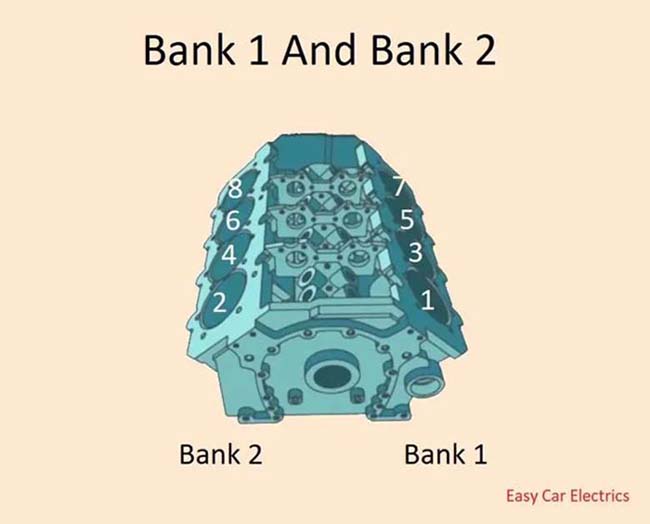
Before diving into interchangeability, let's clarify what Bank 1 and Bank 2 mean. Bank 1 always refers to the side of the engine containing cylinder number 1. Bank 2, if present, refers to the opposite side of the engine. Inline engines only have one bank. Each bank typically has at least two O2 sensors: an upstream sensor (before the catalytic converter) and a downstream sensor (after the catalytic converter). The upstream sensor primarily measures engine performance and fuel mixture, while the downstream sensor monitors the catalytic converter's efficiency.
Sensor Types and Differences
O2 sensors are generally classified into two main types: Zirconium dioxide sensors and Titanium dioxide sensors. Zirconium sensors are more common. Furthermore, they can be narrow-band or wide-band (also known as air-fuel ratio sensors). Wide-band sensors provide more precise and linear readings over a wider range of air-fuel mixtures. Even within Zirconium sensors, there can be variations in connector types, wire lengths, and calibration. Therefore, even if two sensors *look* similar, they might have different electrical characteristics or be specifically calibrated for a particular engine bank.
Interchangeability Issues: Problems and Solutions
The biggest issue with interchanging O2 sensors between Bank 1 and Bank 2 (or even upstream and downstream) is the potential for incorrect engine management. If the sensor's calibration is mismatched, the ECU will receive inaccurate data, leading to:
- Poor Fuel Economy: The engine might run too rich (excess fuel) or too lean (insufficient fuel).
- Rough Idling: An imbalanced air-fuel mixture can cause the engine to idle erratically.
- Reduced Performance: The engine may lack power or hesitate during acceleration.
- Increased Emissions: Incorrect combustion leads to higher levels of pollutants in the exhaust.
- Check Engine Light (CEL): The ECU will detect the sensor malfunction and trigger the CEL. Common codes include P0131, P0132 (Bank 1 Sensor 1 Low/High Voltage), P0151, P0152 (Bank 2 Sensor 1 Low/High Voltage), P0420 (Catalyst System Efficiency Below Threshold Bank 1), and P0430 (Catalyst System Efficiency Below Threshold Bank 2).
Example 1: On a 2010 Ford F-150 with a 5.4L V8, the upstream O2 sensors (Sensor 1) in Bank 1 and Bank 2 might appear identical. However, using the incorrect sensor for a specific bank can lead to a P0171 (System Too Lean Bank 1) or P0174 (System Too Lean Bank 2) code, even if the sensor itself isn't faulty.
Example 2: On a 2015 Honda Accord with a V6 engine, the downstream O2 sensors (Sensor 2) might have slightly different wire lengths to accommodate their specific mounting locations. Interchanging them could put stress on the wiring harness and eventually lead to connection problems or sensor failure.
Troubleshooting and Diagnosis
If you suspect an O2 sensor issue, follow these steps:
- Scan for Diagnostic Trouble Codes (DTCs): Use an OBD-II scanner to retrieve any stored error codes. This will pinpoint the affected sensor and bank.
- Visual Inspection: Check the sensor wiring for damage, corrosion, or loose connections. Look for signs of exhaust leaks near the sensor.
- Sensor Testing: Use a multimeter to measure the sensor's resistance and voltage output. Compare these readings to the manufacturer's specifications. Many resources are available online with typical voltage ranges.
- Live Data Analysis: Use a scan tool to monitor the O2 sensor's live data while the engine is running. Observe how the sensor responds to changes in engine load and throttle position. This can help identify slow or unresponsive sensors.
When Can You Use The Same Sensor?
In some cases, O2 sensors are interchangeable. This is most common when:
- The parts catalog for your specific vehicle lists the same part number for both Bank 1 and Bank 2 sensors in the desired location (upstream or downstream). Always consult the parts catalog!
- You are replacing both sensors at the same time with identical, high-quality sensors recommended for your vehicle by a reputable manufacturer.
The Solution: Proper Replacement and Verification
The best approach is to always replace O2 sensors with the exact part number specified for your vehicle and the correct bank/location. Use the vehicle's VIN to ensure accuracy. After replacing the sensor:
- Clear the DTCs: Use a scan tool to clear any stored error codes.
- Monitor Performance: Drive the vehicle and monitor the O2 sensor data to ensure it's functioning correctly.
- Check for Recurrence: Verify that the Check Engine Light does not reappear.
Preventative Maintenance: Keeping Your Car in Top Condition
While O2 sensors are designed to last a long time (typically 60,000 to 100,000 miles), certain factors can shorten their lifespan. Regular maintenance can help prevent premature sensor failure:
- Use High-Quality Fuel: Low-quality fuel can contain contaminants that damage the O2 sensors.
- Address Engine Problems Promptly: Issues like oil leaks, coolant leaks, and misfires can contaminate the sensors.
- Follow the Recommended Maintenance Schedule: Replacing spark plugs, air filters, and other components according to the manufacturer's recommendations helps maintain optimal engine performance and prolongs the life of the O2 sensors.
- Avoid Using Excessive Fuel Additives: Some fuel additives can damage the O2 sensors. Stick to reputable brands and use them sparingly.
By understanding the nuances of O2 sensors, performing proper diagnosis, and using the correct replacement parts, you can keep your car running smoothly and efficiently for years to come. Remember, when in doubt, consult a qualified mechanic or refer to your vehicle's repair manual.