
Are New Nissan Cvt Transmissions Reliable
The words "Nissan" and "CVT" often elicit a mixed bag of reactions from car enthusiasts. On one hand, you have the promise of smooth, fuel-efficient driving. On the other, the specter of reliability issues looms large. For years, Nissan's Continuously Variable Transmissions have been a point of contention, with some singing their praises and others recounting horror stories. So, are *new* Nissan CVTs reliable? The answer, as with most things automotive, is nuanced.
Understanding the CVT Landscape
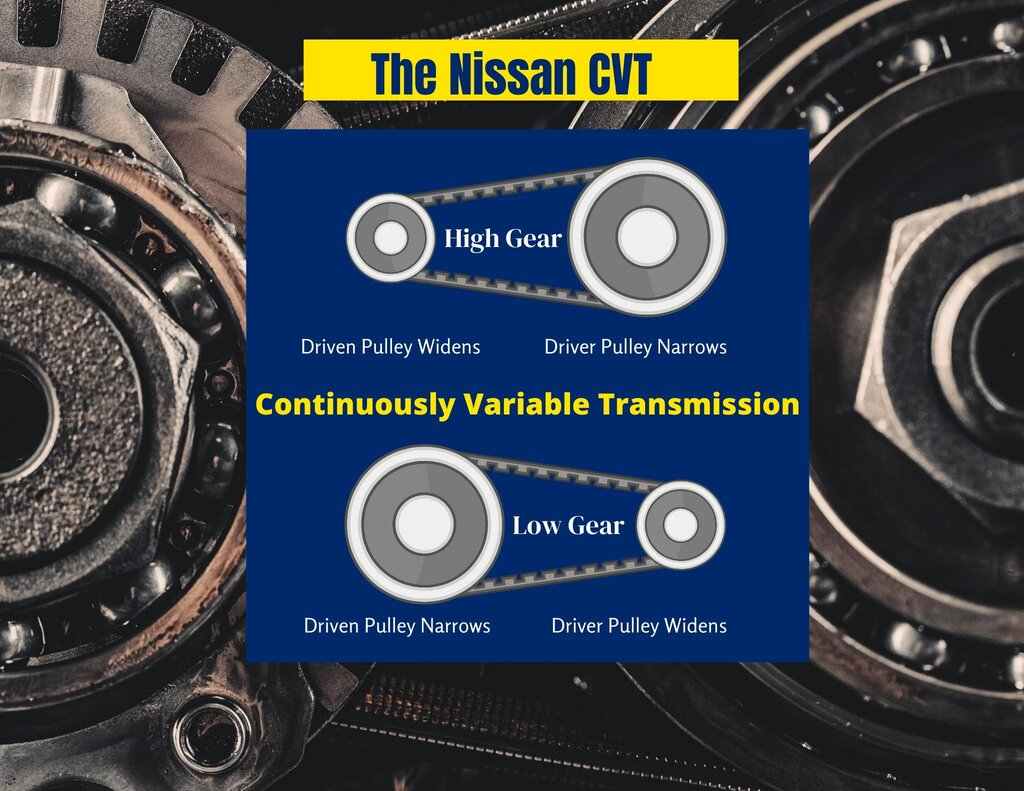
Before we dive into reliability, let's quickly recap what a CVT is and how it differs from a traditional automatic transmission. A CVT uses a belt and pulley system to provide an infinite range of gear ratios, eliminating the fixed gears of a conventional automatic. This allows the engine to stay in its optimal power band, resulting in improved fuel economy and smoother acceleration. However, the design inherently places stress on the belt and pulleys, which can be a source of potential problems.
Nissan has been a major proponent of CVTs, employing them across a wide range of models. However, not all Nissan CVTs are created equal. Variations exist based on vehicle type, engine size, and even model year. Understanding these differences is crucial to assessing reliability.
Key Nissan CVT Variations
Nissan utilizes different CVT models depending on the application. Here's a brief overview:
- Jatco CVT7 (JF015E): Found in smaller, lighter vehicles like the Nissan Versa and Nissan Sentra.
- Jatco CVT8 (JF011E/JF017E): Used in mid-size vehicles like the Nissan Rogue, Nissan Altima, and Nissan Murano. The JF017E is a heavier-duty version.
- Jatco CVT8 Hybrid (JF018E): A hybrid-specific CVT found in vehicles like the Nissan Pathfinder Hybrid.
- Jatco CVT8 W/R (JF022E): Used in larger vehicles like the Nissan Titan and Nissan Armada. Built to handle higher torque outputs.
The engine paired with the CVT also plays a significant role. A smaller engine, like the 1.6L in the Versa, puts less stress on the transmission compared to the 3.5L V6 in the Murano. Newer CVTs, especially those paired with downsized, turbocharged engines, are often engineered with reinforced components and improved cooling systems to address potential issues.
Reliability: The Good, the Bad, and the Nuanced
So, are new Nissan CVTs reliable? The answer isn't a simple yes or no. Here's a breakdown:
The Good (Improvements in Newer Models)
Nissan has made significant improvements to its CVT technology in recent years. These improvements include:
- Strengthened Components: Newer CVTs often feature reinforced belts, pulleys, and bearings to handle increased stress and torque.
- Improved Cooling Systems: Enhanced cooling systems help prevent overheating, a major contributor to CVT failure.
- Refined Software: Updated transmission control unit (TCU) software optimizes shift strategies and reduces strain on the transmission.
- Updated Fluid: Nissan has developed improved CVT fluids designed to provide better lubrication and heat resistance. Using the *correct* fluid is crucial for CVT longevity.
These improvements have demonstrably improved the reliability of newer Nissan CVTs compared to older models. While anecdotal evidence still exists regarding CVT failures, overall, the trend is moving towards greater dependability.
The Bad (Lingering Concerns)
Despite the improvements, some concerns remain:
- Long-Term Durability: While newer CVTs show promise, their long-term reliability (beyond 100,000 miles) is still being evaluated.
- Driving Habits: Aggressive driving, frequent towing, and neglecting maintenance can still lead to premature CVT failure, regardless of the model year.
- Repair Costs: CVT repairs can be expensive, and replacement is often the only option in case of major failure.
- Public Perception: The lingering reputation of older, less reliable Nissan CVTs continues to influence public perception.
Driving Impressions & Real-World Feedback
Driving a Nissan with a CVT is often a smooth and fuel-efficient experience. The lack of traditional gear shifts can make acceleration feel seamless, especially at lower speeds. However, some drivers find the "rubber band" feel of a CVT – where the engine revs high while the car catches up – to be disconcerting.
Here's a table summarizing the pros and cons from a driver's perspective:
| Pros | Cons |
|---|---|
| Smooth acceleration | "Rubber band" feel can be unnerving |
| Excellent fuel economy | Engine drone at high RPMs |
| No shift shocks | Lack of driver engagement |
Online forums and owner reviews paint a mixed picture. Some owners report flawless CVT performance for hundreds of thousands of miles, while others experience problems much sooner. Regular maintenance, particularly fluid changes, is consistently cited as crucial for maintaining CVT health. Ignoring these services is a recipe for disaster.
Spec Table Comparison (Examples)
Here are some example specifications highlighting differences between CVT models:
Jatco CVT7 (JF015E) vs. Jatco CVT8 (JF011E)
| Feature | Jatco CVT7 (JF015E) | Jatco CVT8 (JF011E) |
|---|---|---|
| Typical Applications | Nissan Versa, Nissan Sentra | Nissan Rogue, Nissan Altima |
| Max Torque Capacity | ~110 lb-ft | ~180 lb-ft |
| Gear Ratio Range | ~7.3:1 | ~7.0:1 |
| Key Improvements (Newer Versions) | Strengthened belt, improved valve body | Reinforced pulley system, enhanced cooling |
Jatco CVT8 (JF011E) vs. Jatco CVT8 W/R (JF022E)
| Feature | Jatco CVT8 (JF011E) | Jatco CVT8 W/R (JF022E) |
|---|---|---|
| Typical Applications | Nissan Rogue, Nissan Altima | Nissan Titan, Nissan Armada |
| Max Torque Capacity | ~180 lb-ft | ~400 lb-ft+ |
| Key Improvements | Improved valve body and fluid pump, reduced internal friction | Heavy-duty belt and pulley system, increased cooling capacity, designed for towing |
| Gear Ratio Range | ~7.0:1 | ~6.3:1 |
Mitigating the Risks
If you're considering a new Nissan with a CVT, here are some steps you can take to minimize potential problems:
- Choose the Right Model: Opt for a vehicle where the CVT is appropriately sized for the engine's power output. A smaller engine paired with a CVT generally experiences less stress on the transmission.
- Follow Maintenance Schedules: Adhere strictly to Nissan's recommended CVT fluid change intervals. Using the correct Nissan NS-3 CVT fluid is essential.
- Drive Sensibly: Avoid aggressive acceleration, hard braking, and prolonged high-speed driving.
- Consider an Extended Warranty: An extended warranty can provide peace of mind, especially if you plan to keep the vehicle for a long time.
- Research Specific Models: Look for owner reviews and forum discussions specific to the Nissan model and model year you're considering.
The Verdict: Cautiously Optimistic
New Nissan CVTs appear to be more reliable than their predecessors, thanks to ongoing improvements in design, materials, and software. However, they are not without their potential drawbacks. Proper maintenance and responsible driving habits are crucial for maximizing CVT longevity. Ultimately, the decision of whether or not to purchase a Nissan with a CVT depends on your individual needs, driving style, and risk tolerance.
Before you buy: Test drive the car extensively, paying attention to any unusual noises or vibrations from the transmission. Ask the dealer about the CVT's warranty coverage and recommended maintenance schedule.
And, for those planning on heavily modifying their Nissan, it may be wise to consider other platforms that offer better aftermarket support for traditional transmissions. But, that's a whole other can of worms...
"The CVT's evolution is a testament to Nissan's commitment, but is it enough to fully erase the stigma? Only time will tell."
Now, let's spark some debate! Are CVTs inherently flawed technology, or are they a viable solution for improving fuel efficiency and driveability? Sound off in the comments below!