
Auxiliary Battery For A 2015 Chevy Malibu
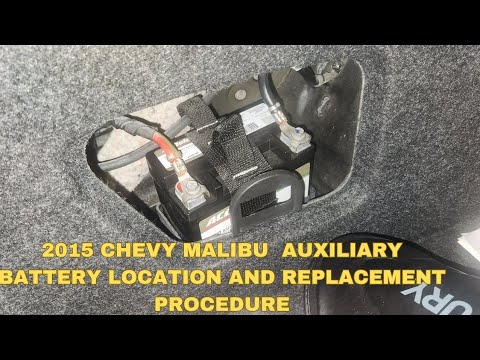
The 2015 Chevrolet Malibu, a mainstay in the mid-size sedan segment, is generally regarded for its reliability and fuel efficiency. However, one area that occasionally raises questions amongst owners and mechanics alike is its electrical system, specifically the presence and function of an auxiliary battery. While not all 2015 Malibus are equipped with one, its presence can significantly impact vehicle operation, especially concerning the Start/Stop system.
Identifying the Auxiliary Battery
The easiest way to determine if a 2015 Malibu has an auxiliary battery is to check for the RPO code KL9, which denotes the Engine Control, Stop/Start System. This system utilizes a secondary, smaller 12-volt battery, typically located in the trunk or under the rear seat, alongside the main starting battery. This auxiliary battery’s primary function is to maintain power to critical vehicle systems, such as the infotainment system, lights, and computer modules, during Auto Stop events. These events happen when the engine shuts off automatically at traffic lights or in stop-and-go traffic to conserve fuel.
Visually, the auxiliary battery is significantly smaller than the main starting battery. It's usually a sealed lead-acid (SLA) or absorbent glass mat (AGM) type, chosen for its deep-cycle capabilities and resistance to vibration. If you find a second battery in the trunk or under the rear seat and your Malibu is equipped with the Start/Stop system, you've located the auxiliary battery.
Function and Importance
The auxiliary battery’s role is critical for a smooth and seamless Start/Stop experience. Without it, the frequent engine restarts would strain the main battery excessively, leading to premature failure. Moreover, the auxiliary battery prevents voltage dips that could disrupt sensitive electronic components during engine restarts. These dips could, in extreme cases, cause the infotainment system to reset or the engine to stumble.
Furthermore, the auxiliary battery helps ensure that essential systems like the power steering and brakes remain functional, even with the engine off. While these systems primarily rely on hydraulic or electrical backups, the auxiliary battery provides an additional layer of security.
Maintenance and Replacement
Like any battery, the auxiliary battery has a limited lifespan, typically ranging from 3 to 5 years depending on usage and environmental conditions. Signs of a failing auxiliary battery include: frequent Start/Stop system malfunctions (e.g., the engine not stopping automatically), warning lights related to the battery or electrical system, and slow engine restarts.
When replacing the auxiliary battery, it's crucial to use a direct replacement that meets the original equipment manufacturer (OEM) specifications. This ensures proper voltage and capacity to support the Start/Stop system. Disconnecting the main battery before working on the auxiliary battery is also vital to prevent electrical shorts or damage to the vehicle's electrical system. Before fully disconnecting the main battery, it's advisable to use a memory saver device to retain radio presets and other customized settings.
The replacement procedure is fairly straightforward, involving disconnecting the battery terminals, removing the battery hold-down, and lifting out the old battery. However, proper tools and safety precautions are essential. Always wear safety glasses and gloves when handling batteries, and dispose of the old battery responsibly at a recycling center.
Troubleshooting Tips
If you're experiencing issues with the Start/Stop system, such as it not functioning properly or displaying error messages, begin by checking the voltage of both the main and auxiliary batteries. A fully charged auxiliary battery should read approximately 12.6 volts. If the voltage is significantly lower, the battery may be failing or not receiving sufficient charge from the vehicle's charging system.
Check all connections to both batteries for corrosion or loose connections. Clean any corroded terminals with a wire brush and ensure that all connections are tight and secure.
Finally, consider having the vehicle's charging system tested by a qualified mechanic. A faulty alternator or voltage regulator could prevent both the main and auxiliary batteries from charging correctly.
Understanding the function and maintenance of the auxiliary battery in a 2015 Chevy Malibu equipped with Start/Stop is crucial for ensuring reliable vehicle operation and preventing unexpected electrical issues. Regular inspection and timely replacement will help keep your Malibu running smoothly for years to come.