
Bank 1 O2 Sensor Upstream Or Downstream
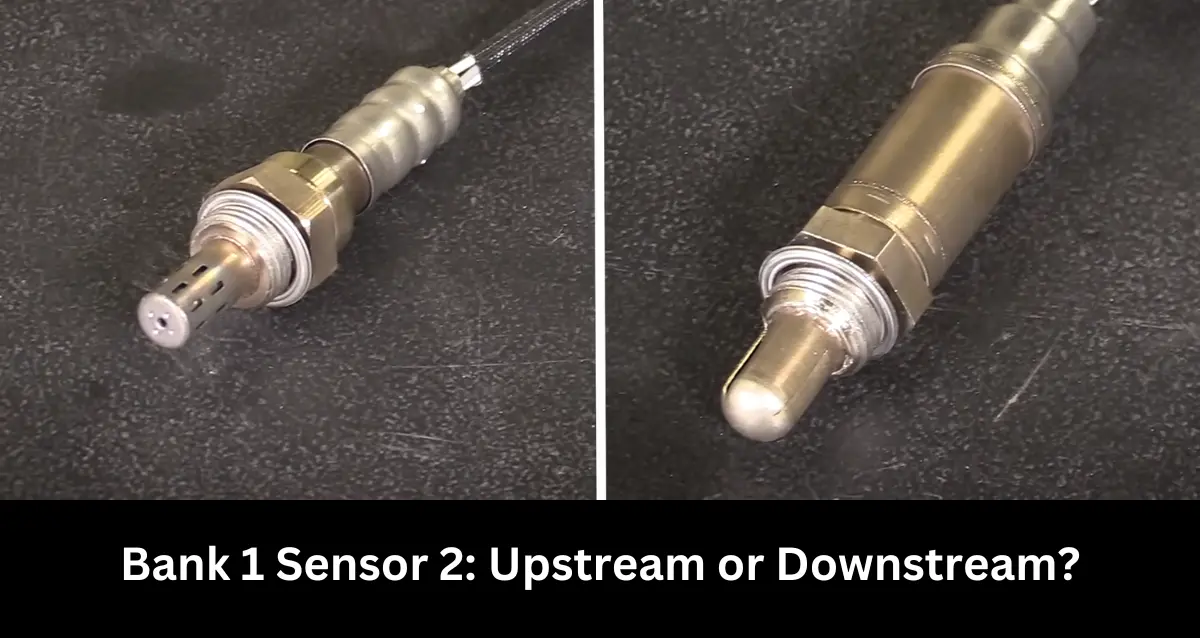
Understanding oxygen (O2) sensors is crucial for any automotive professional. These sensors play a vital role in managing engine efficiency and minimizing harmful emissions. One common point of confusion arises when differentiating between upstream and downstream O2 sensors, particularly in Bank 1. This article delves into the intricacies of Bank 1 O2 sensors, comparing upstream and downstream types, discussing their technical specifications, engineering choices driving their design, real-world performance characteristics, and future trends affecting their development.
Upstream (Pre-Catalytic Converter) O2 Sensors: The Air-Fuel Ratio Guardians
The upstream O2 sensor, also known as the pre-catalytic converter sensor, is positioned before the catalytic converter in the exhaust system. In a V-engine or horizontally opposed engine configuration, "Bank 1" refers to the cylinder bank containing cylinder number 1. The upstream sensor's primary function is to measure the amount of oxygen in the exhaust gas immediately after combustion. This information is sent to the engine control unit (ECU), which uses it to fine-tune the air-fuel mixture. A lean mixture (excess oxygen) will prompt the ECU to increase fuel injection, while a rich mixture (insufficient oxygen) will cause the ECU to reduce fuel injection. Maintaining a stoichiometric air-fuel ratio (around 14.7:1 for gasoline engines) is essential for optimal combustion efficiency and minimizing harmful emissions.
Technical Specifications & Engineering Choices: Upstream O2 sensors are typically wideband or narrowband. Narrowband sensors are older technology, producing a voltage that switches abruptly around the stoichiometric point. They are cheaper but less precise. Wideband sensors, also known as Air-Fuel Ratio (AFR) sensors, provide a continuous output voltage proportional to the air-fuel ratio. They offer significantly better accuracy and responsiveness, allowing the ECU to make more precise adjustments. Zirconia and Titania are common materials used in O2 sensor construction. Zirconia sensors generate their own voltage based on the oxygen concentration difference, while Titania sensors change their resistance. The engineering choice depends on factors like cost, operating temperature range, and desired response time. Most modern vehicles use wideband sensors upstream.
Real-World Performance & Alternatives: A properly functioning upstream O2 sensor is critical for fuel economy and emissions compliance. Failure can result in poor fuel economy, rough idling, and a failed emissions test. Alternatives to standard O2 sensors include aftermarket performance sensors, which often have faster response times. However, these may not always be compatible with the vehicle's ECU and could lead to drivability issues. Choosing a replacement sensor that meets or exceeds the original equipment manufacturer (OEM) specifications is crucial.
Pros: Faster response time, more accurate air-fuel ratio control, direct impact on fuel economy.
Cons: More susceptible to damage from contaminants like oil and coolant, more expensive than downstream sensors in some cases (especially wideband), can be negatively affected by exhaust leaks close to the sensor.
Downstream (Post-Catalytic Converter) O2 Sensors: The Catalyst Efficiency Monitors
The downstream O2 sensor, positioned after the catalytic converter, monitors the efficiency of the catalytic converter. It compares the oxygen levels before and after the converter. A properly functioning catalytic converter should significantly reduce pollutants, including hydrocarbons (HC), carbon monoxide (CO), and nitrogen oxides (NOx). The downstream sensor's signal should be relatively stable compared to the upstream sensor's fluctuating signal. If the downstream sensor's signal starts to mirror the upstream sensor's, it indicates that the catalytic converter is no longer effectively reducing pollutants.
Technical Specifications & Engineering Choices: Downstream O2 sensors are typically narrowband sensors, as their primary function is simply to indicate whether the catalytic converter is working efficiently, not to provide precise air-fuel ratio information. The engineering choices focus on durability and resistance to the high temperatures and corrosive gases present in the exhaust stream. Shielding and robust sensor elements are important design considerations. While some advanced systems may utilize wideband sensors downstream for enhanced diagnostics, the core function remains catalyst monitoring.
Real-World Performance & Alternatives: A faulty downstream O2 sensor will usually trigger a check engine light (CEL) and a diagnostic trouble code (DTC) related to catalytic converter efficiency. It doesn't directly impact fuel economy or engine performance as drastically as a failing upstream sensor. However, ignoring a downstream O2 sensor issue can lead to costly catalytic converter repairs or replacement if the underlying cause isn't addressed. "O2 sensor simulators" are sometimes used as a temporary workaround, but they are not recommended as they mask the underlying problem and can lead to emissions violations.
Pros: Monitors catalytic converter efficiency, relatively simple and inexpensive, durable due to less exposure to raw combustion byproducts.
Cons: Less critical for engine operation (but important for emissions), can trigger false positives due to exhaust leaks or other issues, narrowband sensors provide limited diagnostic information.
Reliability & Maintenance
Both upstream and downstream O2 sensors can fail due to various factors, including contamination, overheating, and physical damage. Regular maintenance, such as inspecting the sensors for damage and ensuring proper exhaust system sealing, can extend their lifespan. Using high-quality fuel and avoiding excessive idling can also help prevent premature failure. When replacing an O2 sensor, always use a sensor that meets or exceeds the OEM specifications and apply anti-seize compound to the threads to prevent future removal issues.
Future Trends
The future of O2 sensor technology is likely to be driven by stricter emissions regulations and the increasing complexity of engine management systems. We can expect to see further advancements in wideband sensor technology, including improved accuracy, faster response times, and more robust designs. There's also a trend towards using more sophisticated diagnostic algorithms to detect subtle O2 sensor degradation and predict potential failures. The integration of O2 sensor data with other vehicle systems, such as on-board diagnostics and cloud-based analytics, will also become more prevalent.
Conclusion
In conclusion, understanding the differences between upstream and downstream O2 sensors in Bank 1 is fundamental for effective automotive diagnostics and repair. The upstream sensor is the primary air-fuel ratio controller, while the downstream sensor monitors catalytic converter performance. By carefully considering their technical specifications, engineering choices, real-world performance characteristics, and potential failure modes, automotive professionals can ensure optimal engine efficiency, minimize emissions, and provide their customers with reliable and cost-effective service. As the automotive industry continues to evolve, staying abreast of the latest O2 sensor technologies and diagnostic techniques will be essential for success.