
Bank 1 Sensor 2 Is Upstream Or Downstream
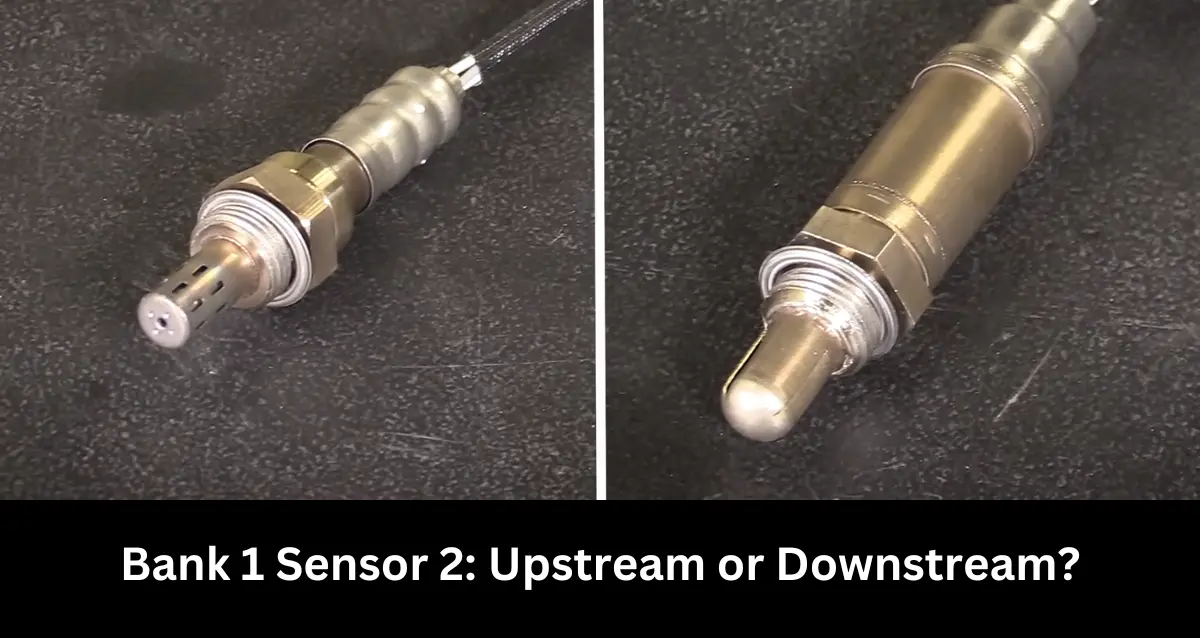
Understanding the intricacies of your car's emission control system can be daunting, but a solid grasp of its components is crucial for both enthusiasts and professionals. One frequently encountered term is "Bank 1 Sensor 2," referring to a specific oxygen sensor (O2 sensor). This article delves into the location of Bank 1 Sensor 2, clarifying whether it's upstream or downstream of the catalytic converter.
The Basics: Oxygen Sensors and Catalytic Converters
Before pinpointing Bank 1 Sensor 2's position, let's review the function of oxygen sensors and catalytic converters. Oxygen sensors monitor the exhaust gas's oxygen content, providing crucial feedback to the engine control unit (ECU). This data enables the ECU to adjust the air-fuel mixture for optimal combustion, minimizing harmful emissions. The catalytic converter, positioned further along the exhaust path, uses chemical reactions to reduce pollutants like hydrocarbons (HC), carbon monoxide (CO), and nitrogen oxides (NOx).
Modern vehicles typically employ multiple oxygen sensors: one or more upstream sensors before the catalytic converter and one or more downstream sensors after it. These sensors work in concert to maintain efficient engine operation and ensure proper catalytic converter function.
Decoding "Bank 1" and "Sensor 2"
The terminology "Bank 1 Sensor 2" provides specific information about the sensor's location. "Bank 1" refers to the side of the engine containing cylinder number 1. On inline engines, there's only one bank, so "Bank 1" is straightforward. However, V-type engines (V6, V8, etc.) have two banks. Identifying which bank is Bank 1 is critical, and your vehicle's repair manual is the definitive resource. Generally, Bank 1 is the side with the first cylinder.
"Sensor 2" indicates the downstream oxygen sensor for that specific bank. Sensor 1 is always the upstream sensor, positioned before the catalytic converter on that bank. Therefore, Bank 1 Sensor 2 is invariably located after the catalytic converter on Bank 1.
Bank 1 Sensor 2: Always Downstream
To reiterate: Bank 1 Sensor 2 is always the downstream oxygen sensor. Its primary role isn't to directly manage the air-fuel mixture. Instead, it monitors the effectiveness of the catalytic converter. The ECU compares the readings from the upstream (Sensor 1) and downstream (Sensor 2) sensors. A properly functioning catalytic converter should significantly reduce the oxygen content in the exhaust gas. Therefore, Sensor 2's reading should be noticeably different from Sensor 1's reading.
If Sensor 2's reading closely mirrors Sensor 1's reading, it signals a potential problem with the catalytic converter's efficiency. This often triggers a check engine light and a diagnostic trouble code (DTC) related to catalytic converter performance (e.g., P0420 - Catalyst System Efficiency Below Threshold Bank 1).
Real-World Examples and Troubleshooting
Consider a scenario: A vehicle owner experiences a check engine light and retrieves a P0420 code. After verifying the oxygen sensors' wiring and connections are intact, the mechanic uses a scan tool to monitor the live data from both the upstream (Bank 1 Sensor 1) and downstream (Bank 1 Sensor 2) oxygen sensors. If the waveforms of both sensors are nearly identical, it indicates that the catalytic converter isn't effectively reducing emissions. The mechanic might then perform further tests on the catalytic converter or recommend its replacement.
Another possible scenario: A faulty Bank 1 Sensor 2 can trigger a check engine light, even if the catalytic converter is functioning correctly. In this case, the sensor itself is providing inaccurate readings. Symptoms might include poor fuel economy or a sluggish engine performance, though these are less common than a catalyst efficiency code.
Conclusion
In summary, understanding the layout of your vehicle's oxygen sensors is key for effective diagnostics and repairs. Remember that Bank 1 Sensor 2 is unequivocally the downstream oxygen sensor located after the catalytic converter on the bank of the engine containing cylinder number 1. This knowledge will empower you to better understand diagnostic trouble codes, interpret sensor data, and troubleshoot potential emission control issues. Always consult your vehicle's repair manual for specific information related to your make and model.