
Catalytic Converter Gets Red Hot
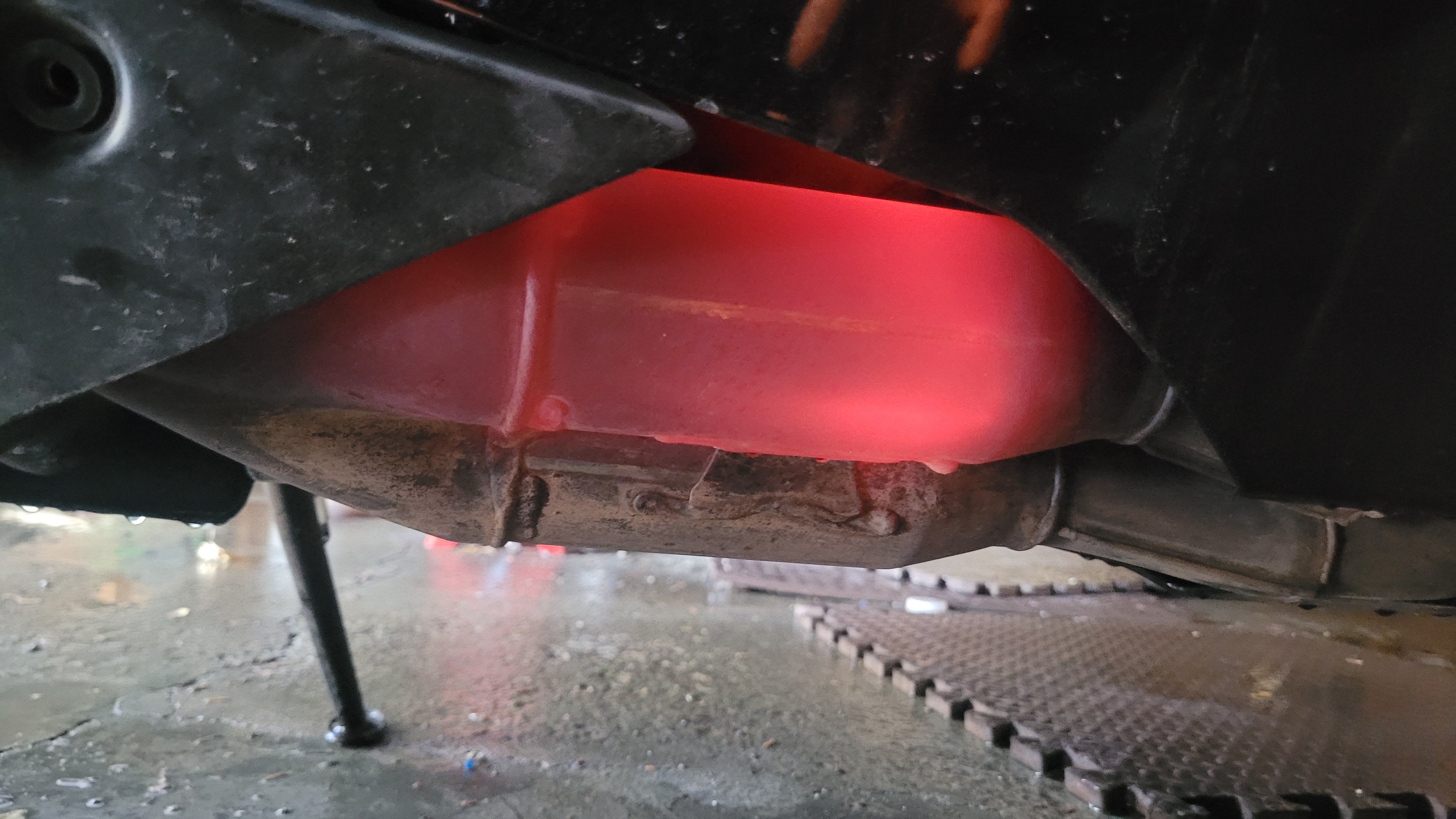
A red-hot catalytic converter is a concerning sight for any vehicle owner, and a crucial diagnostic point for automotive professionals. While catalytic converters operate at high temperatures, a visible red glow indicates excessively high temperatures, often signaling underlying engine or exhaust system problems. Understanding the technical aspects behind this phenomenon, the engineering choices involved, and the potential ramifications is vital for effective diagnosis and repair.
The Role and Function of Catalytic Converters
The catalytic converter is a cornerstone of modern emissions control. Its primary function is to reduce harmful pollutants – hydrocarbons (HC), carbon monoxide (CO), and nitrogen oxides (NOx) – in engine exhaust gases into less harmful substances: carbon dioxide (CO2), water (H2O), and nitrogen (N2). This chemical conversion happens through oxidation and reduction reactions facilitated by precious metal catalysts, typically platinum, palladium, and rhodium, coated onto a ceramic or metallic substrate inside the converter.
The ideal operating temperature window for optimal catalytic converter efficiency is between 400°C (752°F) and 800°C (1472°F). Within this range, the catalyst materials are most effective at promoting the chemical reactions. However, temperatures exceeding this range, particularly reaching red-hot levels (typically above 800-900°C), indicate a problem.
Causes of a Red-Hot Catalytic Converter
Several factors can lead to a catalytic converter overheating. These can be broadly categorized into:
1. Excessive Unburned Fuel
The most common cause of a red-hot catalytic converter is an overabundance of unburned fuel entering the exhaust system. This excess fuel ignites within the converter, causing a significant temperature spike. Potential causes for this condition include:
- Misfires: A misfiring cylinder dumps raw fuel into the exhaust. This can be due to faulty spark plugs, ignition coils, fuel injectors, or even compression issues.
- Rich Air-Fuel Mixture: A persistently rich air-fuel mixture, caused by a malfunctioning oxygen sensor, fuel pressure regulator, or a leaking fuel injector, can also flood the converter with unburned hydrocarbons.
- Vacuum Leaks: While seemingly counterintuitive, vacuum leaks can lean out the mixture in some cylinders while enriching others, leading to localized misfires and fuel dumping.
- EGR System Malfunctions: A faulty Exhaust Gas Recirculation (EGR) system, especially if stuck closed, can increase combustion temperatures and NOx emissions, placing greater strain on the converter.
2. Restricted Exhaust Flow
A clogged or restricted exhaust system can also cause the catalytic converter to overheat. Backpressure buildup inhibits proper exhaust flow, increasing the amount of time exhaust gases spend in the converter, thus raising its temperature. Common culprits include:
- Clogged Muffler or Resonator: Internal damage or debris accumulation can restrict exhaust flow.
- Collapsed Exhaust Pipe: Physical damage to the exhaust pipe can create a significant obstruction.
- Failed Catalytic Converter Substrate: A partially melted or broken-down converter substrate itself can restrict exhaust flow.
3. Catalytic Converter Failure
In some cases, the catalytic converter itself is the source of the problem. Over time, the catalyst materials can degrade or become poisoned by contaminants (e.g., lead, silicon). This reduces the converter's efficiency, requiring it to work harder to achieve the same level of emissions reduction. Furthermore, internal damage can create hot spots.
4. Timing Issues
Incorrect ignition timing can cause incomplete combustion and lead to unburned fuel entering the exhaust, similar to misfires. A timing belt or chain that has jumped a tooth can significantly impact engine performance and contribute to converter overheating.
Diagnosis and Troubleshooting
Diagnosing a red-hot catalytic converter requires a systematic approach:
- Visual Inspection: Start by visually inspecting the exhaust system for any obvious damage, leaks, or restrictions.
- OBD-II Scan: Retrieve diagnostic trouble codes (DTCs) using an OBD-II scanner. These codes can provide valuable clues about the underlying issue (e.g., misfire codes, oxygen sensor codes, fuel trim codes).
- Live Data Analysis: Monitor live engine data, such as oxygen sensor readings, fuel trims, engine temperature, and mass airflow (MAF) sensor readings. This can help identify rich or lean conditions, misfires, or other anomalies.
- Exhaust Backpressure Test: Use a backpressure gauge to measure the exhaust backpressure. Excessive backpressure indicates a restriction in the exhaust system.
- Cylinder Balance Test: Perform a cylinder balance test to identify misfiring cylinders.
- Fuel Injector Testing: Check the fuel injectors for proper operation and leakage.
- Compression Test: A compression test can reveal cylinder compression issues, which can cause misfires.
Reliability Aspects and Maintenance Tips
Catalytic converters are generally reliable components, but their lifespan can be significantly affected by maintenance practices and driving conditions. To prolong the life of a catalytic converter:
- Regular Maintenance: Follow the manufacturer's recommended maintenance schedule, including spark plug replacement, air filter replacement, and oil changes.
- Address Engine Problems Promptly: Address any engine problems, such as misfires or fuel leaks, as soon as they are detected.
- Use High-Quality Fuel: Avoid using fuels with high levels of contaminants, such as lead or silicon.
- Avoid Short Trips: Short trips can prevent the catalytic converter from reaching its optimal operating temperature, reducing its efficiency and potentially leading to premature failure.
Alternatives to Traditional Catalytic Converters
While traditional three-way catalytic converters are the dominant technology, ongoing research and development are exploring alternative solutions:
- Heated Catalytic Converters: These converters use an electric heating element to quickly reach operating temperature, reducing cold-start emissions. Pros: Reduced cold-start emissions. Cons: Increased energy consumption, higher cost.
- Lean NOx Traps (LNTs): Used primarily in diesel engines, LNTs trap NOx under lean conditions and periodically regenerate by injecting fuel to create a rich environment. Pros: Effective NOx reduction in lean-burn engines. Cons: Requires periodic regeneration, sulfur poisoning susceptibility.
- Selective Catalytic Reduction (SCR): SCR systems inject a reductant (e.g., urea) into the exhaust stream to convert NOx into nitrogen and water. Pros: Highly effective NOx reduction. Cons: Requires a separate reductant tank, more complex system.
Pros and Cons of Catalytic Converters:
Pros:
- Effective reduction of harmful emissions (HC, CO, NOx).
- Relatively simple and robust design.
- Widely available and cost-effective.
Cons:
- Can be damaged by contaminants and overheating.
- Contributes to backpressure in the exhaust system.
- Contains precious metals, making them a target for theft.
Future Trends
The future of catalytic converter technology is likely to be driven by increasingly stringent emissions regulations and the growing adoption of electric vehicles (EVs). Key trends include:
- Improved Catalyst Materials: Research is ongoing to develop more efficient and durable catalyst materials that can operate at lower temperatures and resist poisoning.
- Integrated Emission Control Systems: Future emission control systems may integrate multiple technologies, such as catalytic converters, particulate filters, and NOx traps, to achieve optimal emissions reduction.
- Advanced Monitoring and Control: Real-time monitoring and control systems will be used to optimize catalytic converter performance and detect potential problems early.
- Electrically Heated Catalysts: Increased adoption of electrically heated catalysts to minimize cold start emissions in hybrid and gasoline vehicles.
The Automotive Industry: A Forward-Looking Note
The automotive industry is undergoing a rapid transformation, driven by the shift towards electric vehicles and the increasing focus on sustainability. While catalytic converters will remain an important technology for internal combustion engine vehicles for the foreseeable future, their role will likely diminish as EVs gain market share. The industry is constantly evolving, and automotive professionals must stay abreast of the latest technological advancements to remain competitive. Adapting to new technologies, such as electric powertrains, advanced driver-assistance systems (ADAS), and connected car technologies, is crucial for long-term success. The knowledge and skills required to diagnose and repair vehicles are also changing, requiring technicians to be proficient in both mechanical and electrical systems.
Ultimately, understanding the intricacies of systems like the catalytic converter, and the conditions that lead to its failure, is a vital skill for automotive professionals navigating this evolving landscape. As we move toward a more sustainable future, the importance of efficient and effective emissions control will only continue to grow.