
Cómo Se Dice Sensor De Cigüeñal En Inglés
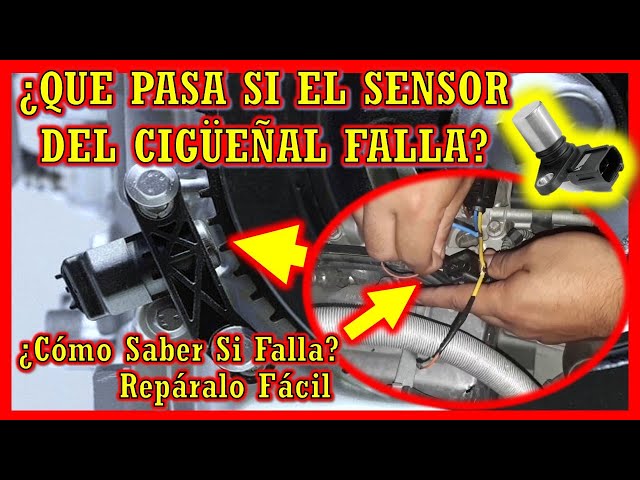
For those in the automotive trade who are bilingual or frequently work on vehicles originating from or destined for Spanish-speaking markets, understanding the translation of automotive terms is crucial. One common term that arises frequently is "Sensor de Cigüeñal." In English, this translates directly to the Crankshaft Position Sensor, often abbreviated as CKP sensor. This sensor is a critical component in modern internal combustion engines, responsible for providing vital information to the engine control unit (ECU) regarding the position and rotational speed of the crankshaft.
Understanding the Crankshaft Position Sensor
The CKP sensor plays a pivotal role in engine management. Its primary function is to monitor the position of the crankshaft as it rotates. This information is used by the ECU to determine several critical parameters: ignition timing, fuel injection timing, and engine speed (RPM). Without accurate input from the Crankshaft Position Sensor, the engine will either fail to start, run erratically, or experience significant performance issues. The ECU relies on the CKP signal to synchronize the firing of the spark plugs and the opening/closing of the fuel injectors with the position of the pistons. In essence, the CKP sensor is the heartbeat of the engine's control system.
Types of Crankshaft Position Sensors
There are primarily two types of Crankshaft Position Sensors used in automotive applications: inductive sensors (also known as magnetic reluctance sensors) and Hall effect sensors. Understanding the differences between these two types is essential for proper diagnosis and repair.
- Inductive Sensors: These sensors utilize a coil of wire and a permanent magnet. As the crankshaft rotates, teeth on a reluctor wheel (also called a tone ring) pass by the sensor. This movement changes the magnetic field, inducing a voltage signal in the coil. The frequency and amplitude of this signal are directly proportional to the crankshaft's speed. Inductive sensors are generally robust but can be susceptible to electromagnetic interference (EMI).
- Hall Effect Sensors: Hall effect sensors use a semiconductor material that produces a voltage when exposed to a magnetic field. A rotating reluctor wheel with windows or teeth interrupts the magnetic field, creating a digital signal (on/off) that the ECU interprets as the crankshaft's position. Hall effect sensors are less susceptible to EMI and can provide a more precise signal at low speeds, making them ideal for applications requiring accurate crankshaft position information at startup.
Troubleshooting Crankshaft Position Sensor Issues
A failing or faulty Crankshaft Position Sensor can manifest in various symptoms. Common indicators include:
- Engine stalling
- Difficulty starting the engine
- Rough idling
- Reduced engine power
- Check engine light (CEL) illumination with codes related to crankshaft position
When diagnosing a potential CKP sensor issue, a systematic approach is crucial. Begin by visually inspecting the sensor and its wiring for any signs of damage, such as frayed wires, corrosion, or oil contamination. Next, use a multimeter to check the sensor's resistance and voltage output. Compare these readings to the manufacturer's specifications. If the sensor's output is erratic or outside the specified range, it may need replacement. An oscilloscope can also be used to visualize the sensor's waveform, providing a more detailed analysis of its performance. Remember that a faulty Crankshaft Position Sensor can sometimes be misdiagnosed as other engine-related problems, so thorough testing is essential.
Replacing the Crankshaft Position Sensor
Replacing a Crankshaft Position Sensor is typically a straightforward procedure, but it's crucial to follow the manufacturer's instructions carefully. Before starting, disconnect the negative battery terminal to prevent electrical shorts. Locate the sensor, usually mounted near the crankshaft pulley or flywheel housing. Disconnect the electrical connector and remove the mounting bolts. Install the new sensor, ensuring it is properly seated and torqued to the specified value. Reconnect the electrical connector and the negative battery terminal. After replacement, it may be necessary to clear any diagnostic trouble codes (DTCs) and perform a crankshaft position sensor relearn procedure, depending on the vehicle's make and model. A crankshaft position sensor relearn ensures that the ECU accurately recognizes the new sensor's signal.
Conclusion
In conclusion, "Sensor de Cigüeñal" in English is Crankshaft Position Sensor, or CKP sensor. Understanding its function, types, troubleshooting, and replacement procedures is essential for automotive professionals dealing with engine performance and diagnostics. Whether you are a seasoned mechanic or a budding automotive enthusiast, a solid grasp of the Crankshaft Position Sensor's role is vital for maintaining and repairing modern vehicles effectively.