
Does Air Conditioning Use Gas In Your Car
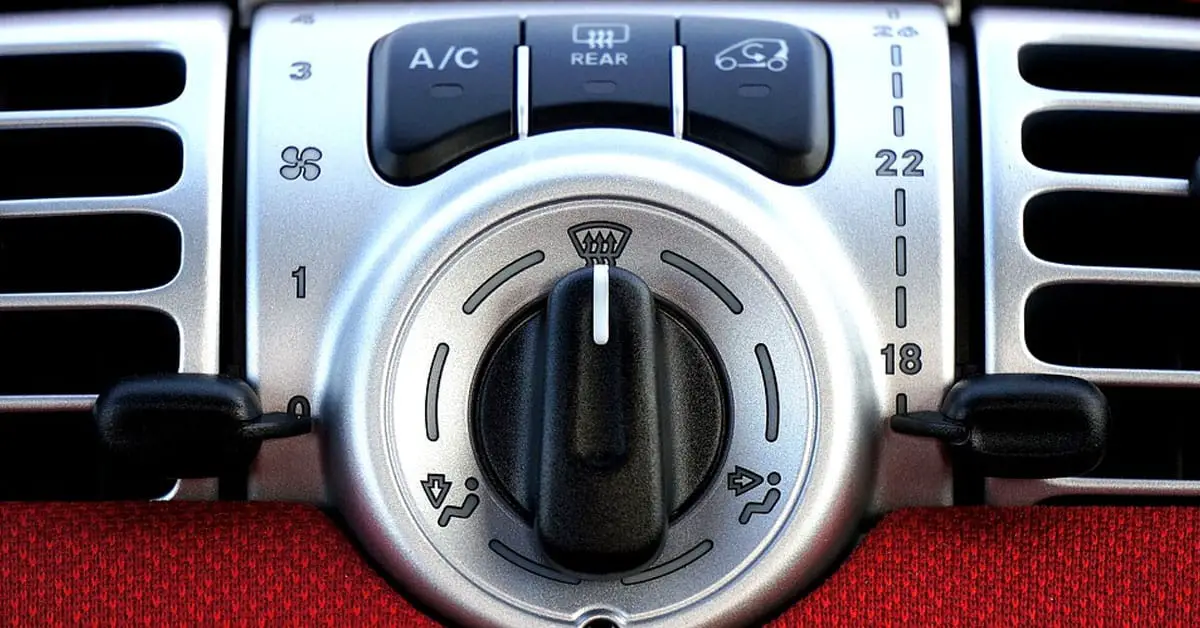
The age-old question that plagues every fuel-conscious driver, especially as summer's heat intensifies: Does blasting the AC really guzzle more gas? The short answer is a resounding yes. But the devil, as always, is in the details. It's not a simple on/off switch. The impact of your air conditioning system on fuel economy varies wildly depending on your car, engine, driving style, and even the type of refrigerant used. Let's dive under the hood (figuratively, of course) and explore the nuances.
How AC Systems Steal Your Horses (and Your MPG)
The core principle is straightforward: your car's air conditioning compressor is driven by the engine. This compressor is responsible for circulating refrigerant, which absorbs heat from inside the cabin and releases it outside. The process requires energy, and that energy ultimately comes from burning fuel. The more you demand from the AC (cranking it up to "arctic blast" levels), the more the compressor works, and the more fuel is consumed.
Engine Size and AC Impact: A Tale of Two Cars
The effect of AC on fuel economy is significantly more pronounced in smaller-engined vehicles. Think about it: a massive V8 might barely notice the tiny bit of extra drag from the AC compressor, whereas a small, fuel-efficient four-cylinder engine will struggle more visibly. Here's a comparison:
| Vehicle | Engine | EPA Combined MPG (AC Off) | Estimated MPG Loss (AC On) | Percentage Decrease |
|---|---|---|---|---|
| Honda Civic | 1.5L Turbocharged I4 | 42 mpg | 37 mpg | ~12% |
| Ford Mustang GT | 5.0L V8 | 19 mpg | 18 mpg | ~5% |
As you can see, the Civic experiences a significantly larger percentage drop in fuel economy compared to the Mustang. The larger engine has more power in reserve to compensate for the AC's drain.
Technology to the Rescue? (Or Not?)
Modern cars are equipped with features designed to mitigate the AC's impact on fuel economy. Some examples include:
- Variable Displacement Compressors: These compressors can adjust their output based on cooling demand, rather than running at full blast all the time. This helps to reduce energy consumption when maximum cooling isn't required.
- Eco Modes: Many cars offer an "Eco" mode that limits engine power and adjusts AC settings to prioritize fuel efficiency. While effective, this often results in reduced performance and less aggressive AC cooling.
- Start-Stop Systems: These systems automatically shut off the engine when the car is idling, such as at a stoplight. While the AC compressor stops running when the engine is off, some systems include an auxiliary electric AC compressor that maintains cooling for a short period.
However, even with these advancements, the AC still takes a toll. Let's consider some pros and cons of using AC:
- Pros:
- Increased driver comfort and alertness.
- Reduced window fogging, improving visibility.
- Potentially better fuel economy at highway speeds compared to driving with windows down (due to reduced aerodynamic drag).
- Cons:
- Reduced fuel economy, especially at lower speeds.
- Slightly reduced engine performance.
- Potential increase in emissions.
Real-World Driving Impressions: The Sweat Test
In real-world driving, the impact of AC can be subtle or dramatic. On a hot summer day in city traffic, expect to see a noticeable dip in your fuel economy. Short trips with frequent stops will amplify the effect, as the compressor constantly cycles on and off. On the highway, the impact is less pronounced, especially if you keep your windows closed. Some tests have even shown that at higher speeds, using AC can be more fuel-efficient than driving with the windows down, due to the increased aerodynamic drag of open windows.
I recently tested this in my old 1998 BMW Z3 with a 2.8L inline-six. With the AC blasting during stop-and-go traffic, I saw my MPG drop from a respectable 24 to a measly 19. Ouch! However, on a long highway cruise, the difference was negligible, maybe 1 or 2 MPG.
The Refrigerant Factor: A Cold Calculation
The type of refrigerant used in your AC system also plays a role. Older vehicles often use R-134a refrigerant, while newer vehicles are transitioning to R-1234yf, which has a lower global warming potential. While R-1234yf is more environmentally friendly, it can be slightly less efficient, potentially requiring the compressor to work harder. The difference, however, is usually minimal.
Conclusion: To AC or Not to AC?
The decision of whether to use AC or not is ultimately a trade-off between comfort and fuel economy. If you're hyper-sensitive to fuel consumption, you can certainly minimize AC usage. However, for most drivers, the comfort and safety benefits of AC outweigh the relatively small decrease in fuel economy. Keep your car properly maintained, avoid excessively low temperatures, and consider using "Eco" mode when appropriate. And remember, a sweaty driver is a distracted driver!
Now, for the controversial question: Is it ever acceptable to drive with the AC on *and* the windows down? Discuss!