
Does The Air Conditioner Use Gas In A Car
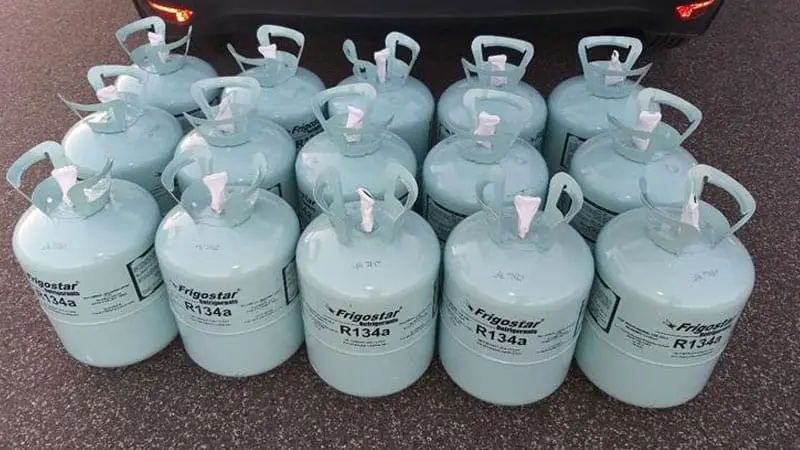
Let's tackle a common question that often pops up in automotive discussions: Does your car's air conditioner use gas? The short answer is: No, it doesn't directly burn gasoline to produce cold air. However, the relationship is a bit more nuanced than a simple yes or no. While your AC system runs on electricity, it ultimately impacts your fuel economy. Let's dive into the details to understand how.
The Car's AC System: A Closed-Loop Refrigeration Cycle
At its core, your car's AC system is a closed-loop refrigeration cycle. This means a refrigerant, a special fluid with specific thermodynamic properties, circulates continuously within the system, absorbing and releasing heat. It's similar in principle to your home refrigerator, just adapted for automotive use.
Components of the System
Here are the key components and their roles:
- Compressor: This is the heart of the system. Driven by the engine's serpentine belt (also called a drive belt or accessory belt), the compressor pressurizes the refrigerant. Compressing the refrigerant raises its temperature significantly.
- Condenser: Located at the front of the car (often near the radiator), the condenser dissipates the heat from the high-pressure, hot refrigerant. Think of it like a radiator for the refrigerant. As the refrigerant cools, it changes from a high-pressure gas to a high-pressure liquid.
- Receiver-Drier (or Accumulator): This component acts as a filter, removing moisture and contaminants from the refrigerant. It also provides a reservoir for liquid refrigerant. The accumulator is typically used in systems with an orifice tube, while the receiver-drier is used with a thermal expansion valve (TXV). The choice depends on the AC system design.
- Expansion Valve (or Orifice Tube): This component creates a pressure drop, causing the high-pressure liquid refrigerant to rapidly expand into a low-pressure, cold mist. The expansion valve precisely meters the amount of refrigerant entering the evaporator, while the orifice tube provides a fixed restriction.
- Evaporator: Located inside the passenger compartment (usually behind the dashboard), the evaporator absorbs heat from the cabin air. As the low-pressure, cold refrigerant absorbs heat, it changes from a liquid to a low-pressure gas, cooling the air blowing across it. The cooled air is then blown into the cabin through the vents.
After passing through the evaporator, the low-pressure gas refrigerant returns to the compressor, and the cycle repeats.
The Electrical Connection: Powering the Compressor
While the refrigerant is the working fluid, the key to making the system work is the compressor. The compressor is driven by the engine via the serpentine belt. When you turn on your AC, the AC clutch engages. This is an electromagnetic clutch that connects the compressor pulley (which is always spinning with the engine) to the compressor shaft. When engaged, the engine's power is transferred to the compressor, driving the refrigerant cycle.
The electrical system plays a vital role in engaging the AC clutch. A signal from the AC control system activates a relay, which energizes the electromagnetic clutch. This is why you might notice a slight drop in engine RPMs when you first turn on the AC – the engine is now working harder to drive the compressor.
Fuel Economy Impact: The Indirect Cost of Cool Air
Here's where the connection to fuel economy comes in. The compressor requires power, and that power ultimately comes from the engine. The engine needs to burn more fuel to produce the extra power needed to drive the compressor. This translates to a decrease in fuel efficiency when the AC is running.
The exact impact on fuel economy varies depending on several factors, including:
- Vehicle size and engine size: Smaller engines will generally see a larger percentage decrease in fuel economy.
- AC system efficiency: Newer, more efficient AC systems are designed to minimize the power draw on the engine.
- Driving conditions: Stop-and-go traffic puts more strain on the AC system compared to highway driving.
- Ambient temperature: The hotter the outside temperature, the harder the AC system has to work, increasing the load on the engine.
- Your driving habits: Aggressive acceleration and braking will exacerbate the fuel economy impact.
Studies have shown that running the AC can decrease fuel economy by anywhere from 5% to 25% or even more in extreme conditions. It's important to understand that this isn't a fixed number; it fluctuates based on the above factors.
Troubleshooting and Maintenance
Maintaining your AC system is crucial not only for keeping you cool but also for optimizing fuel economy. Here are a few tips:
- Refrigerant levels: Low refrigerant levels can make the compressor work harder, reducing efficiency and potentially damaging the compressor. Have your refrigerant levels checked regularly by a qualified technician.
- Condenser cleanliness: Ensure the condenser is free of debris, such as leaves and bugs, which can restrict airflow and reduce cooling efficiency.
- Belt condition: Inspect the serpentine belt for cracks or wear. A worn belt can slip, reducing the compressor's effectiveness.
- Cabin air filter: A clogged cabin air filter restricts airflow to the evaporator, reducing cooling efficiency. Replace it regularly according to the manufacturer's recommendations.
- AC system leaks: Address any refrigerant leaks promptly. Leaks not only reduce cooling performance but also release harmful greenhouse gases into the atmosphere.
Upgrades and Modifications
While you can't fundamentally change the principle of operation, there are some upgrades you can consider to improve AC performance and potentially reduce the fuel economy impact:
- Electric AC Compressors: Some aftermarket electric AC compressors are available, allowing you to run the AC without the engine. These are often used in electric vehicle conversions but could be adapted to certain gasoline-powered vehicles with the addition of a robust electrical system. This completely decouples the AC load from the engine.
- Improved Condenser Fans: Replacing the stock condenser fan with a more powerful unit can improve cooling efficiency, especially in stop-and-go traffic.
- Tinted Windows: Reducing the amount of solar heat entering the cabin can significantly reduce the AC load.
In conclusion, while your car's AC doesn't directly use gasoline as a fuel source, it does indirectly impact your fuel economy by placing a load on the engine. Understanding how the system works and performing regular maintenance can help you keep your cool without breaking the bank at the gas pump.