
Electric Power Washer Vs Gas Power Washer
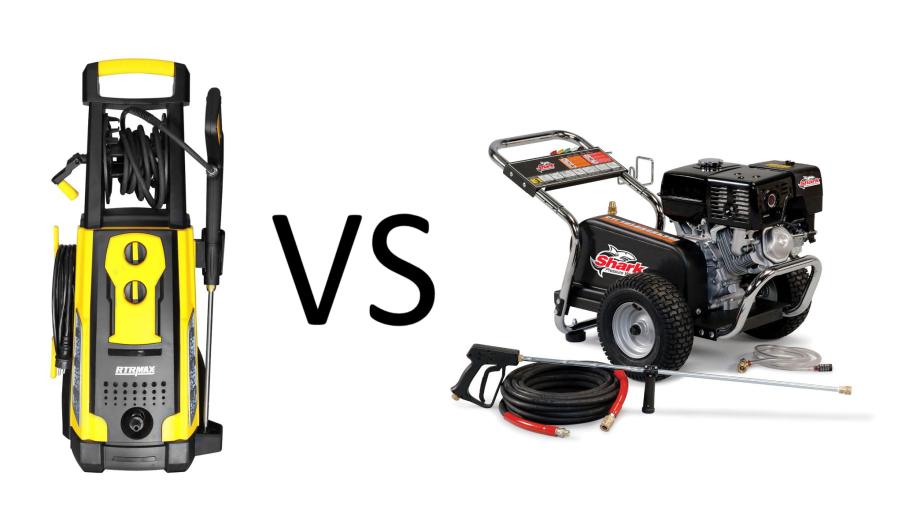
The satisfying hiss of a power washer cutting through grime is a common sound on weekends across the country. But behind that clean surface lies a choice: electric or gas? While both aim to deliver pressurized water for cleaning, the technologies powering them, and consequently their performance characteristics, differ significantly. Understanding these differences is crucial for selecting the right tool for the job.
The Core Technologies: Engines vs. Motors
The fundamental difference lies in the power source. A gas power washer, unsurprisingly, relies on a small internal combustion engine – typically a four-stroke engine similar to those found in lawnmowers. An electric power washer, on the other hand, uses an electric motor to drive the pump.
Gas Engine Operation
The operation of a gas engine is relatively straightforward:
Intake: The piston moves down, drawing in a mixture of air and fuel into the cylinder.
Compression: The piston moves up, compressing the air-fuel mixture, increasing its temperature.
Combustion: A spark plug ignites the compressed mixture, creating a rapid expansion that forces the piston down.
Exhaust: The piston moves up, pushing the exhaust gases out of the cylinder.
This reciprocating motion of the piston is converted into rotary motion via a crankshaft, which then drives the pump.
Electric Motor Operation
Electric motors convert electrical energy into mechanical energy. While different types of motors exist, most electric power washers utilize either a universal motor (found in cheaper models) or an induction motor (more common in higher-end units). Let's focus on induction motors for their robust and relatively maintenance-free design.
Induction motors work on the principle of electromagnetic induction. A stationary stator winding creates a rotating magnetic field. This rotating field induces a current in the rotor, which is a rotating assembly of conductive bars or windings. The interaction between the stator's rotating magnetic field and the induced current in the rotor creates a torque, causing the rotor to spin and drive the pump.
The Pump: The Heart of the Pressure Washer
Regardless of whether powered by a gas engine or an electric motor, the pump is responsible for generating the high-pressure water stream. Most power washers use a positive displacement pump, meaning that they displace a fixed volume of water with each cycle. Two common types are:
Axial Cam Pumps
These are more common in consumer-grade pressure washers, both electric and gas. They use a rotating swashplate (also known as an axial cam) to drive pistons that draw water in and force it out under pressure. Axial cam pumps are generally more compact and less expensive to manufacture but tend to have a shorter lifespan compared to wobble plate pumps.
Wobble Plate Pumps
Wobble plate pumps use a wobbling plate (hence the name) to drive pistons. This design tends to be more robust and provides better efficiency and longer lifespan compared to axial cam pumps. They are typically found in higher-end gas and electric power washers.
Performance Metrics: PSI and GPM
The effectiveness of a power washer is primarily determined by two key performance metrics:
- PSI (Pounds per Square Inch): This measures the pressure of the water stream. Higher PSI translates to more force at the cleaning surface, allowing for the removal of more stubborn dirt and grime.
- GPM (Gallons per Minute): This measures the volume of water delivered by the washer. Higher GPM allows you to rinse away the loosened dirt and grime more quickly, covering a larger area in less time.
The cleaning power of a pressure washer is often expressed as Cleaning Units (CU), calculated as PSI x GPM. This provides a single number to compare the overall performance of different models.
Advantages and Disadvantages
Gas Power Washers
Advantages:
- Higher Power: Generally, gas power washers offer significantly higher PSI and GPM compared to their electric counterparts. This makes them suitable for demanding tasks like cleaning large surfaces, removing stubborn stains, and preparing surfaces for painting.
- Portability: Gas-powered units are not tethered to an electrical outlet, providing greater freedom of movement and allowing them to be used in remote locations.
- Durability: With proper maintenance, gas engines can last for many years.
Disadvantages:
- Maintenance: Gas engines require regular maintenance, including oil changes, spark plug replacement, and air filter cleaning.
- Noise: Gas power washers are significantly louder than electric models.
- Emissions: Gas engines produce exhaust fumes, making them less environmentally friendly and unsuitable for indoor use.
- Starting: Starting a gas engine can sometimes be difficult, especially after periods of inactivity.
- Cost: Gas power washers are generally more expensive than electric models.
Electric Power Washers
Advantages:
- Ease of Use: Electric power washers are simple to operate, typically requiring only plugging them in and turning them on.
- Quiet Operation: Electric motors are significantly quieter than gas engines, making them more pleasant to use in residential areas.
- Low Maintenance: Electric motors require minimal maintenance compared to gas engines.
- Environmentally Friendly: Electric power washers produce no emissions, making them a cleaner option.
- Cost: Electric power washers are generally less expensive than gas models.
Disadvantages:
- Lower Power: Electric power washers typically offer lower PSI and GPM compared to gas models, limiting their suitability for heavy-duty tasks.
- Limited Portability: Electric power washers are tethered to an electrical outlet, restricting their range of operation.
- Dependence on Power Source: They require a readily available and reliable electrical outlet, which may not be available in all locations.
- Potential for Overheating: Some electric motors can overheat if used continuously for extended periods.
Choosing the Right Tool
The choice between an electric and gas power washer depends on your specific needs and priorities. Consider the following:
- Frequency of Use: If you plan to use a power washer infrequently for light-duty tasks, an electric model is likely sufficient.
- Type of Cleaning: For demanding tasks like cleaning large driveways, removing stubborn paint, or washing siding, a gas power washer is generally recommended.
- Budget: Electric power washers are typically more affordable upfront, but gas models may offer better long-term value for heavy users.
- Environmental Concerns: If you are concerned about emissions and noise pollution, an electric power washer is the better choice.
- Portability: If you need to use the power washer in remote locations without access to electricity, a gas model is essential.
Ultimately, understanding the fundamental differences in technology and performance between electric and gas power washers will empower you to make an informed decision and select the ideal tool for your cleaning needs.