
Foam Cannon With Pressure Washer
Unleashing the Power of Foam: A Deep Dive into Foam Cannons and Pressure Washers
For automotive enthusiasts and detailing professionals alike, achieving a showroom-worthy finish is the ultimate goal. While elbow grease and quality products are essential, a powerful combination of a foam cannon and a pressure washer can significantly streamline the process and elevate the results. Let's explore the intricacies of this dynamic duo, delving into their mechanics, benefits, and best practices.
Understanding the Foam Cannon
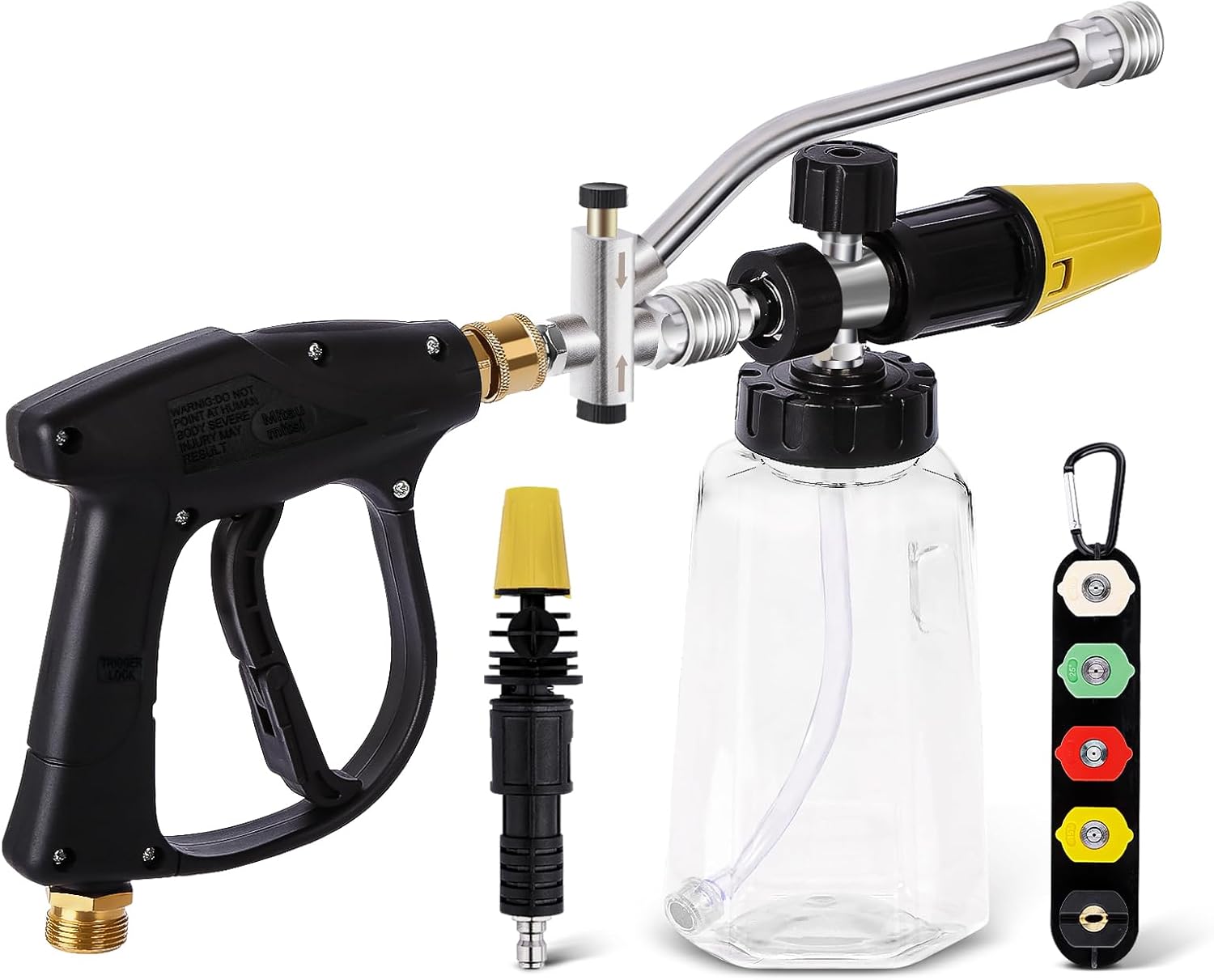
At its core, a foam cannon is a specialized nozzle attachment for a pressure washer designed to generate thick, clinging foam from a mixture of soap and water. Unlike traditional pressure washer nozzles that deliver a concentrated stream of water, foam cannons utilize a venturi effect to draw soap from a reservoir and mix it with the high-pressure water stream and air. This creates a voluminous, stable foam that blankets the vehicle's surface.
Key components of a foam cannon include:
- Nozzle/Orifice: This controls the spray pattern and foam thickness. Adjustable nozzles allow you to switch between a wide fan pattern and a concentrated stream.
- Soap Reservoir: A container holding the concentrated soap solution. Capacity varies between models.
- Mixing Valve/Dial: Allows you to adjust the soap-to-water ratio, influencing foam density.
- Intake Tube: Draws the soap solution from the reservoir into the mixing chamber.
- Adapter: Connects the foam cannon to the pressure washer wand. Ensure compatibility with your pressure washer's quick-connect system.
The Role of the Pressure Washer
The pressure washer provides the necessary water pressure to drive the foam cannon's operation. Different pressure washers deliver varying levels of PSI (pounds per square inch) and GPM (gallons per minute). A higher PSI generally translates to a more powerful spray, while a higher GPM provides greater rinsing capability.
For optimal foam cannon performance, a pressure washer with the following specifications is generally recommended:
- PSI: 1600-3000 PSI. Lower PSI may produce weaker foam, while excessively high PSI can damage certain vehicle surfaces.
- GPM: 1.4-2.0 GPM. This ensures adequate water flow to generate a sufficient volume of foam.
Electric pressure washers are often sufficient for home use, offering convenience and portability. Gas-powered pressure washers provide greater power and are better suited for heavy-duty applications or professional detailing environments.
The Benefits of Using a Foam Cannon
Employing a foam cannon in your washing routine offers several advantages over traditional methods:
- Enhanced Cleaning Power: The thick foam clings to the vehicle's surface, allowing the soap to dwell longer and effectively loosen dirt, grime, and contaminants.
- Reduced Swirl Marks: By pre-soaking the vehicle with foam, you minimize the risk of dragging abrasive particles across the paint during the wash mitt stage, thereby reducing swirl marks and scratches.
- Efficient Soap Application: Foam cannons provide even and consistent soap distribution, ensuring thorough coverage and minimizing product waste.
- Touchless Pre-Wash: In some cases, the foam alone can effectively remove light dirt and dust, eliminating the need for a physical pre-wash.
- Fun and Engaging: Let's be honest, using a foam cannon is simply more enjoyable than traditional washing methods!
Choosing the Right Soap
The effectiveness of your foam cannon is heavily dependent on the soap you use. Not all car wash soaps are created equal. Look for products specifically formulated for foam cannons. These soaps typically contain surfactants that promote foam generation and stability. Avoid using dish soap, as it can strip away waxes and sealants, leaving your paint vulnerable. Look for pH-neutral soaps to be gentler on your car's paint.
Consider these factors when selecting a foam cannon soap:
- Foaming Ability: Opt for soaps that are specifically designed to create thick, long-lasting foam.
- Lubricity: The soap should provide excellent lubricity to help your wash mitt glide smoothly across the paint, minimizing the risk of scratches.
- Cleaning Power: The soap should effectively remove dirt, grime, and road film without damaging the vehicle's finish.
- Rinsing Properties: The soap should rinse cleanly, leaving no residue behind.
- Wax/Sealant Compatibility: Choose a soap that is safe for use on waxed or sealed vehicles.
Setting Up and Using Your Foam Cannon
Proper setup and usage are crucial for achieving optimal foam cannon performance:
- Connect the Foam Cannon: Attach the foam cannon to your pressure washer wand, ensuring a secure connection.
- Fill the Reservoir: Dilute the soap according to the manufacturer's instructions. Experiment with different soap-to-water ratios to find the optimal consistency for your setup and preferences.
- Adjust the Nozzle and Mixing Valve: Start with a wide fan pattern and adjust the mixing valve to achieve the desired foam thickness.
- Apply the Foam: Starting from the top of the vehicle, apply a thick, even layer of foam to all surfaces.
- Dwell Time: Allow the foam to dwell on the surface for several minutes to loosen dirt and grime. Avoid letting the foam dry completely, as this can leave water spots.
- Wash with a Mitt: Using a clean microfiber wash mitt and a two-bucket washing system, gently wash the vehicle, starting from the top and working your way down.
- Rinse Thoroughly: Rinse the vehicle thoroughly with clean water, ensuring all soap residue is removed.
- Dry: Dry the vehicle with a clean microfiber drying towel or a leaf blower.
Troubleshooting Common Issues
Even with the best equipment and techniques, you may occasionally encounter issues with your foam cannon. Here are some common problems and their solutions:
- Weak Foam: Possible causes include low water pressure, incorrect soap dilution, a clogged nozzle, or a faulty mixing valve. Check your pressure washer's PSI and GPM, adjust the soap-to-water ratio, clean the nozzle, and inspect the mixing valve for damage.
- No Foam: Possible causes include a clogged intake tube, an empty soap reservoir, or a disconnected foam cannon. Check the intake tube for obstructions, ensure the soap reservoir is full, and verify that the foam cannon is securely connected to the pressure washer wand.
- Uneven Foam Distribution: Possible causes include a partially clogged nozzle or an improperly adjusted spray pattern. Clean the nozzle and adjust the spray pattern to ensure even coverage.
- Leaking Foam Cannon: Possible causes include loose connections or damaged O-rings. Tighten all connections and replace any damaged O-rings.
Maintenance and Care
Proper maintenance will prolong the life of your foam cannon and ensure optimal performance:
- Rinse Thoroughly After Each Use: Flush the foam cannon with clean water to remove any soap residue.
- Clean the Nozzle: Periodically clean the nozzle with a small brush or needle to remove any clogs.
- Inspect the O-Rings: Regularly inspect the O-rings for damage and replace them as needed.
- Store Properly: Store the foam cannon in a clean, dry place, away from direct sunlight and extreme temperatures.
Real-World Applications and Examples
The versatility of the foam cannon extends beyond simple car washing. Consider these use cases:
- Pre-Soaking Wheels and Tires: Applying foam to wheels and tires before using a wheel brush can loosen brake dust and grime, making cleaning easier and more effective.
- Engine Bay Cleaning: Use a foam cannon to apply a degreaser to the engine bay, allowing it to dwell and break down grease and oil. Rinse thoroughly with low pressure. (Use caution around sensitive electronics.)
- Motorcycle Detailing: The foam cannon's gentle cleaning action is ideal for delicate motorcycle finishes.
- RV and Boat Washing: Foam cannons can be used to effectively clean large surfaces like RVs and boats.
For example, a detailer working on a heavily soiled pickup truck might first use a foam cannon to apply a thick layer of pre-soak solution, followed by a thorough rinse, before proceeding with a traditional two-bucket wash. This pre-soak significantly reduces the amount of scrubbing required, minimizing the risk of swirl marks.
Conclusion
The foam cannon and pressure washer combination is a powerful tool for achieving professional-quality detailing results at home or in a professional setting. By understanding the mechanics of these devices, choosing the right products, and following proper techniques, you can unlock the full potential of foam and elevate your car washing routine to a whole new level. Investing in a quality foam cannon and pressure washer is an investment in the longevity and appearance of your vehicle. Remember to always prioritize safety and consult your vehicle's owner's manual for any specific washing recommendations.