
Ford Ignition Lock Cylinder Diagram
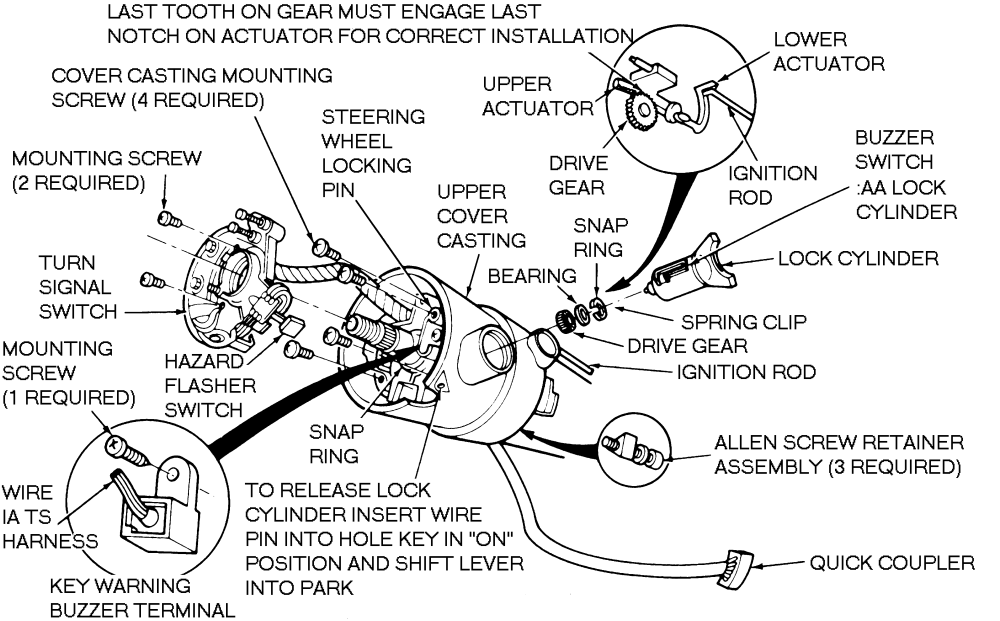
The ignition lock cylinder, a seemingly simple component, is a critical part of a Ford vehicle's security and starting system. More than just a place to insert your key, it's a complex electromechanical device that authenticates the key, controls various electrical circuits, and interacts with the steering column lock. This article delves into the intricate workings of a Ford ignition lock cylinder, providing a detailed look at its components and their functions.
The Anatomy of a Ford Ignition Lock Cylinder
While specific designs vary slightly depending on the Ford model and year, the fundamental principles and components remain consistent. Understanding these key elements is crucial for diagnosing problems or attempting repairs.
The Cylinder Housing
The cylinder housing is the main body of the assembly, usually made of durable metal such as brass or zinc alloy. It's designed to withstand repeated use and provide a secure enclosure for the internal components. The housing is typically mounted within the steering column and secured by a combination of fasteners and mechanical retention mechanisms.
The Keyway and Tumblers
At the heart of the ignition lock cylinder is the keyway, the slot where the key is inserted. Within the keyway reside the tumblers, also known as wafers or pins. These are precisely machined metal components that interact directly with the key. Each tumbler is designed to move to a specific position when the correct key is inserted. This alignment is essential for the cylinder to rotate.
Ford ignition cylinders often use a side-milled key design. This means the key has grooves cut along its sides, rather than just serrations on its top and bottom edges. The tumblers are designed to interact with these grooves, adding an extra layer of security compared to older designs. When the correct key is inserted, each tumbler aligns perfectly, creating a shear line that allows the cylinder to rotate.
When an incorrect key is inserted, the tumblers do not align correctly. They protrude into the path of the cylinder's rotation, preventing it from turning. This is a fundamental security mechanism that prevents unauthorized operation of the vehicle.
The Actuator Pin or Sector
Once the tumblers are properly aligned and the key is turned, the ignition cylinder rotates the actuator pin or sector. This component is typically located at the rear of the cylinder and connects to the ignition switch. As the cylinder rotates, the actuator pin moves, pushing or pulling on the ignition switch to activate the various circuits necessary for starting and running the vehicle.
The Ignition Switch Interface
The ignition switch is a separate component, often mounted directly behind the ignition lock cylinder. The actuator pin from the cylinder directly interacts with the ignition switch. The ignition switch is responsible for controlling the flow of electricity to various circuits within the vehicle, based on the position of the key. These positions typically include:
- Lock: The key can be inserted or removed, and no electrical circuits are active. The steering wheel is typically locked in this position.
- Accessory (ACC): Certain accessories, such as the radio and windshield wipers, can be operated. The engine is not running.
- On (RUN): All essential electrical systems are active, preparing the vehicle for starting.
- Start: The starter motor is engaged, cranking the engine.
The actuator pin translates the rotational movement of the ignition cylinder into a linear or rotational movement within the ignition switch, activating these different circuits.
The Steering Column Lock Mechanism
Integrated within the ignition lock cylinder assembly is the steering column lock mechanism. This is a crucial anti-theft feature that prevents the vehicle from being steered when the ignition is in the "Lock" position and the key is removed. The mechanism typically involves a locking pawl or pin that engages with a toothed sector on the steering column. When the key is in the "Lock" position, the pawl is engaged, preventing the steering wheel from turning. When the correct key is inserted and turned, the pawl is disengaged, allowing the steering wheel to rotate freely.
The Electrical Circuitry and Interlocks
The ignition lock cylinder system is more than just a mechanical device; it also incorporates electrical circuitry that interacts with various other systems in the vehicle.
Transponder Key Systems (PATs – Passive Anti-Theft System)
Modern Ford vehicles are equipped with transponder key systems, often referred to as PATs. These systems add an additional layer of security by requiring the key to transmit a unique electronic code to the vehicle's computer before the engine will start. The ignition lock cylinder assembly incorporates an antenna or exciter coil that surrounds the keyway. This coil emits a radio frequency (RF) signal that energizes the transponder chip embedded in the key. The transponder chip then transmits its unique code back to the vehicle's computer.
If the code transmitted by the key matches the code stored in the vehicle's computer, the computer allows the engine to start. If the codes do not match, the engine will be disabled, preventing theft. This system is passive, meaning the transponder chip in the key does not require a battery to function. It's energized by the RF signal emitted by the antenna in the ignition lock cylinder assembly.
Neutral Safety Switch Interlock
Vehicles equipped with automatic transmissions have a neutral safety switch interlock, which prevents the engine from being started unless the transmission is in Park or Neutral. This is a safety feature that prevents the vehicle from accidentally lurching forward when started. While not directly part of the ignition lock cylinder itself, the ignition switch, which is controlled by the ignition lock cylinder, incorporates this interlock logic. This signal runs from the transmission range sensor to the PCM (Powertrain Control Module) which then enables the starter relay when the transmission is in the correct range.
Common Problems and Troubleshooting
The ignition lock cylinder is a wear item and can experience various problems over time. Some common issues include:
- Difficulty turning the key: This can be caused by worn tumblers, a bent key, or debris in the keyway.
- Key won't turn at all: This can be caused by a jammed tumbler, a broken key, or a faulty steering column lock mechanism.
- Key turns, but the engine won't start: This can be caused by a faulty ignition switch, a problem with the transponder key system, or a problem with the starter motor.
- Steering wheel locked and key won't turn: Try gently wiggling the steering wheel back and forth while attempting to turn the key. This can sometimes release the steering column lock.
When troubleshooting ignition lock cylinder problems, it's important to consider all the possible causes. Start by visually inspecting the key and the keyway for any signs of damage or debris. Try lubricating the keyway with a graphite-based lubricant. If the problem persists, it may be necessary to disassemble the ignition lock cylinder assembly to inspect the internal components. However, this should only be attempted by experienced individuals with the proper tools and knowledge. Incorrect disassembly can damage the cylinder and potentially disable the vehicle.
Replacing the Ignition Lock Cylinder
Replacing the ignition lock cylinder can be a complex procedure, especially on vehicles with transponder key systems. The steps typically involve:
- Disconnecting the battery.
- Removing the steering wheel and airbag (if equipped).
- Removing the steering column covers.
- Releasing the ignition lock cylinder assembly from the steering column. This often involves pressing a retaining pin or using a special tool to disengage the cylinder.
- Disconnecting the electrical connectors from the ignition switch and transponder antenna (if applicable).
- Installing the new ignition lock cylinder assembly.
- Reconnecting the electrical connectors.
- Reinstalling the steering column covers, steering wheel, and airbag.
- Reconnecting the battery.
- Programming the new key (if required). This typically involves using a diagnostic tool to communicate with the vehicle's computer and program the transponder code into the system.
It is highly recommended that you consult a qualified mechanic or technician for ignition lock cylinder replacement, especially on vehicles with transponder key systems. Incorrect installation or programming can disable the vehicle or compromise its security.
Conclusion
The Ford ignition lock cylinder is a sophisticated component that combines mechanical and electrical functions to provide security and control over the vehicle's starting system. Understanding its anatomy, operation, and potential problems can be invaluable for diagnosing and resolving issues. While replacement can be complex, especially with modern security systems, a clear understanding of the system allows for a more informed approach to maintenance and repair. Remember to always prioritize safety and consult with qualified professionals when dealing with automotive electrical and security systems.