
Front Wheel Drive Vs All Wheel Drive Snow
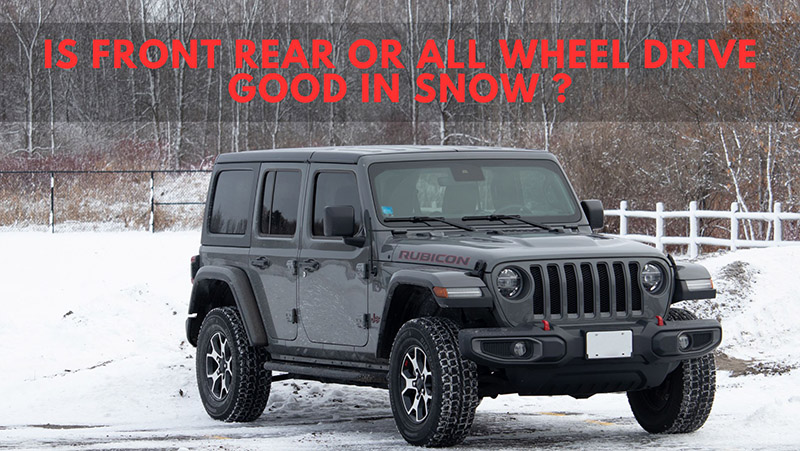
The debate rages on every winter: which drivetrain reigns supreme when the snow starts to fall? While many automatically champion all-wheel drive (AWD), the reality is far more nuanced. Front-wheel drive (FWD) has its own set of advantages, and understanding the technical differences between these systems is crucial for making an informed decision about winter driving.
The Fundamentals: Power Distribution
At its core, the difference between FWD and AWD lies in how the engine's power is distributed to the wheels.
Front-Wheel Drive (FWD): In a FWD vehicle, the engine's power is solely directed to the front wheels. This is typically achieved through a transaxle, a single unit combining the transmission and differential. The differential allows the front wheels to rotate at different speeds, which is essential for turning. Most modern FWD cars also employ electronic traction control (ETC) to mitigate wheelspin, applying brakes to a spinning wheel to transfer power to the wheel with more grip.
All-Wheel Drive (AWD): AWD systems distribute power to all four wheels. However, there are various types of AWD systems, each with its own technical intricacies:
Types of AWD Systems:
Understanding the specific type of AWD in a vehicle is crucial, as their performance characteristics can vary significantly.
Part-Time AWD: Primarily found in older or more rugged vehicles, part-time AWD requires the driver to manually engage the system. Typically, the vehicle operates in two-wheel drive (2WD) until the driver selects AWD via a lever or switch. These systems usually lock the front and rear axles together, providing maximum traction in very slippery conditions. However, driving with locked axles on dry pavement can cause damage due to torque binding, as the front and rear wheels must rotate at slightly different speeds during turns.
Automatic/On-Demand AWD: These systems automatically engage AWD when they detect wheel slippage. They often rely on sensors that monitor wheel speeds. A variety of coupling mechanisms can be used, including:
Viscous Couplings: These utilize a fluid that becomes thicker and more resistant to shear when subjected to high speeds. When one set of wheels slips, the viscous fluid heats up, stiffening and transferring torque to the other set of wheels. Viscous couplings are relatively simple and reliable, but they can be slow to react.
Electronic Clutch Packs: These use electronically controlled clutches to engage and disengage the rear axle. Sophisticated control algorithms monitor wheel slip, throttle position, and steering angle to determine the optimal amount of torque to send to the rear wheels. Electronic clutch packs offer faster response times and more precise torque distribution than viscous couplings.
Haldex Traction: A specific type of electronic clutch pack system, Haldex is known for its responsiveness and ability to proactively distribute torque to the rear wheels, even before wheel slippage occurs. This can improve handling and stability in a wider range of driving conditions.
Full-Time AWD: These systems constantly send power to all four wheels. They often utilize a center differential to allow for different rotational speeds between the front and rear axles, preventing torque binding on pavement. Some full-time AWD systems use a limited-slip center differential or electronic controls to further optimize torque distribution.
FWD vs. AWD in Snow: A Detailed Comparison
The performance of FWD and AWD vehicles in snow depends on several factors, including the depth of the snow, the type of tires used, and the driver's skill.
Traction: AWD generally provides superior traction in slippery conditions, especially when accelerating from a stop or climbing hills. The ability to distribute power to all four wheels minimizes wheelspin and maximizes grip. However, modern FWD vehicles with effective traction control systems can perform surprisingly well in moderate snow. The weight of the engine over the front wheels also aids in traction.
Handling: AWD can offer enhanced handling in snowy conditions, providing a more stable and predictable feel. The ability to send power to the rear wheels can help to rotate the vehicle through corners and reduce understeer (the tendency for the vehicle to plow straight ahead). FWD vehicles, on the other hand, can be prone to understeer in snow, especially when accelerating hard. Lift-off oversteer can also be a concern if the driver suddenly releases the throttle mid-corner.
Braking: Crucially, it's important to note that AWD does *not* improve braking performance. All vehicles, regardless of drivetrain, rely on the same braking system to slow down. In snowy conditions, anti-lock brakes (ABS) are essential for maintaining control during braking. The effectiveness of ABS, along with the type of tires used, will determine the vehicle's stopping distance.
Fuel Economy: FWD vehicles typically achieve better fuel economy than AWD vehicles. This is because AWD systems add weight and complexity, requiring more energy to operate. The difference in fuel economy can be significant, especially for older AWD systems that constantly engage all four wheels.
Cost: AWD vehicles generally cost more than comparable FWD models. This is due to the added complexity and components of the AWD system. Maintenance costs can also be higher for AWD vehicles, as there are more parts that can potentially fail.
The Tire Factor: The Real Game Changer
While drivetrain plays a role, the single most important factor in winter driving is the type of tires used. Winter tires, also known as snow tires, are specifically designed for cold weather and snowy conditions. They feature a special rubber compound that remains pliable at low temperatures, as well as a unique tread pattern with sipes (small slits) that grip the snow and ice.
Even the best AWD system will struggle with all-season tires in deep snow. A FWD vehicle equipped with winter tires will often outperform an AWD vehicle with all-season tires. Winter tires provide significantly better traction, braking, and handling in winter conditions.
Conclusion
The choice between FWD and AWD for snow driving depends on individual needs and priorities. AWD offers superior traction and handling in challenging conditions, but it comes at a higher cost and reduced fuel economy. FWD vehicles can perform well in moderate snow, especially when equipped with winter tires. Ultimately, the best option is a vehicle with a competent driver, appropriate tires, and an understanding of how to drive safely in winter conditions. Regardless of drivetrain, driving cautiously and adapting to the conditions are paramount for safe winter motoring.