
Gmc Canyon Vs Nissan Frontier
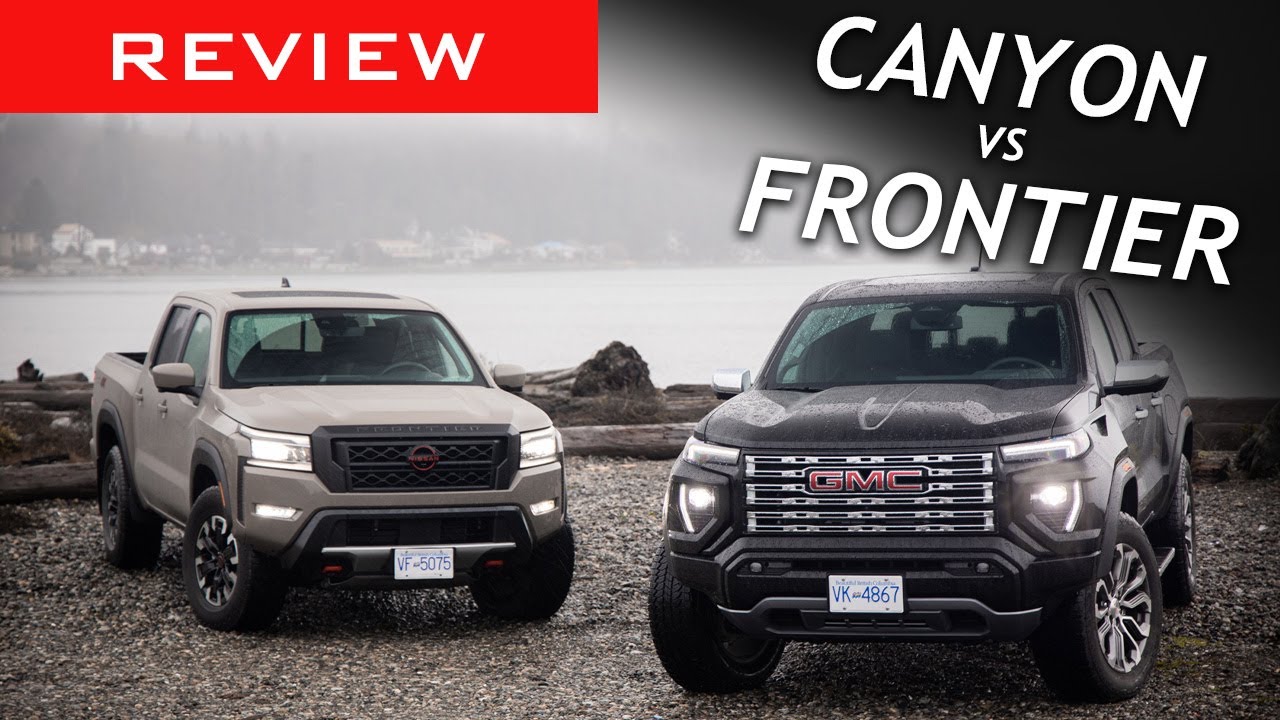
The mid-size truck segment is currently enjoying a renaissance, offering a compelling alternative to full-size pickups for buyers who prioritize maneuverability, fuel efficiency, and ease of parking. Two key contenders in this space are the GMC Canyon and the Nissan Frontier, each boasting unique strengths and catering to slightly different customer profiles. This article provides an in-depth comparison of these trucks, focusing on their technical specifications, engineering choices, real-world performance, reliability, maintenance, and future trends.
Technical Specifications and Engineering Choices
Let's begin by comparing the core mechanical components of these two trucks.
Engines and Transmissions
The GMC Canyon offers a choice of engines. The base engine is a 2.7-liter turbocharged inline-4 producing 310 horsepower and 430 lb-ft of torque. This engine is paired with an 8-speed automatic transmission. A significant upgrade for the new Canyon is a more robust chassis, tuned suspension, and dedicated off-road trims like the AT4 and AT4X. This signals a focus on capability and performance, moving beyond simply offering a smaller alternative to the Sierra.
The Nissan Frontier, in contrast, features a 3.8-liter V6 engine as its only option, generating 310 horsepower and 281 lb-ft of torque. It's also paired with a 9-speed automatic transmission. Nissan opted for a single-engine approach, aiming for simplicity and proven reliability. While the horsepower figures are similar, the torque delivery is noticeably different, with the Canyon's turbo four-cylinder offering more low-end grunt. This difference in torque impacts towing and hauling capabilities, as well as the overall driving experience, especially in off-road conditions.
Drivetrain and Suspension
Both the Canyon and Frontier offer rear-wheel drive (RWD) as standard and four-wheel drive (4WD) as an option. The 4WD systems are electronically controlled and feature selectable modes for different terrains. The Canyon offers more advanced 4WD systems on specific trims, including an automatic mode that can switch between 2WD and 4WD based on road conditions. The Frontier's 4WD system is more traditional, requiring manual selection of 4H and 4L.
In terms of suspension, both trucks employ an independent front suspension for improved ride quality and a solid rear axle with leaf springs for durability and load-carrying capacity. However, the Canyon's specific trims, especially the AT4 and AT4X, feature upgraded suspension components, including Multimatic DSSV dampers in the AT4X, for enhanced off-road performance and articulation. These dampers provide superior damping control and are designed to handle extreme terrain. The Frontier's suspension is more conventional and geared towards overall comfort and daily driving.
Towing and Payload
Towing and payload capacities are critical considerations for truck buyers. The GMC Canyon, depending on the configuration, can tow up to 7,700 pounds and has a maximum payload capacity of around 1,640 pounds. The Nissan Frontier's towing capacity is slightly lower, maxing out at approximately 6,720 pounds, and its payload capacity is around 1,460 pounds. The Canyon's higher torque output and specifically tuned chassis contribute to its superior towing and payload figures.
Real-World Performance
Beyond the specifications, real-world performance is where these trucks truly differentiate themselves.
On-Road Driving Experience
The Canyon's turbocharged engine provides strong acceleration and responsive throttle, making it feel quicker and more agile on the road. The 8-speed automatic transmission shifts smoothly and efficiently. The ride quality is generally comfortable, though the upgraded suspension on the AT4 and AT4X trims can feel firmer on paved roads. The steering is precise and provides good feedback.
The Frontier's V6 engine delivers adequate power, but it doesn't feel as responsive as the Canyon's turbo four. The 9-speed automatic transmission is generally smooth, but it can sometimes feel hesitant to downshift. The ride quality is comfortable, and the steering is light and easy to manage. The Frontier's overall driving experience is more relaxed and less engaging than the Canyon's.
Off-Road Capabilities
Both trucks are capable off-roaders, but the Canyon, particularly in AT4 and AT4X trim, has a clear advantage. The higher ground clearance, skid plates, and advanced 4WD systems make it better equipped to tackle challenging terrain. The Multimatic DSSV dampers on the AT4X provide exceptional control and stability over rough surfaces. The Canyon's shorter wheelbase also contributes to its maneuverability in tight off-road situations.
The Frontier offers decent off-road capabilities with its 4WD system and available skid plates. However, it lacks the advanced features and suspension upgrades found on the Canyon's off-road trims. The Frontier's longer wheelbase can also make it more challenging to navigate tight trails.
Fuel Efficiency
Fuel efficiency is always a concern, and the Canyon and Frontier offer comparable numbers. The Canyon, with its turbocharged engine, typically achieves slightly better fuel economy in city driving. However, the Frontier's V6 engine can sometimes deliver better highway mileage. Real-world fuel efficiency will vary depending on driving style, load, and terrain.
Alternatives
Several other mid-size trucks compete in this segment, including the Toyota Tacoma, Chevrolet Colorado, Ford Ranger, and Jeep Gladiator. The Toyota Tacoma is known for its reliability and off-road prowess, but its engine and transmission are less refined than those of the Canyon and Frontier. The Chevrolet Colorado is mechanically similar to the Canyon, offering similar performance and features. The Ford Ranger provides a powerful turbocharged engine and a comfortable ride, but its interior design is somewhat dated. The Jeep Gladiator offers unique open-air capabilities and impressive off-road performance, but it's also the most expensive option in the segment.
Pros and Cons
GMC Canyon
Pros:
- More powerful and responsive engine
- Higher towing and payload capacities
- Advanced off-road capabilities (especially AT4 and AT4X trims)
- More modern interior design and technology
Cons:
- Higher price point
- Firmer ride quality on some trims
- Potentially more complex engine with turbocharging
Nissan Frontier
Pros:
- Lower price point
- Simpler and potentially more reliable engine
- Comfortable ride quality
- User-friendly infotainment system
Cons:
- Less powerful and responsive engine
- Lower towing and payload capacities
- Less advanced off-road capabilities
- Less modern interior design
Reliability Aspects
Nissan has a reputation for building reliable vehicles, and the Frontier's V6 engine is a proven design. However, even the most reliable vehicles require regular maintenance. The Canyon, with its turbocharged engine and more complex systems, *may* require more frequent maintenance in the long run. However, GMC is leveraging much of its experience to ensure reliability of its latest engine. Data is still emerging and long term reliability will be a key factor to consider for new Canyon owners.
Maintenance Tips
For both the Canyon and Frontier, following the manufacturer's recommended maintenance schedule is crucial. This includes regular oil changes, fluid flushes, tire rotations, and brake inspections. Pay close attention to the cooling system, especially in hot climates or when towing. Regularly inspect the suspension components for wear and tear, particularly if you frequently drive off-road. For the Canyon, it's essential to monitor the turbocharger for any signs of leaks or damage. For both vehicles, use high-quality replacement parts and fluids to ensure optimal performance and longevity.
Future Trends
The automotive industry is rapidly evolving, and several future trends will impact the mid-size truck segment. Electrification is a major trend, and it's likely that both the Canyon and Frontier will eventually offer hybrid or all-electric versions. Autonomous driving technology is also advancing, and future trucks may feature more advanced driver-assistance systems. Connectivity is another key trend, with trucks becoming increasingly integrated with smartphones and cloud-based services. The use of lightweight materials, such as aluminum and carbon fiber, will also become more prevalent in an effort to improve fuel efficiency and performance. Expect more advanced off-road technologies to trickle down from high-end models to more affordable trims, enhancing the capabilities of mid-size trucks.
Conclusion
The GMC Canyon and Nissan Frontier are both capable mid-size trucks that offer compelling alternatives to full-size pickups. The Canyon stands out with its more powerful engine, higher towing capacity, and advanced off-road capabilities. The Frontier offers a more affordable price point, a comfortable ride, and a potentially more reliable engine. The best choice for you will depend on your specific needs and priorities.
Looking ahead, the automotive industry faces significant challenges and opportunities. The transition to electric vehicles will require significant investment in infrastructure and battery technology. Automakers will need to adapt to changing consumer preferences and develop new business models to remain competitive. The increasing complexity of modern vehicles will also require more skilled technicians and advanced diagnostic tools. Despite these challenges, the automotive industry remains a vital part of the global economy, and innovation will continue to drive its evolution.