
Heated Car Seat Cover With Lumbar Support
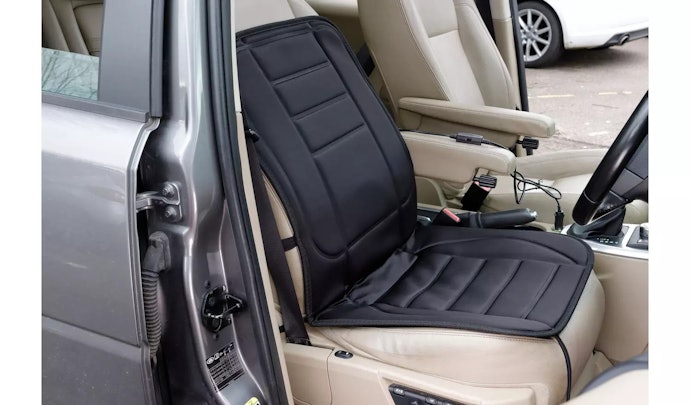
The heated car seat cover with lumbar support represents a confluence of comfort and automotive technology, designed to alleviate the discomforts of long drives and cold weather. While seemingly simple in concept, the engineering behind these devices involves a careful consideration of electrical resistance, heat transfer, ergonomic design, and safety. Let's delve into the intricate workings of these ubiquitous automotive accessories.
Heating Element: The Core of Warmth
The heart of any heated car seat cover is, unsurprisingly, the heating element. These elements are typically constructed from a resistive material, often a woven fabric or mesh containing carbon fiber, nichrome (nickel-chromium alloy), or similar alloys. The principle is straightforward: when an electric current is passed through a resistive material, the electrical energy is converted into heat due to the material's inherent resistance to the flow of electrons. This is known as Joule heating, described by the equation: P = I2R, where P is the power (heat generated), I is the current, and R is the resistance.
Material Selection
The choice of resistive material is crucial. Several factors are considered:
- Resistance: The material needs to offer sufficient resistance to generate adequate heat at a safe voltage (typically 12V in a car's electrical system).
- Durability: The material must withstand repeated flexing and abrasion without breaking or losing its resistive properties. Carbon fiber, for example, is known for its high tensile strength and flexibility.
- Temperature Coefficient of Resistance: This refers to how the resistance of the material changes with temperature. Ideally, a material with a low-temperature coefficient is preferred to ensure a relatively stable heat output.
- Cost: Obviously, the cost of the material factors into the overall product pricing.
Heating Element Configuration
The heating element is not simply a single wire. It's usually distributed across a large area within the seat cover to provide uniform heating. This is achieved through various weaving or stitching patterns. Some designs use a serpentine pattern to maximize the heated area. More sophisticated designs may incorporate multiple heating zones with independent control, allowing the user to adjust the heat distribution. This is often accomplished by sectioning the heating element and providing separate wiring to each section.
Electrical Circuitry and Control
The electrical circuitry for a heated car seat cover is relatively simple, but crucial for safety and performance. It typically includes:
- Power Input: A connector, usually a cigarette lighter adapter (now often a 12V accessory socket), draws power from the car's electrical system.
- Fuse: A fuse is a critical safety component. It protects the car's electrical system and the seat cover from overcurrent conditions. If too much current flows through the circuit (due to a short circuit or malfunction), the fuse melts, breaking the circuit and preventing damage.
- Switch/Controller: A switch, often incorporated into a small control unit, allows the user to turn the heating element on and off, and sometimes to adjust the heat level. More advanced controllers may use Pulse Width Modulation (PWM) to control the average power delivered to the heating element.
- Wiring: Wires connect the power input, fuse, switch/controller, and heating element. The gauge (thickness) of the wires is important to ensure they can handle the current without overheating.
- Thermistor/Temperature Sensor: A temperature sensor (often a thermistor) is sometimes included to monitor the temperature of the heating element or the seat surface. This information can be used by the controller to prevent overheating.
Pulse Width Modulation (PWM)
PWM is a technique used to control the average power delivered to the heating element. Instead of simply turning the heating element on and off, PWM rapidly switches the power on and off at a high frequency. The *duty cycle*, which is the percentage of time the power is on, determines the average power. A higher duty cycle means more power and thus, more heat. PWM allows for finer control over the heat output compared to a simple on/off switch.
Lumbar Support: Ergonomic Considerations
The lumbar support component aims to provide additional support to the lower back, improving posture and reducing strain during driving. These supports can be:
- Fixed: A simple, static padding or shaping integrated into the seat cover. The effectiveness of a fixed support depends heavily on the user's body shape and seating position.
- Adjustable: These supports incorporate a mechanism that allows the user to adjust the level of support. This can be achieved through inflatable bladders or mechanical adjustment mechanisms.
Inflatable Lumbar Support
Inflatable lumbar supports use an air bladder that can be inflated or deflated to provide varying levels of support. A small hand pump or electric pump is used to control the air pressure in the bladder. The shape and position of the bladder are critical for effective support. The bladder needs to conform to the natural curvature of the spine and provide consistent pressure across the lumbar region.
Mechanical Lumbar Support
Mechanical lumbar supports typically involve a system of levers or cams that can be adjusted to push a padded support forward. This allows the user to customize the shape and depth of the support. The mechanism needs to be robust and reliable to withstand repeated adjustments and the weight of the user.
Materials and Construction
The materials used in the construction of a heated car seat cover with lumbar support are crucial for comfort, durability, and safety.
- Outer Fabric: This is the visible surface of the seat cover. Common materials include polyester, nylon, and faux leather. These materials should be durable, abrasion-resistant, and easy to clean. Breathability is also an important consideration, especially for long drives.
- Padding: Padding materials such as foam, batting, or gel provide cushioning and insulation. The type and density of the padding affect comfort and support.
- Heating Element Insulation: The heating element must be properly insulated to prevent electrical shock and to direct heat towards the user. Heat-resistant fabrics or films are used for this purpose.
- Attachment System: Straps, buckles, and hooks are used to secure the seat cover to the car seat. The attachment system needs to be robust and adjustable to ensure a snug and secure fit.
Safety Considerations
Safety is paramount in the design of any automotive accessory, especially one involving electricity. Several safety features are incorporated into heated car seat covers:
- Overcurrent Protection: The fuse, as mentioned earlier, is a critical safety device.
- Overheating Protection: Temperature sensors and controllers can be used to prevent the heating element from overheating and potentially causing a fire.
- Flame Retardant Materials: Materials used in the seat cover should be flame-retardant to minimize the risk of fire.
- Proper Wiring and Insulation: Wires must be properly insulated and routed to prevent short circuits and electrical shock.
- Compliance with Safety Standards: Reputable manufacturers ensure their products comply with relevant safety standards, such as those set by UL (Underwriters Laboratories) or other regulatory bodies.
In conclusion, the heated car seat cover with lumbar support, while seemingly simple, represents a carefully engineered combination of electrical, mechanical, and material science. Understanding the principles behind its operation allows for a greater appreciation of its design and functionality. **Proper maintenance and adherence to manufacturer's instructions are essential for safe and effective use.** _Always inspect the device for damage before each use and never leave it unattended while in operation._