
How Do I Know What Size Engine My Car Has
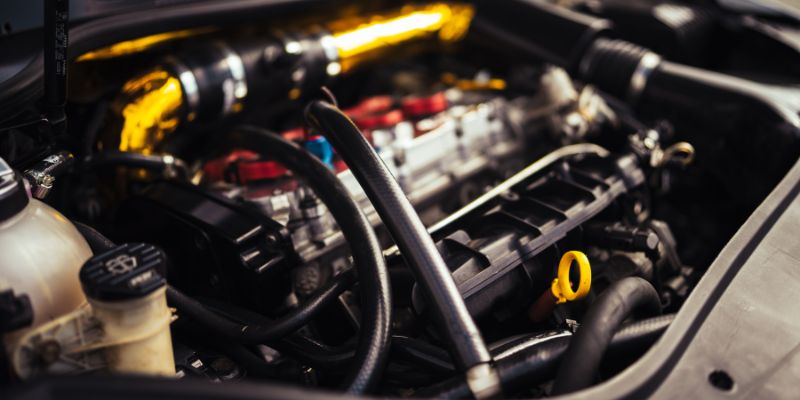
Alright, gearheads, let's talk displacement! Knowing the size of your engine isn't just about bragging rights at the local cars and coffee; it's fundamental to understanding your car's performance characteristics, fuel efficiency, and overall driving experience. But how do you actually *know* what's lurking under that hood? Fear not, we’re here to guide you through the various methods, from the painfully obvious to the slightly more obscure.
The Obvious: Decoding the Badges
Let's start with the low-hanging fruit: the exterior badges. Many manufacturers proudly display the engine size right on the trunk or fender. This is often in liters (L) or cubic inches (cu in or CI). For example:
- Ford Mustang GT: Often features a "5.0" badge, indicating a 5.0-liter engine.
- Chevrolet Corvette: Might sport a "6.2L" badge for its 6.2-liter V8.
- BMW 330i: The "30" designation often, but not always, hints at a 3.0-liter engine, though complexities arise with newer models due to naming conventions not always reflecting exact displacement.
However, don't always take the badge at face value! Especially with modern turbocharging and hybrid technology, manufacturers sometimes use number designations that don't directly correlate to engine size. They might represent the *equivalent* power output of a naturally aspirated engine of a certain displacement. Marketing, folks!
Under the Hood: The Engine Cover and Data Plate
Popping the hood is another great way to get a clue. Look for an engine cover. Sometimes, the displacement is molded directly into the plastic. Alternatively, search for a data plate, usually a small metal or plastic tag affixed to the engine block. This plate often contains vital information, including the engine code and sometimes the displacement in cubic centimeters (cc) or liters.
Example: You find a data plate that reads "Engine Code: N55B30. Displacement: 2979cc." Convert cc to liters by dividing by 1000, giving you 2.979 liters, which is typically rounded up to 3.0 liters.
The Paper Trail: VIN Decoding and Owner's Manual
If physical inspections fail, turn to the documentation. Your car's Vehicle Identification Number (VIN) holds a wealth of information. Use a free online VIN decoder (many reputable websites offer this service) to reveal your car's original factory specifications, including engine size. Similarly, your owner's manual will definitively state the engine displacement.
Pros of Using VIN Decoding/Owner's Manual:
- Highly accurate.
- Provides a comprehensive overview of the vehicle's original specifications.
Cons of Using VIN Decoding/Owner's Manual:
- Requires internet access or access to the physical manual.
- May not reflect engine swaps or modifications.
Diving Deeper: The Engine Code Breakdown
The engine code is a crucial piece of the puzzle. This alphanumeric code uniquely identifies the specific engine variant used in your car. Understanding the code can reveal details about its configuration, such as:
- Number of Cylinders: Inline-4 (I4), V6, V8, etc.
- Valve Train: Single Overhead Cam (SOHC), Double Overhead Cam (DOHC).
- Forced Induction: Turbocharged or Supercharged.
Example: Let's compare two popular engines:
| Engine Code | Displacement | Configuration | Technology | Typical Vehicle |
|---|---|---|---|---|
| LS3 | 6.2L (376 cu in) | V8 | Naturally Aspirated | Chevrolet Corvette, Camaro SS |
| B48 | 2.0L (122 cu in) | I4 | Turbocharged | BMW 330i, Mini Cooper S |
Real-World Driving Impressions: The LS3 delivers instant, raw power with a visceral roar. It's all about brute force and immediate throttle response. The B48, while smaller in displacement, offers impressive torque thanks to its turbocharger. It's more refined and fuel-efficient, delivering a punchy and responsive driving experience.
Special Cases: The Turbocharged and Hybrid Maze
As mentioned earlier, modern technology complicates matters. Turbocharging allows smaller engines to produce power comparable to larger, naturally aspirated engines. Hybrid systems add another layer of complexity. Sometimes, the engine size listed is the *combined* output of the internal combustion engine and the electric motor.
Be especially wary of manufacturers who use marketing terms like "TwinPower Turbo" or "EcoBoost." While these technologies are impressive, they don't necessarily tell you the exact engine displacement. Always refer to the official specifications or VIN decoding for accurate information.
Pros of Smaller Turbocharged Engines:
- Improved fuel efficiency.
- Reduced emissions.
- Often lighter, improving handling.
Cons of Smaller Turbocharged Engines:
- Can suffer from turbo lag.
- May lack the immediate throttle response of a larger, naturally aspirated engine.
So, there you have it – a comprehensive guide to deciphering the mysteries of engine displacement! Armed with this knowledge, you can confidently discuss your car's engine with fellow enthusiasts, understand its performance capabilities, and avoid being misled by marketing hype.
Now, for a fun debate: Would you rather have a high-revving, naturally aspirated engine or a torquey, turbocharged powerplant? And why? Let the arguments begin!