
How Do You Know If Your Ball Joint Is Bad
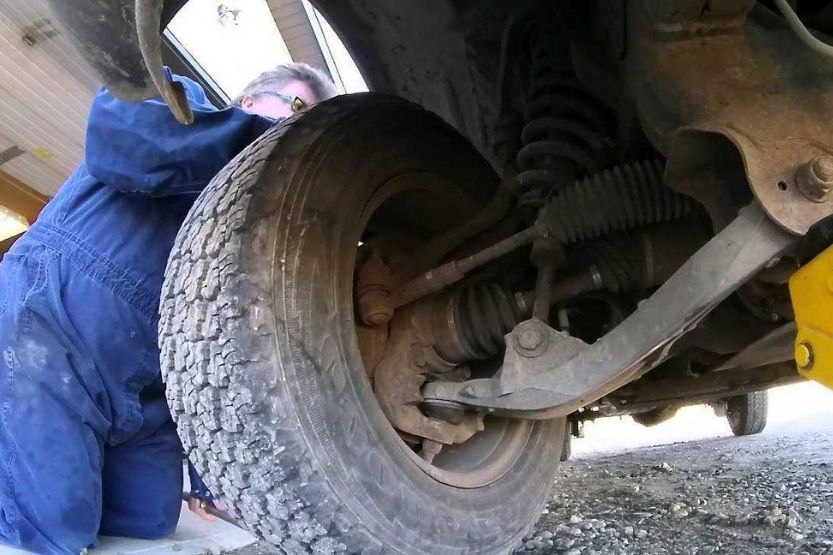
The humble ball joint. For decades, it's been the unsung hero of our suspension systems, quietly facilitating the smooth, safe, and controlled movement of our vehicles. But as our vehicles evolve at an unprecedented pace, powered by electricity, guided by algorithms, and connected to everything, the question of “How do you know if your ball joint is bad?” takes on a new dimension. It’s no longer just about clunking noises and wobbly wheels; it’s about maintaining the integrity of increasingly complex and interconnected systems.
Traditional Signs in a Modern World
The classic symptoms of a failing ball joint remain relevant, even in the age of EVs and advanced driver-assistance systems (ADAS). These include:
- Clunking or knocking noises, especially when going over bumps or turning. This is often the most obvious indicator.
- Wandering steering, where the vehicle drifts or pulls to one side, requiring constant correction.
- Uneven tire wear, particularly on the inner or outer edges of the tires. This indicates misalignment caused by the worn joint.
- Vibrations in the steering wheel, which can become more pronounced at higher speeds.
- Loose or sloppy steering feel, lacking the responsiveness you’d expect.
However, diagnosing ball joint issues is becoming more nuanced. In electric vehicles (EVs), for instance, the near-silent operation of the powertrain can make subtle suspension noises, including those emanating from a failing ball joint, much more noticeable. Similarly, the regenerative braking systems in EVs and hybrids can place different stresses on the suspension components compared to traditional internal combustion engine (ICE) vehicles, potentially leading to accelerated wear.
The Rise of Sensor-Based Diagnostics
The future of ball joint diagnostics lies in the integration of sensors and smart technology. Imagine ball joints equipped with miniature strain gauges and accelerometers, constantly monitoring their own condition. These sensors could transmit real-time data to the vehicle's central control unit, providing early warning of potential failures. This data could then be relayed to the driver via the vehicle’s infotainment system or through a dedicated mobile app. Think of it as a preemptive strike against suspension problems, minimizing downtime and maximizing safety.
Furthermore, the data collected by these sensors could be invaluable for predictive maintenance. By analyzing trends in ball joint wear, manufacturers and service providers could accurately predict when a component needs to be replaced, allowing for proactive scheduling and preventing catastrophic failures. This approach aligns perfectly with the growing trend towards subscription-based vehicle ownership and service models.
Challenges and Opportunities
While the potential benefits of sensor-based ball joint diagnostics are significant, there are also challenges to overcome. The cost of integrating sensors into these components must be minimized to ensure affordability. Data security and privacy are also paramount concerns. Ensuring that the data collected by these sensors is protected from unauthorized access and misuse is crucial for maintaining driver trust.
Another challenge is the need for standardized data formats and communication protocols. This would allow for seamless integration of sensor data across different vehicle makes and models, facilitating the development of universal diagnostic tools and predictive maintenance algorithms. Overcoming these challenges will require collaboration between automotive manufacturers, technology providers, and regulatory bodies.
Despite these challenges, the opportunities presented by smart ball joints are immense. Beyond diagnostics, these sensors could also contribute to improved vehicle performance and handling. By monitoring the forces acting on the suspension, the vehicle's control systems could dynamically adjust damping rates and steering assist levels, optimizing ride comfort and handling characteristics in real-time.
The Electric Revolution and Suspension Evolution
The transition to electric vehicles presents a unique opportunity to rethink suspension design. EVs often have different weight distributions compared to ICE vehicles, with heavier battery packs located low in the chassis. This can affect the stresses on suspension components, including ball joints. Furthermore, the instant torque delivery of electric motors can place greater demands on the suspension system during acceleration and braking.
As a result, we are likely to see the development of new ball joint designs specifically tailored for EVs. These designs may incorporate lighter materials, optimized geometries, and advanced coatings to enhance durability and reduce friction. Moreover, the integration of active suspension systems, which use electronically controlled dampers and actuators to adjust ride height and stiffness, is likely to become more prevalent in EVs. These systems can further enhance vehicle handling and stability, while also minimizing the impact of road imperfections.
The integration of autonomous driving technologies will also place greater emphasis on the reliability and accuracy of suspension systems. Self-driving vehicles rely on precise sensor data and control algorithms to navigate safely. Any degradation in the performance of the suspension system, including the ball joints, could compromise the vehicle's ability to maintain its intended trajectory. Therefore, ensuring the integrity of the suspension will be critical for the widespread adoption of autonomous vehicles.
The Vision: Intelligent Mobility
In the not-so-distant future, we envision a world where vehicles are seamlessly integrated into a smart mobility ecosystem. Ball joints, equipped with advanced sensors and connected to the cloud, will play a critical role in this ecosystem. They will not only provide real-time diagnostic information but also contribute to the overall optimization of vehicle performance and safety. Imagine a vehicle that can automatically schedule its own maintenance appointments, based on data from its smart ball joints. Imagine a fleet of vehicles that can collectively learn from each other, identifying and addressing potential suspension issues before they become critical. This is the future of intelligent mobility, where technology empowers us to move more safely, efficiently, and sustainably.
The future of mobility is not just about getting from point A to point B. It's about creating a transportation system that is intelligent, responsive, and adaptable to our changing needs. The humble ball joint, reimagined and enhanced with smart technology, will be an essential component of this transformative vision. The clunking sounds of the past will be replaced by the silent whispers of data, guiding us towards a safer and more sustainable future on the road.