
How Do You Test A Fuel Pressure Regulator
The fuel pressure regulator is a seemingly small but critically important component in your car's fuel system. Its job is simple: maintain a constant fuel pressure at the fuel injectors, ensuring your engine gets the precise amount of fuel it needs for optimal performance. When it malfunctions, you can experience a range of issues, from poor fuel economy to rough idling, hesitation during acceleration, and even a no-start condition. Therefore, understanding how to test your fuel pressure regulator is a valuable skill for any car enthusiast or DIY mechanic.
Understanding Fuel Pressure Regulation: The Basics
Before diving into testing procedures, let's briefly explain how a fuel pressure regulator works. Most modern fuel-injected cars use a diaphragm-style regulator. This regulator typically sits on the fuel rail, after the fuel injectors. Fuel is pumped from the fuel tank to the fuel rail by the fuel pump. The regulator controls the pressure in the rail by bleeding off excess fuel back to the fuel tank via a return line.
Inside the regulator, there's a diaphragm, a spring, and a vacuum port. The spring pushes against the diaphragm, creating a set fuel pressure. The vacuum port connects to the intake manifold. When the engine is idling (high vacuum), the vacuum pulls on the diaphragm, reducing the fuel pressure. This is because the engine needs less fuel at idle. When you accelerate (low vacuum), the vacuum decreases, and the spring maintains the set fuel pressure, delivering more fuel to the engine. Think of it like a seesaw, where fuel pressure and vacuum are balanced against each other.
For example, a 1998 Honda Civic might have a fuel pressure of around 40-45 PSI with the vacuum line disconnected. When the vacuum line is connected at idle, the fuel pressure drops to around 30-35 PSI. This drop in pressure is crucial for smooth idling and fuel efficiency.
Some newer vehicles utilize a returnless fuel system, where the fuel pressure regulator is integrated into the fuel pump assembly inside the fuel tank. These systems rely on the engine control unit (ECU) to control the fuel pump speed and thus maintain the desired fuel pressure. Testing these systems requires a slightly different approach, which we'll touch on later.
Symptoms of a Faulty Fuel Pressure Regulator
Recognizing the symptoms of a failing fuel pressure regulator is the first step towards diagnosing the problem. Here are some common signs:
- Poor Fuel Economy: If the regulator is stuck open, it will bleed off too much fuel, causing the fuel pump to work harder and the engine to run lean. Conversely, if it's stuck closed, the fuel pressure will be too high, leading to a rich condition and wasted fuel.
- Rough Idling: Incorrect fuel pressure can cause the engine to idle erratically. Too much fuel (rich condition) can cause stumbling or stalling, while too little fuel (lean condition) can cause a rough or surging idle.
- Hesitation During Acceleration: If the regulator cannot adjust the fuel pressure quickly enough when you accelerate, the engine may hesitate or stumble.
- Black Smoke from Exhaust: This is a sign of a rich condition, indicating that the engine is burning too much fuel.
- Fuel Smell: A leaking regulator can emit a strong fuel smell, especially around the engine bay.
- Engine Stalling: In severe cases, a faulty regulator can cause the engine to stall, especially at low speeds or when coming to a stop.
- Check Engine Light (CEL): Although not always the case, a malfunctioning fuel pressure regulator can trigger a check engine light, often with codes related to fuel trim or lean/rich conditions.
Tools You'll Need
To test your fuel pressure regulator, you'll need the following tools:
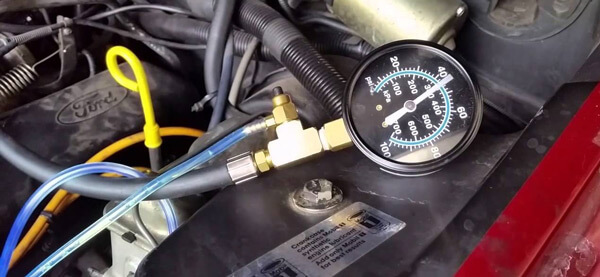
- Fuel Pressure Tester: This is the most important tool. It connects to the fuel rail and displays the fuel pressure.
- Safety Glasses: Protect your eyes from fuel splashes.
- Rags: For cleaning up spills.
- Gloves: To protect your hands from fuel.
- Wrench Set: To disconnect the fuel lines or vacuum hose.
- Shop Manual (Optional): Provides specific fuel pressure specifications for your vehicle.
Testing a Return-Style Fuel Pressure Regulator: Step-by-Step
Here's how to test a traditional return-style fuel pressure regulator:
- Safety First: Always work in a well-ventilated area. Disconnect the negative battery cable to prevent sparks. Have a fire extinguisher nearby.
- Locate the Fuel Rail Test Port: Most fuel-injected cars have a Schrader valve (like a tire valve) on the fuel rail. This is where you'll connect the fuel pressure tester. On some vehicles, like older BMWs, you might need to disconnect a fuel line and use an adapter. Consult your car's repair manual for specific instructions.
- Connect the Fuel Pressure Tester: Carefully screw the fuel pressure tester onto the Schrader valve. Make sure it's snug to prevent leaks.
- Re-connect the Negative Battery Cable: This will allow you to start the engine.
- Start the Engine: Start the engine and let it idle. Observe the fuel pressure reading on the tester. Compare the reading to the specification in your car's repair manual. For example, a 2005 Ford Mustang might have a specified fuel pressure of 35-45 PSI at idle.
- Check Pressure with Vacuum Line Disconnected: Locate the vacuum line connected to the fuel pressure regulator. Disconnect the vacuum line and plug it (a golf tee works well). Observe the fuel pressure reading. The pressure should increase when the vacuum line is disconnected. Again, compare the reading to the specifications. If you don't plug the vacuum line, the engine will run poorly, because it will create a vacuum leak.
- Check for Leaks: Inspect the regulator for any signs of fuel leaks. A leaking regulator is a sure sign of a problem.
- Perform a Vacuum Test: With the engine idling, reconnect the vacuum line to the regulator. The fuel pressure should drop. If the fuel pressure doesn't change, the vacuum line may be clogged or the regulator's internal diaphragm may be damaged. You can test the vacuum line itself by using a vacuum gauge.
- Shut Off the Engine and Relieve Fuel Pressure: After testing, shut off the engine and carefully relieve the fuel pressure using the fuel pressure tester's bleed valve. Dispose of the fuel properly. Disconnect the fuel pressure tester.
Testing a Returnless Fuel System
Returnless fuel systems, commonly found in newer cars like the Mazda 3 or the Toyota Camry, require a different approach. Since the regulator is integrated into the fuel pump assembly and controlled by the ECU, you'll need a scan tool that can read fuel pressure data. The procedure generally involves:
- Connecting a scan tool to the OBD-II port.
- Monitoring the fuel pressure data reported by the ECU.
- Comparing the reported pressure to the specified pressure at various engine loads and speeds.
Because the ECU controls the fuel pump speed, you may also need to test the fuel pump control module and the fuel pump itself to rule out other potential issues.
Interpreting the Results
Here's a summary of how to interpret the test results:
- Low Fuel Pressure: Could indicate a faulty fuel pump, a clogged fuel filter, a leak in the fuel line, or a malfunctioning regulator.
- High Fuel Pressure: Often points to a faulty fuel pressure regulator stuck in the closed position.
- No Change in Fuel Pressure with Vacuum Line Disconnected: Indicates a problem with the regulator's diaphragm or a clogged vacuum line.
- Fuel Leaks: A leaking regulator needs to be replaced immediately.
Important Note: Always consult your car's repair manual for specific fuel pressure specifications and testing procedures.
Practical Takeaways
Here are some practical takeaways to help you apply this knowledge:
- Regular Maintenance: Replacing your fuel filter regularly (as recommended in your owner's manual) can prevent fuel pressure issues.
- Visual Inspection: Periodically inspect your fuel lines and regulator for any signs of leaks or damage.
- Listen to Your Car: Pay attention to any changes in your car's performance, such as poor fuel economy, rough idling, or hesitation during acceleration. These could be early warning signs of a fuel pressure regulator problem.
- Don't Hesitate to Seek Professional Help: If you're not comfortable performing these tests yourself, or if you're unsure about the results, take your car to a qualified mechanic. Fuel systems are critical and potentially dangerous.
- Consider the Age of the Regulator: Fuel pressure regulators are not lifetime parts. After 100,000 miles, or if problems are starting to show, replacement is a smart move.
By understanding how to test your fuel pressure regulator, you can diagnose and address fuel system issues early on, saving you time, money, and potential headaches down the road. Remember to always prioritize safety and consult your car's repair manual for specific instructions.