
How Hard Is It To Replace A Wheel Bearing
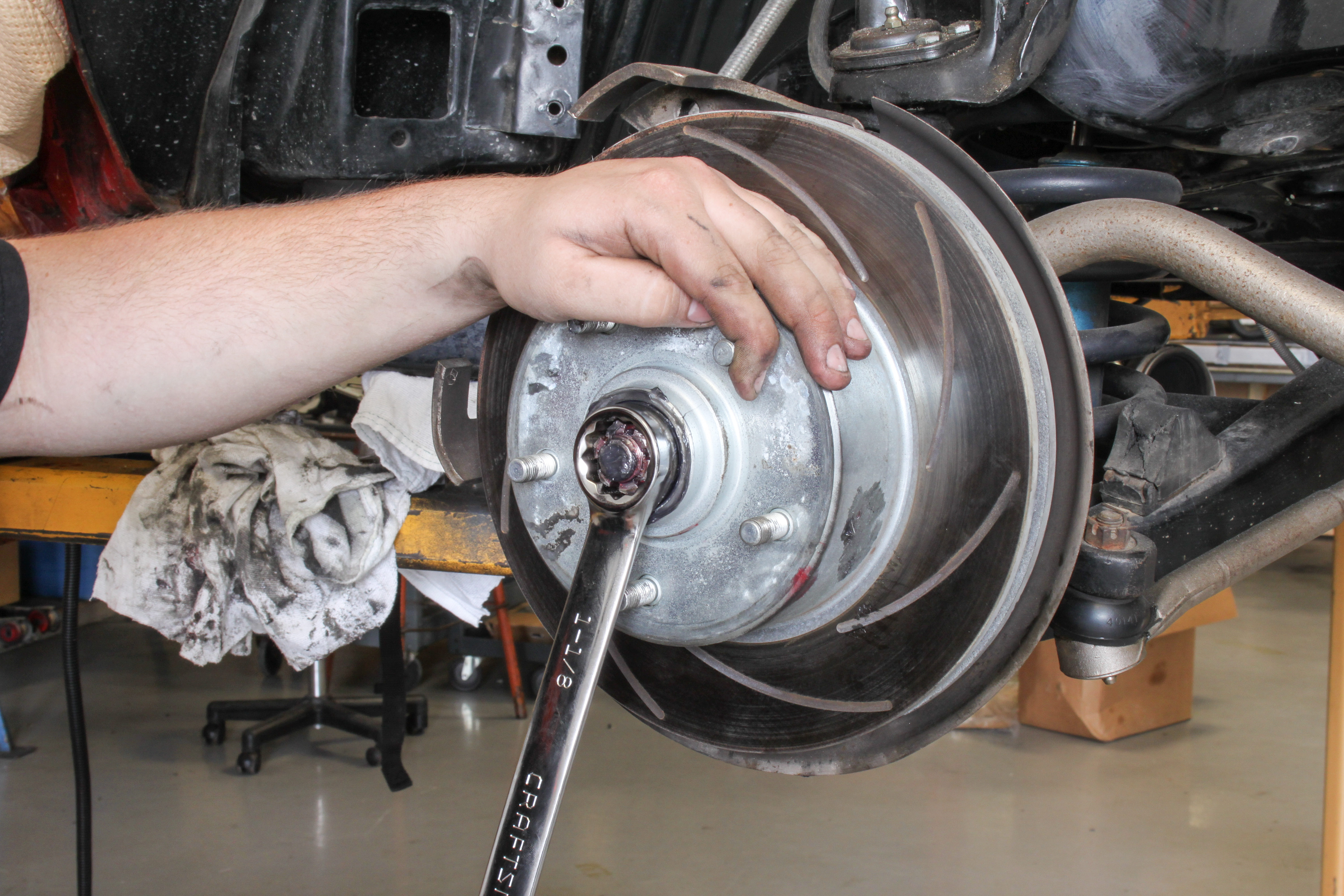
The wheel bearing. It's a small, unassuming component nestled deep within the bowels of your car's wheel hub, but its failure can lead to a cacophony of noise, a loss of control, and ultimately, a stranded vehicle. So, how difficult is it to replace this crucial part? The answer, as with most things automotive, is: it depends. It depends on your skillset, your tools, the make and model of your car, and even the climate in which you live.
Understanding the Wheel Bearing's Role
Before we dive into the replacement process, let's understand what a wheel bearing actually does. In its simplest form, it's a set of hardened steel balls or tapered rollers encased within inner and outer races. These races are precision-fitted onto the hub (the rotating part that holds the wheel) and the spindle (the stationary part connected to the suspension). The bearing allows the wheel to rotate smoothly and with minimal friction. It also supports the weight of the vehicle and handles the lateral forces encountered during cornering.
There are primarily two types of wheel bearings: ball bearings and tapered roller bearings. Ball bearings are generally used in applications where the loads are primarily radial (straight up and down), while tapered roller bearings are better suited for handling both radial and axial (side-to-side) loads. Some modern vehicles also utilize hub assemblies, which are pre-assembled units that include the bearing, hub, and sometimes even the ABS sensor.
The Difficulty Factors: A Technical Breakdown
Several factors contribute to the overall difficulty of a wheel bearing replacement. Let's examine them individually:
1. Vehicle Design and Bearing Type
The most significant factor is the vehicle's design and the type of wheel bearing used. Some cars, particularly older models, have bearings that can be pressed in and out of the hub with relative ease. These typically require a hydraulic press, but the process is straightforward once the hub is removed from the vehicle. Other vehicles, especially those with hub assemblies, can be more complex. Replacing a hub assembly usually involves unbolting the old unit and bolting in the new one – a relatively simple procedure. However, even this can be complicated by rust or seized bolts.
Front-wheel-drive vehicles can present additional challenges, especially if the bearing is integrated into the steering knuckle. This often requires removing the entire knuckle from the vehicle, disconnecting the steering components and suspension arms. This adds significant complexity to the job.
2. Rust and Corrosion
Rust is the bane of any automotive repair. In regions where roads are salted during winter, corrosion can seize bolts, fuse components together, and make disassembly a nightmare. Even seemingly simple tasks can become hours-long struggles against rust. Applying penetrating oil liberally and allowing it to soak is crucial, but sometimes heat is necessary to break stubborn connections. Be cautious when using heat near brake lines, fuel lines, and other sensitive components.
3. Required Tools and Equipment
A wheel bearing replacement isn't a simple wrench-and-screwdriver job. At a minimum, you'll need:
- A good set of sockets and wrenches, including a torque wrench.
- A hammer and various punches.
- A bearing press or a bearing separator and a hydraulic press. The press is almost essential for pressing bearings in and out of hubs.
- Penetrating oil.
- A brake caliper compressor tool.
- Possibly a slide hammer with a hub puller attachment.
- Safety glasses and gloves.
The hydraulic press is arguably the most critical tool. Attempting to hammer a bearing in or out without one is generally a recipe for disaster, potentially damaging the bearing, the hub, or both. A bearing separator is also useful for separating bearings from spindles or axles.
4. Mechanical Skill and Experience
Experience plays a significant role in the ease with which you can tackle a wheel bearing replacement. If you're comfortable disassembling suspension components, working with brakes, and using specialized tools, you'll likely find the job manageable. However, if you're new to automotive repair, it's best to start with simpler tasks before attempting a wheel bearing replacement. A mistake can lead to damage, injury, or both.
Accurately torquing fasteners is also crucial. Under-torquing can lead to loose components and premature failure, while over-torquing can damage threads or even break bolts. Always consult the vehicle's service manual for the correct torque specifications.
5. ABS Sensors
Many modern vehicles have ABS (Anti-lock Braking System) sensors integrated into the wheel hub or spindle. These sensors are delicate and can be easily damaged during disassembly or reassembly. Exercise extreme caution when working around them. Sometimes, the sensor may be corroded in place and impossible to remove without breaking. Be prepared to replace the ABS sensor if necessary.
The Replacement Process: A Simplified Overview
While the specific steps vary depending on the vehicle, the general process for replacing a wheel bearing typically involves:
- Loosening the lug nuts and jacking up the vehicle, supporting it securely on jack stands. Safety First!
- Removing the wheel and brake caliper.
- Removing the brake rotor.
- Disconnecting any ABS sensors or other electrical connections.
- Disassembling the suspension components as necessary to access the hub.
- Removing the hub from the vehicle.
- Pressing out the old bearing from the hub (if applicable).
- Pressing in the new bearing into the hub (if applicable).
- Reassembling the suspension components, brake components, and wheel.
- Torquing all fasteners to the correct specifications.
The Verdict: How Hard Is It, Really?
So, back to the original question: how hard is it to replace a wheel bearing? For a mechanically inclined individual with the right tools and some experience, it can be a challenging but manageable DIY project. Replacing a simple hub assembly on a rust-free car might be a 4-6 hour job. However, for a novice or someone lacking the necessary tools, it's best left to a professional mechanic. A complex front-wheel-drive vehicle with seized components could easily turn into a multi-day ordeal, requiring specialized tools and techniques. Knowing your limitations is key. If you're unsure, err on the side of caution and seek professional assistance. A faulty wheel bearing can have serious consequences, so it's not worth risking your safety or damaging your vehicle.
In conclusion, the difficulty of a wheel bearing replacement is highly variable. Consider your skillset, assess your tools, and evaluate the condition of your vehicle before tackling this task. If in doubt, consult a professional.