
How Long Before Check Engine Light Resets
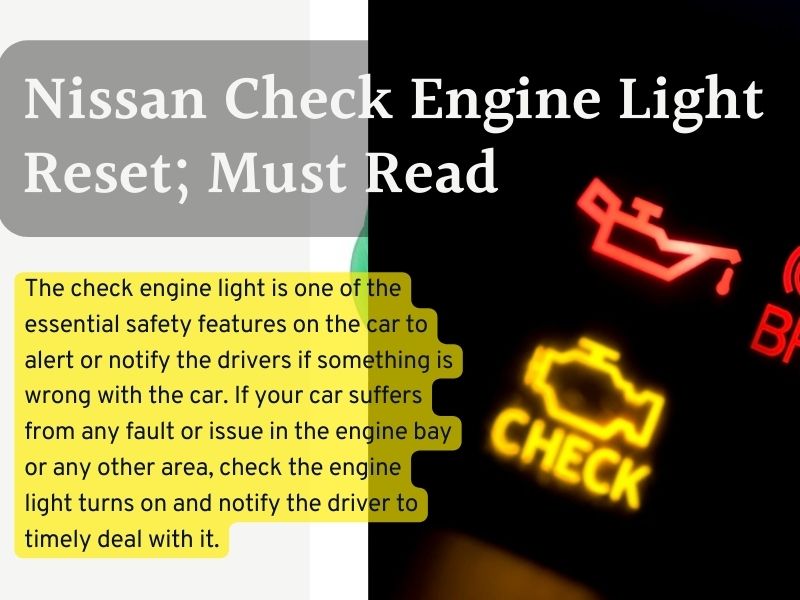
The dreaded Check Engine Light (CEL). It's a sight that strikes fear into the hearts of car owners and sometimes even seasoned mechanics. While it can indicate a minor issue like a loose gas cap, it can also signal a serious problem that needs immediate attention. One question that frequently arises is: How long will it take for the Check Engine Light to reset after I fix the problem?
Understanding the Check Engine Light
Before diving into reset times, it's crucial to understand what the CEL actually represents. It's part of your car's On-Board Diagnostic (OBD) system, specifically OBD-II for most vehicles manufactured after 1996. This system constantly monitors various engine and emissions components. When it detects a fault that exceeds pre-defined thresholds, it illuminates the CEL and stores a Diagnostic Trouble Code (DTC) in the car's computer. This code provides valuable information about the nature of the problem.
Automatic Resetting: The Good News
The good news is that the OBD-II system is designed to automatically reset the CEL under certain conditions. However, this automatic reset only occurs if the underlying problem has been completely resolved and the system detects no further faults related to the original issue. The time it takes for this to happen can vary, depending on the specific fault and the drive cycle required by the car's computer.
Generally, if the fault is a minor, intermittent issue, the CEL might turn off after a few drive cycles. A drive cycle is defined as a period of driving that includes a cold start, acceleration to highway speed, a period of cruising, deceleration, and idling. For some vehicles, particularly those with more sophisticated monitoring systems, several drive cycles might be necessary. Think of it as the car needing to "confirm" that the problem is truly gone before clearing the warning.
Factors Affecting Reset Time
Several factors can influence how long it takes for the CEL to reset automatically:
- The nature of the fault: Some faults require more extensive monitoring before the system is convinced the problem is resolved. For instance, an evaporative emissions (EVAP) leak might require several days of specific driving conditions to be properly tested.
- The car's make and model: Different manufacturers have different approaches to fault monitoring and reset protocols. Some models, like certain BMWs or Mercedes-Benzes, are known to be particularly stringent about emissions-related codes and might require more drive cycles. For example, a P0420 code (Catalyst System Efficiency Below Threshold) on a Toyota Camry might clear after a week of normal driving if the catalytic converter is replaced, while the same code on a Subaru Outback might require a more specific drive cycle to verify the repair.
- Driving habits: Short trips and stop-and-go traffic might not provide the necessary conditions for the OBD-II system to complete its tests. A longer highway drive is often more effective in allowing the system to assess the repairs.
- Other existing codes: If other DTCs are present, they can interfere with the system's ability to reset the CEL related to the original problem. Addressing all stored codes is essential.
Manual Resetting: When You Want It Gone Now
If you've fixed the problem and don't want to wait for the CEL to reset automatically, you can manually reset it. This can be done in two primary ways:
- Using an OBD-II Scanner: The most common and reliable method is to use an OBD-II scanner. These devices can read the stored DTCs and provide information about the fault. More importantly, they can also clear the codes, effectively resetting the CEL. You can purchase a scanner yourself (prices range from affordable to professional-grade) or visit a mechanic who has one. After clearing the codes, it's important to rescan after a few drive cycles to ensure the issue hasn't returned.
- Disconnecting the Battery: While not recommended as a primary method, disconnecting the negative terminal of the car's battery for about 15-30 minutes can sometimes reset the CEL. However, this method also clears other stored data, such as radio presets and seat memory settings. Furthermore, on some modern vehicles, disconnecting the battery can trigger other issues, so it's best to avoid this unless absolutely necessary and only after researching potential consequences for your specific vehicle model.
Common Problems and Solutions
Here are a few common scenarios involving the CEL and how to address them:
- Loose Gas Cap (P0455, P0456): This is one of the most frequent causes of the CEL. Symptom: CEL illuminated. Cause: Loose or damaged gas cap, allowing fuel vapors to escape. Fix: Tighten or replace the gas cap. The CEL should reset automatically after a few drive cycles.
- Faulty Oxygen Sensor (P0131, P0137): Symptom: CEL illuminated, poor fuel economy, rough idling. Cause: Aging or damaged oxygen sensor. Fix: Replace the faulty oxygen sensor. After replacement, clear the codes using a scanner.
- Catalytic Converter Problems (P0420, P0430): Symptom: CEL illuminated, reduced engine performance, possible rattling noise from the exhaust. Cause: Failing catalytic converter. Fix: Replace the catalytic converter. This is a more expensive repair and might require a mechanic's expertise.
- Mass Airflow (MAF) Sensor Issues (P0101, P0102): Symptom: CEL illuminated, poor fuel economy, stalling, difficulty starting. Cause: Dirty or faulty MAF sensor. Fix: Clean the MAF sensor with a specialized cleaner or replace it.
Keeping Your Car in Top Condition
The best way to avoid the dreaded Check Engine Light is to maintain your car properly. Regular maintenance, including oil changes, air filter replacements, and spark plug replacements, can prevent many common issues that trigger the CEL. Pay attention to any unusual noises, smells, or changes in performance. Addressing small problems early can prevent them from escalating into larger, more expensive issues. Don't ignore warning lights – they're there to help you keep your car running smoothly. Finally, always consult a qualified mechanic if you're unsure about the cause of a CEL or how to fix it. Attempting repairs without the proper knowledge or tools can potentially damage your vehicle further.