
How Long Does It Take To Jump Start A Car
The dreaded dead battery – a common car owner's nightmare. Knowing how long it should take to jump start a car can save you time, frustration, and potentially prevent further damage to your vehicle. This article provides a practical guide for both car owners and mechanics, covering maintenance, troubleshooting, and real-world issues related to jump starting.
The Ideal Jump Start Timeframe
Under ideal conditions, jump starting a car should only take a few minutes. After properly connecting the jumper cables, allowing the charging car to run for about 2-3 minutes is generally sufficient to transfer enough charge to the dead battery. You should then be able to start the car with the dead battery. However, "ideal" is rarely the reality. Several factors can significantly extend the jump start time or even prevent it altogether.
Common Problems and Solutions: Why Your Car Won't Jump Start Quickly
Here's a breakdown of common issues and their solutions:
1. Poor Cable Connections
Symptom: Clicking sound when trying to start, weak cranking, or no response at all. Cause: Insecure or corroded connections prevent efficient current flow. Solution: Clean the battery terminals with a wire brush or terminal cleaner. Ensure the clamps are making solid contact with the terminals. Wiggle the clamps to see if you can find a sweet spot where it starts. Check the ground connection too – ensure it's connected to a clean, unpainted metal surface on the engine block or chassis, away from the battery. Consider using a dedicated battery terminal cleaning tool. This is a common issue, especially in older cars like a 1998 Honda Civic or a 2005 Toyota Camry where corrosion can build up over time.
2. Severely Depleted Battery
Symptom: Even after several minutes of charging, the car still won't start. Cause: The battery is so deeply discharged that it needs a longer charging period to recover enough power to start the engine. This can happen if lights were left on overnight or if the car sat unused for an extended period. Solution: Allow the charging car to run for a longer period – 5-10 minutes. If that still doesn't work, consider using a battery charger instead of jump starting. A battery charger provides a slower, more controlled charge that can help revive a severely depleted battery. Trying to force a jump start on a heavily discharged battery can sometimes damage the donor car's electrical system, especially on vehicles with more complex electronics like a newer BMW 3 Series or a Tesla Model 3.
3. Faulty Jumper Cables
Symptom: Cables get excessively hot during the jump start process, or the car still won't start despite seemingly good connections. Cause: Cheap or undersized jumper cables can't handle the current required to start a car. The gauge of the wire is too thin. Solution: Invest in a good quality set of jumper cables with a heavy gauge wire (4-gauge or thicker is recommended). Avoid the cheap, flimsy cables often found at discount stores. Consider a jump starter pack – a portable battery pack specifically designed for jump starting cars. These are especially useful if you frequently find yourself needing a jump start or if you live in a remote area. Brands like NOCO Boost and Schumacher are popular choices.
4. Underlying Mechanical Issues
Symptom: The car cranks but doesn't start, even after a successful jump start. Cause: The battery might have been weak, but the underlying issue could be a faulty starter motor, a fuel system problem (like a clogged fuel filter or a failing fuel pump), or an ignition system problem (like bad spark plugs or a faulty ignition coil). Solution: This requires further diagnosis. If the car cranks but doesn't start after a jump start, take it to a mechanic to diagnose the underlying issue. Don't assume the jump start fixed the problem – it may have only masked the real cause. For example, a failing fuel pump in a Ford F-150 might be the culprit, requiring more than just a jump start to resolve.
5. Bad Alternator
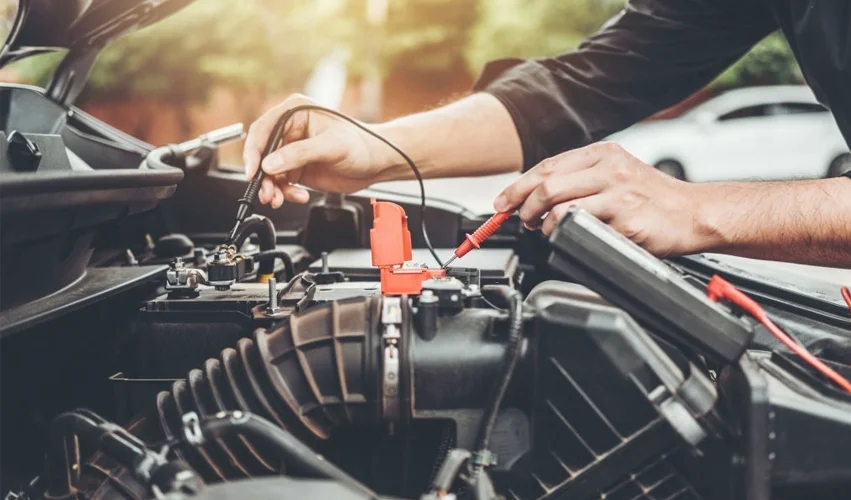
Symptom: The car starts after a jump, but dies shortly after disconnecting the jumper cables. Cause: A failing alternator isn't charging the battery while the engine is running. Solution: After a successful jump start, use a multimeter to check the voltage at the battery terminals with the engine running. It should be around 13.5-14.5 volts. If it's lower, the alternator is likely the problem and needs to be replaced. Many auto parts stores offer free alternator testing. This is a common problem in older vehicles and vehicles with high mileage, such as a 2010 Chevy Malibu with over 150,000 miles.
Preventative Maintenance: Keeping Your Car Ready
Prevention is always better than cure. Here are some tips to keep your car's battery and electrical system in top condition:
- Regular Battery Testing: Have your battery tested at least once a year, especially before winter.
- Clean Battery Terminals: Keep the battery terminals clean and free of corrosion.
- Avoid Short Trips: Short trips don't allow the alternator enough time to fully recharge the battery.
- Turn Off Accessories: Avoid leaving lights or accessories on when the engine is off.
- Use a Battery Tender: If you don't drive your car frequently, use a battery tender to keep the battery charged.
- Check Your Alternator: Periodically check the voltage output of your alternator.
By understanding the common causes of jump start problems and implementing preventative maintenance practices, you can minimize the risk of getting stranded with a dead battery and keep your car running smoothly for years to come.