
How Many Camshaft Sensors Does A Car Have
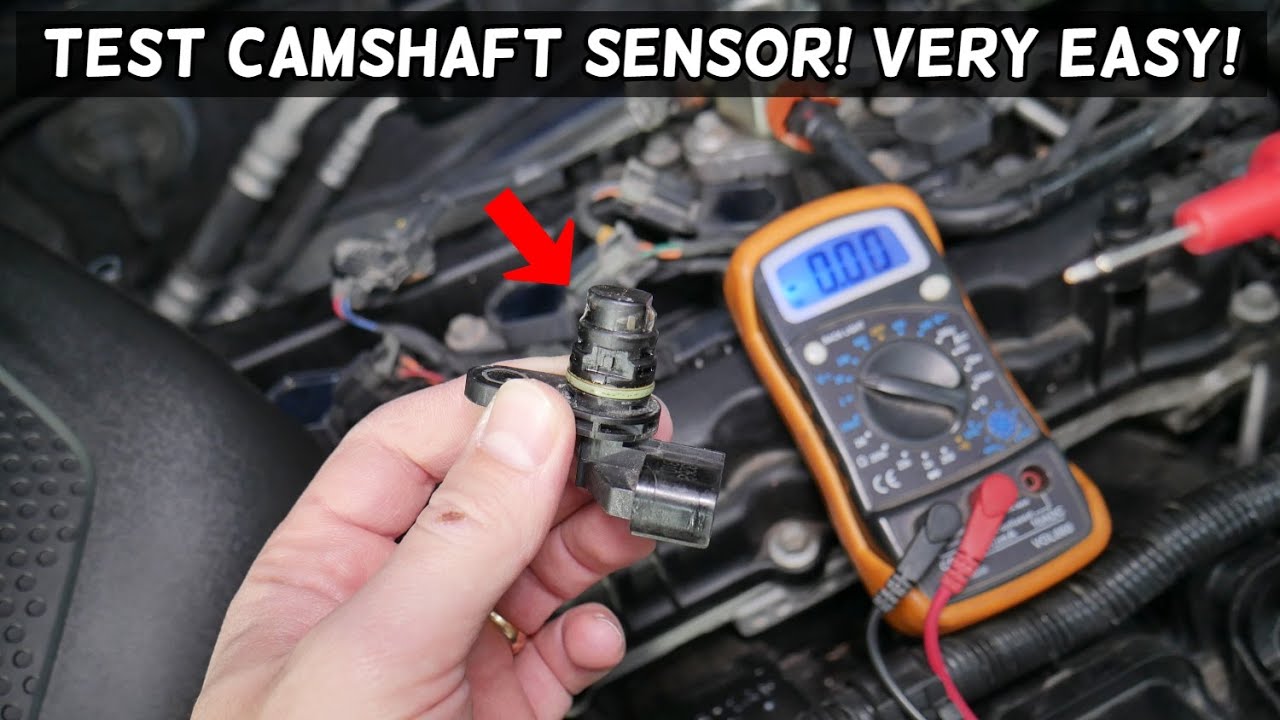
The number of camshaft sensors a car has isn't a one-size-fits-all answer. It depends heavily on the engine's design, specifically its configuration and how sophisticated its timing system is. While some cars might have just one, others can have multiple. Let's delve into why this is the case.
Understanding Camshaft Sensors and Their Role
First, a quick refresher on what camshaft sensors actually do. The camshaft is a rotating shaft inside your engine that controls the opening and closing of the engine's valves – the intake valves which let air and fuel into the cylinders, and the exhaust valves which let the burnt gases out. The camshaft sensor monitors the position and rotational speed of the camshaft. This information is crucial for the engine control unit (ECU), often called the engine computer, to precisely time fuel injection and ignition. Without accurate camshaft sensor data, the engine could misfire, run poorly, or even fail to start.
The ECU uses this data, along with information from the crankshaft sensor (which monitors the crankshaft's position and speed), to create a precise map of where each piston is in its cycle and when the valves should be opened and closed. Think of it as the conductor of an engine's symphony, ensuring everything happens in perfect harmony.
Factors Influencing the Number of Camshaft Sensors
Several key factors determine how many camshaft sensors a car will have:
Engine Configuration
The most significant factor is the engine's configuration. Let's consider a few common examples:
- Inline Engines (e.g., BMW inline-6, Toyota inline-4): Engines with cylinders arranged in a single line typically have one camshaft sensor. This sensor monitors the position of the single (or sometimes dual) camshaft. A good example is older BMW 3 Series models with inline-6 engines; they usually feature a single camshaft sensor.
- V-Engines (e.g., Ford V8, Honda V6): V-shaped engines, where cylinders are arranged in two banks, often have two camshaft sensors, one for each cylinder bank. This is because each bank usually has its own camshaft. Consider a Ford Mustang GT with its iconic V8; it will have two camshaft sensors, one monitoring each cylinder bank's camshaft.
- Dual Overhead Camshaft (DOHC) Engines: DOHC engines have two camshafts per cylinder bank – one for the intake valves and one for the exhaust valves. These often have two camshaft position sensors per bank. So, a V6 DOHC engine could have four camshaft sensors in total. A common example would be a Honda Accord V6 with a DOHC configuration.
- Variable Valve Timing (VVT) Systems: Engines equipped with VVT, a technology that allows the engine to adjust valve timing for improved performance and fuel efficiency, frequently require more camshaft sensors. These sensors are needed to monitor the position of the camshafts as the VVT system adjusts their timing. For example, many modern Nissan and Infiniti vehicles with VQ-series engines utilize VVT and have multiple camshaft sensors per bank to control and monitor the variable valve timing mechanisms.
Essentially, the more camshafts an engine has, the more camshaft sensors it will likely require to accurately monitor their positions. Each sensor provides crucial feedback to the ECU for precise control.
Variable Valve Timing (VVT) Complexity
The complexity of the VVT system also plays a role. Simpler VVT systems might only require one camshaft sensor per camshaft, while more advanced systems that independently control intake and exhaust valve timing might necessitate multiple sensors per camshaft.
Consider Toyota's VVT-i (Variable Valve Timing with intelligence) system. Earlier versions might use a single sensor per camshaft, while more advanced versions, like Dual VVT-i, require sensors to monitor both the intake and exhaust camshafts independently.
Engine Management System Design
The specific design of the engine management system can also influence the number of camshaft sensors. Some manufacturers might use a more sophisticated system with redundant sensors for increased reliability, while others might opt for a simpler, more cost-effective approach.
Locating Camshaft Sensors
Camshaft sensors are typically located near the camshaft pulleys or sprockets, usually on the cylinder head. They are often relatively easy to access, though the exact location can vary depending on the engine design.
Important Note: Always consult your car's repair manual or online resources specific to your vehicle's make, model, and year to find the exact location of the camshaft sensor(s).
Symptoms of a Faulty Camshaft Sensor
A failing camshaft sensor can cause several noticeable symptoms, including:
- Check Engine Light: This is often the first sign of a problem. The ECU will detect an issue and illuminate the check engine light.
- Engine Misfires: The engine might misfire due to incorrect timing of fuel injection and ignition.
- Rough Idle: The engine might idle roughly or stall.
- Reduced Engine Performance: You might notice a decrease in power and acceleration.
- Difficulty Starting: In some cases, a faulty camshaft sensor can prevent the engine from starting altogether.
- Poor Fuel Economy: Inefficient combustion can lead to reduced fuel economy.
Practical Takeaways
Here are some practical takeaways to help you apply this knowledge:
- Know Your Engine: The first step is to understand your car's engine configuration (inline, V-engine, etc.) and whether it has a DOHC setup. This will give you a general idea of how many camshaft sensors to expect.
- Consult Your Repair Manual: Always refer to your car's repair manual or online resources for specific information about your vehicle. This will provide the exact number and location of camshaft sensors.
- Diagnose Carefully: If you suspect a faulty camshaft sensor, use an OBD-II scanner to retrieve diagnostic trouble codes (DTCs). These codes can help you pinpoint the problem sensor. Common codes related to camshaft sensors include P0340, P0341, P0342, and P0343.
- Consider VVT Complexity: If your engine has VVT, be aware that it might have multiple camshaft sensors per camshaft.
- Replace Wisely: When replacing a camshaft sensor, use a high-quality replacement part from a reputable supplier. Cheaper sensors can be unreliable and cause further problems.
In conclusion, the number of camshaft sensors in a car varies significantly depending on the engine's configuration and complexity. By understanding these factors, you can better diagnose and address potential issues related to camshaft sensors, ensuring your engine runs smoothly and efficiently.