
How Many Volts Does An Alternator Put Out
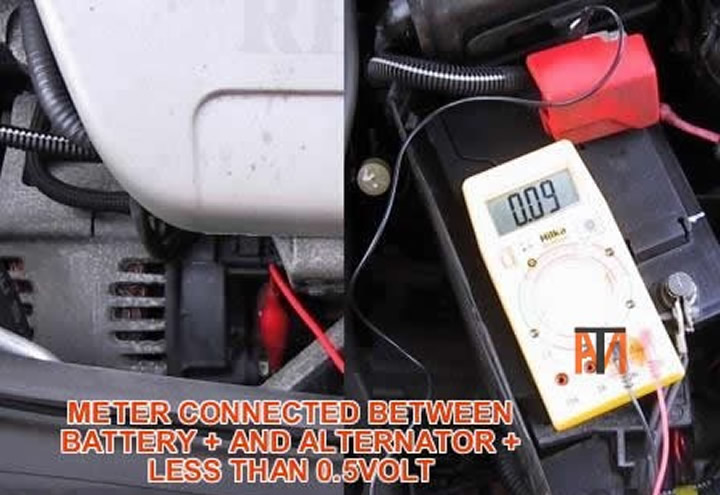
For decades, the humble alternator has faithfully served as the electrical backbone of the internal combustion engine (ICE) vehicle. Its primary function: to convert mechanical energy from the engine into the electrical power needed to run the car's accessories and recharge the battery. A typical alternator churns out around 13.5 to 14.5 volts. But in a rapidly evolving automotive landscape, this long-standing stalwart is facing a revolution. So, the question of "how many volts does an alternator put out?" is becoming increasingly complex, nuanced, and frankly, less relevant in its traditional sense.
The Shifting Landscape of Automotive Electrification
The rise of electric vehicles (EVs) and hybrid electric vehicles (HEVs) is fundamentally changing the way cars are powered – and the role of the alternator. In a pure EV, the alternator, as we know it, is absent. The high-voltage battery pack, typically operating at 400V or even 800V, handles all the vehicle's electrical needs, from powering the motor(s) to running the climate control and infotainment systems. An onboard charger converts AC power from the grid to DC power for the battery, while a DC-to-DC converter steps down the high voltage to a lower voltage (typically 12V or 24V) to power traditional automotive accessories.
Hybrid systems present a more diverse picture. Some mild hybrids (MHEVs) retain a belt-driven starter generator (BSG), which combines the functions of a starter and an alternator. These systems often operate at a higher voltage than traditional alternators, perhaps 48V, offering improved fuel efficiency and the ability to provide regenerative braking. Full hybrids (HEVs) typically have a high-voltage battery and a sophisticated power electronics system that manages the flow of energy between the engine, motor(s), and battery. While a traditional alternator might be present to support the 12V system, its role is significantly diminished, often acting as a backup or supplemental power source.
Beyond the Alternator: Advanced Power Management Systems
The future of automotive electrical systems is not simply about replacing the alternator with a higher-voltage equivalent. It's about a holistic approach to power management, involving sophisticated electronics, intelligent control algorithms, and advanced battery technologies. Emerging trends include:
- Dual-voltage systems: Vehicles with both high-voltage (for propulsion) and low-voltage (for accessories) systems, connected by efficient DC-to-DC converters. This allows for the optimization of each system independently.
- Solid-state circuit breakers and smart fuses: Replacing traditional fuses with electronically controlled solid-state devices that offer faster response times, improved protection, and the ability to be remotely monitored and controlled.
- Wireless power transfer: The ability to charge EVs wirelessly, both statically (e.g., parking over a charging pad) and dynamically (e.g., charging while driving on a specially equipped road).
- Vehicle-to-grid (V2G) and vehicle-to-home (V2H) technology: Using the EV's battery as a mobile energy storage unit to provide power back to the grid or to a home during peak demand or power outages.
Challenges and Opportunities
The transition to electrified vehicles and advanced power management systems presents both significant challenges and exciting opportunities. One challenge is the cost of high-voltage components, such as batteries, inverters, and DC-to-DC converters. Reducing these costs is critical for making EVs more accessible to a wider range of consumers. Another challenge is ensuring the reliability and safety of high-voltage systems. Rigorous testing and validation are essential to prevent electrical failures and ensure the safety of passengers and maintenance personnel.
However, the opportunities are immense. Electrification offers the potential for significant reductions in greenhouse gas emissions and improved air quality. Advanced power management systems can enhance vehicle performance, improve fuel efficiency, and enable new features and services. The development of V2G and V2H technology could transform the way we think about energy storage and distribution, making EVs an integral part of a more resilient and sustainable energy grid.
A Vision for the Future of Mobility
Looking ahead, the concept of the alternator, as a discrete component responsible for generating electrical power, will likely fade into obscurity. Instead, we will see highly integrated power electronics systems that seamlessly manage the flow of energy throughout the vehicle. These systems will be intelligent, adaptive, and connected, capable of learning and optimizing their performance based on driving conditions, battery state of charge, and external factors such as grid conditions. The future of mobility is not just about electric vehicles; it's about creating a sustainable and interconnected ecosystem where energy is managed efficiently and intelligently, transforming our vehicles into mobile power hubs contributing to a cleaner and more resilient future. The voltage itself becomes a flexible, managed resource, not a fixed output, tailored by sophisticated algorithms to meet the ever-changing demands of a dynamic, connected vehicle.