
How Much Should A Starter Cost To Replace
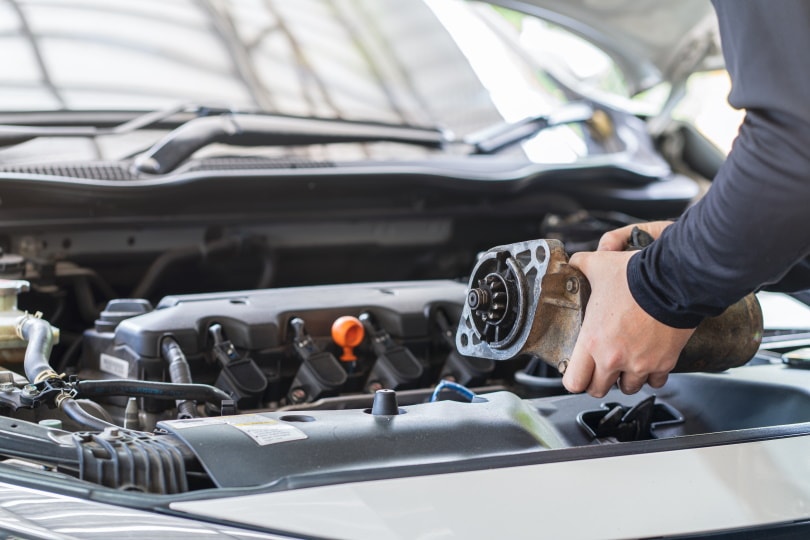
The starter motor. It's the unsung hero that brings your engine to life. We rarely think about it until that dreaded moment – the click, click, click instead of the reassuring roar. When that happens, the question quickly becomes: how much is this going to cost me?
Understanding the Starter and Its Role
Before diving into the costs, let's quickly recap what a starter does. Imagine your engine as a really stubborn child. It needs a good, forceful shove to get going. That's where the starter motor comes in. It's a powerful electric motor that uses a small pinion gear to engage with the flywheel (or flexplate in automatic transmissions). This gear spins the engine's crankshaft, starting the combustion process. Once the engine is running on its own, the starter disengages.
Think of it like winding up a toy car with a pull-back mechanism. The starter motor provides the initial "pull back" or rotation needed for the engine to catch and run independently. Without a functioning starter, your car is simply a very expensive paperweight.
Factors Influencing Starter Replacement Cost
The cost to replace a starter isn't a fixed number; it varies widely depending on several factors:
1. Vehicle Make and Model
This is arguably the biggest cost driver. A starter for a basic, mass-produced car like a Honda Civic will generally be much cheaper than one for a high-performance vehicle like a Porsche 911. The complexity of the engine and the availability of parts play a significant role.
For example, a starter for a 2015 Honda Civic might cost between $100-$250 for the part itself. Compare that to a 2018 BMW 3 Series, where the starter could easily range from $250-$500 or more. European cars, especially luxury brands, often have more expensive parts due to higher manufacturing costs and import duties.
2. Part Quality (OEM vs. Aftermarket)
You have two main choices when it comes to the replacement starter: Original Equipment Manufacturer (OEM) and aftermarket parts. OEM parts are made by the same manufacturer that supplied the original part to your car. They're typically more expensive but guarantee a perfect fit and are often seen as higher quality.
Aftermarket starters are made by third-party companies. They can range in price and quality. Some aftermarket brands offer excellent value and performance, while others are simply cheap knock-offs that might fail prematurely. Researching reputable aftermarket brands is crucial. For example, brands like Bosch or Denso often offer reliable aftermarket starters.
Choosing between OEM and aftermarket is a balancing act. If you plan to keep the car for a long time and prioritize reliability, OEM might be worth the investment. If you're on a tighter budget and the car is nearing the end of its life, a quality aftermarket starter could be a sensible option.
3. Labor Costs
Labor costs can vary dramatically depending on the shop's location, hourly rate, and the complexity of the job. Replacing a starter in some cars is relatively straightforward, while in others, it can be a real pain.
Imagine a scenario where the starter is easily accessible, like in many older American cars such as a Ford Mustang. The mechanic can simply unbolt the old starter, disconnect the wiring, and install the new one in under an hour. Labor costs in this case would be minimal, perhaps $100-$200.
However, in some newer cars, especially those with cramped engine bays or where the starter is buried deep under other components, the job becomes much more involved. For example, in some Audi models, the intake manifold might need to be removed to access the starter. This can add several hours to the job, significantly increasing the labor costs. In such cases, expect to pay $300-$500 or more for labor.
4. Location and Accessibility
As mentioned above, the location of the starter motor plays a massive role in labor costs. A starter located in a difficult-to-reach spot will always translate to more labor hours. Some cars even require specialized tools or procedures to access the starter. Researching your specific car model can give you an idea of how challenging the job is likely to be.
5. Additional Repairs
Sometimes, a failing starter is just a symptom of a larger problem. The mechanic might discover underlying issues, such as a faulty battery, corroded wiring, or a bad solenoid. These additional repairs will, of course, increase the overall cost. It's always wise to have a mechanic thoroughly inspect the starting system to identify any potential problems.
Typical Cost Ranges for Starter Replacement
Taking all these factors into account, here's a general cost range for starter replacement:
* Economy Cars (e.g., Honda Civic, Toyota Corolla): $250 - $500 * Mid-Size Sedans (e.g., Ford Fusion, Toyota Camry): $300 - $600 * Luxury Cars (e.g., BMW 3 Series, Mercedes-Benz C-Class): $400 - $800+ * Trucks and SUVs (e.g., Ford F-150, Chevrolet Tahoe): $350 - $700+These are just estimates, and the actual cost can vary. Always get quotes from multiple shops before committing to the repair.
DIY Starter Replacement: Is It Feasible?
If you're a mechanically inclined car enthusiast, you might be tempted to replace the starter yourself. It can save you a significant amount of money on labor costs. However, it's essential to assess your skills and the complexity of the job carefully.
Pros of DIY:
- Significant cost savings
- Learning experience
- Sense of accomplishment
Cons of DIY:
- Requires mechanical knowledge and tools
- Can be time-consuming
- Risk of injury
- Potential for mistakes that could damage the car
Before attempting a DIY starter replacement, consult your car's repair manual or online resources like YouTube. Make sure you have the necessary tools, including sockets, wrenches, and safety glasses. Disconnect the battery before starting work to avoid electrical shock.
If the starter is easily accessible and the job seems straightforward, it might be a good DIY project. However, if the starter is buried deep within the engine bay or you're unsure about any part of the process, it's best to leave it to the professionals.
Practical Takeaways
Here are some practical tips to help you navigate starter replacement:
* Get multiple quotes: Don't settle for the first quote you receive. Contact several shops in your area to compare prices. * Ask about the warranty: Make sure the replacement starter and the labor are covered by a warranty. * Inquire about OEM vs. aftermarket: Discuss the pros and cons of each option with your mechanic. * Check online reviews: Research the reputation of the repair shop before entrusting them with your car. * Consider DIY (with caution): If you're confident in your abilities, a DIY starter replacement can save you money, but proceed with caution. * Don't ignore warning signs: If you hear clicking noises when you try to start your car, or if the engine cranks slowly, it's a sign that your starter is failing. Address the issue promptly to avoid getting stranded. * Battery health matters: A weak battery can put extra strain on the starter. Ensure your battery is in good condition to prolong the life of your starter. Consider having your battery tested regularly, especially in extreme climates. * Clean battery terminals: Corroded battery terminals can hinder the flow of electricity to the starter. Clean them regularly to ensure optimal performance.By understanding the factors that influence starter replacement cost and following these practical tips, you can make informed decisions and avoid getting ripped off. A little knowledge can go a long way in keeping your car running smoothly and your wallet happy.