
How Often Do You Change Brakes And Rotors
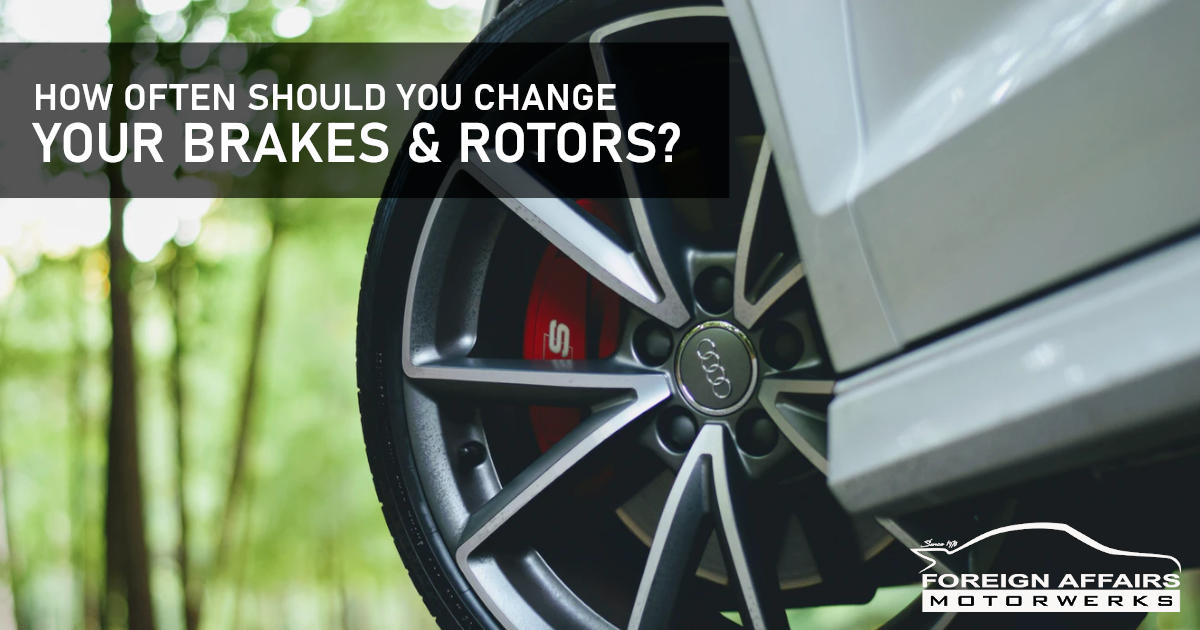
The age-old question: how often do you really need to change your brakes and rotors? It’s a query that’s plagued drivers for decades, often met with vague answers and the nagging suspicion of upselling. But the answer is undergoing a radical transformation, driven by technological advancements and the evolving landscape of modern mobility. While the traditional mileage-based recommendation (every 30,000-70,000 miles) still holds some weight for conventional vehicles, the future of braking is far more nuanced.
The Electric Revolution and Regenerative Braking
Electric Vehicles (EVs) are rewriting the rules of the road, and braking systems are no exception. The introduction of regenerative braking is a game-changer. Instead of relying solely on friction, regenerative braking uses the electric motor to slow the vehicle, converting kinetic energy back into electricity and recharging the battery. This drastically reduces the wear and tear on traditional brake pads and rotors. In many EVs, drivers are reporting brake pad lifespans two or three times longer than their gasoline-powered counterparts. However, this doesn't mean EVs are brake-maintenance-free. Rotors can still rust and corrode, especially in regions with harsh winter conditions and road salt. Periodic inspections are still crucial to ensure the overall health of the braking system.
Hybrid Systems: A Bridge Between Worlds
Hybrid vehicles, sitting at the intersection of combustion engines and electric motors, also benefit from regenerative braking. While not to the same extent as EVs, hybrids still experience a significant reduction in brake wear. The frequency of brake changes in hybrids typically falls somewhere between that of traditional gasoline cars and EVs. The sophistication of the hybrid system and the driver’s driving habits play a significant role. Aggressive driving, even with regenerative braking, will inevitably lead to faster brake wear. Careful and anticipatory driving, maximizing the use of regenerative braking, can extend the life of brake components considerably.
Smart Automotive Solutions: Predictive Maintenance is Here
The rise of connected cars and smart automotive solutions is bringing a new level of intelligence to vehicle maintenance. Sensors embedded in the braking system can now monitor pad thickness, rotor condition, and even braking force applied. This data is then transmitted to the vehicle's onboard computer and potentially to the manufacturer or a designated service provider. This allows for predictive maintenance, where the vehicle proactively alerts the driver when brake service is needed, rather than relying on arbitrary mileage intervals. This not only optimizes brake maintenance but also improves safety by ensuring the braking system is always in optimal condition.
Challenges and Considerations
Despite these advancements, challenges remain. The initial cost of EVs and hybrids can be a barrier to entry for some consumers. The availability of qualified technicians to service advanced braking systems is also a concern. Furthermore, the transition to predictive maintenance requires robust data security and privacy measures to protect driver information. The dependence on sensors and software also introduces a new layer of complexity, potentially requiring more frequent software updates and diagnostic checks. Corrosion and rust, especially in regions with harsh weather conditions, will continue to be a factor affecting rotor longevity, even with reduced usage. Standardized testing and reporting of brake wear across different EV models and driving conditions are also needed to provide consumers with more accurate and reliable information.
Beyond Friction: The Future of Braking
Looking further ahead, we can envision a future where friction-based braking is almost entirely replaced by advanced energy recuperation systems. Technologies like enhanced regenerative braking, incorporating supercapacitors for even more efficient energy storage, could become commonplace. Electromagnetic braking systems, utilizing magnetic fields to slow the vehicle without physical contact, are also under development. These technologies promise to further extend brake component lifespan, reduce maintenance costs, and improve energy efficiency. Moreover, the integration of advanced driver-assistance systems (ADAS) and autonomous driving technologies will play a crucial role in optimizing braking performance and preventing accidents. The future of braking is not just about stopping the car; it's about seamlessly integrating braking with the overall driving experience, enhancing safety, efficiency, and sustainability.
The changing landscape of mobility is rapidly transforming how we think about brake maintenance. Embrace the shift, educate yourself about the technologies in your vehicle, and prioritize regular inspections to ensure your braking system is always ready to respond. The future of braking is smart, efficient, and ultimately, safer.