
How Often Should I Change My Brake Rotors
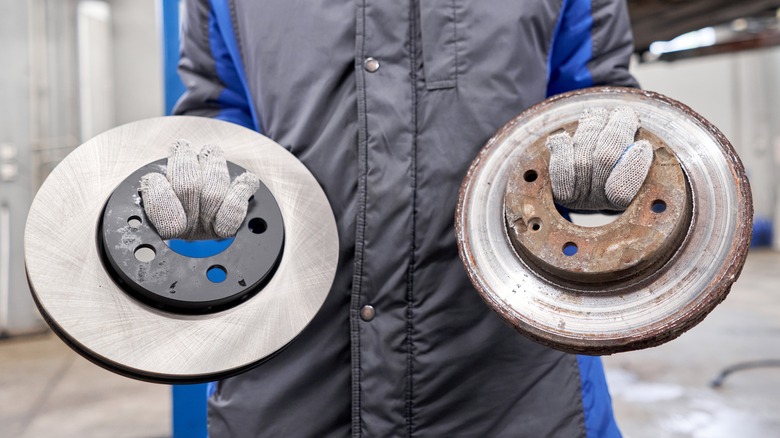
So, you're wondering how often you should change your brake rotors, huh? That's a great question, and one that doesn't always have a straightforward answer. Unlike oil changes with a set mileage interval, rotor replacement depends heavily on a variety of factors. Think of me as your friendly neighborhood service advisor here to break it down for you.
The short answer is: there's no magic number. However, with regular inspections and a bit of knowledge, you can keep your braking system in top shape and avoid costly repairs down the line. Let's dive into what affects rotor lifespan and how to tell when it's time for a change.
Factors Affecting Rotor Lifespan
Several things impact how long your brake rotors will last. Understanding these can help you anticipate when replacement might be necessary:
Driving Habits:
Aggressive driving, characterized by hard braking and rapid acceleration, puts significantly more stress on your rotors. Frequent stop-and-go traffic, especially in urban environments, also contributes to increased wear. Conversely, highway driving with fewer braking instances tends to prolong rotor life.
Vehicle Type:
Heavier vehicles, like trucks and SUVs, generally require more braking force to stop. This increased demand translates to higher rotor temperatures and accelerated wear compared to lighter passenger cars. Consider a full-size truck compared to a compact sedan - the truck's rotors will typically wear out sooner.
Brake Pad Material:
The type of brake pads you use plays a crucial role. Harder, more aggressive brake pad compounds (like metallic pads) can extend the life of the brake pads, but also lead to faster rotor wear. Softer, organic or ceramic pads are typically gentler on rotors but may wear out more quickly themselves. There's always a trade-off!
Environmental Conditions:
Road salt, dirt, and other debris can act as abrasives, accelerating rotor wear. If you live in an area with harsh winters or dusty conditions, you'll likely need to replace your rotors more frequently. Rust is also a major factor, especially for vehicles parked outside for extended periods.
Rotor Quality:
Not all rotors are created equal. High-quality rotors made from durable materials will generally last longer than cheaper, low-quality alternatives. Investing in reputable brands from your local auto parts store, and/or getting them installed at your local service center, can save you money in the long run.
Signs You Need New Brake Rotors
While there's no single mileage interval, these symptoms indicate that your brake rotors might be nearing the end of their lifespan and you should have them inspected by a professional mechanic:
Brake Pedal Pulsation:
This is one of the most common indicators. If you feel a pulsating or vibrating sensation in the brake pedal when you apply the brakes, it could be due to warped or unevenly worn rotors. This "warping" isn't always literal bending of the metal, but often uneven deposits of brake pad material that create variations in thickness and friction. Ignoring this pulsation can lead to reduced braking performance and potentially dangerous situations.
Squealing or Grinding Noises:
While squealing can sometimes be attributed to worn brake pads, a grinding noise often indicates that the pads have worn down completely and the metal backing plates are scraping against the rotors. This is a serious problem that requires immediate attention, as it can cause significant damage to the rotors. Waiting too long will not only wear the rotor, but will also require more expensive repairs to the calipers.
Visible Damage:
Inspect your rotors for visible signs of damage, such as deep scoring, cracks, or excessive rust. While surface rust is normal, especially after rain or humidity, deep rust or cracks are a definite sign that the rotors need to be replaced. You may have to remove the wheel to see the entire rotor surface, but you'll also have the option to just take the vehicle to your local service center for inspection.
Increased Stopping Distance:
If you notice that it takes longer to stop your vehicle than usual, it could be a sign of worn rotors. Reduced friction between the pads and rotors can compromise braking performance, making it harder to stop quickly and safely. Always best to visit your local service center when experiencing this condition.
Uneven Brake Pad Wear:
When you're replacing your brake pads, take a look at the rotors. If you notice uneven wear patterns on the pads, it could be a sign that the rotors are not perfectly flat or are experiencing uneven contact. This unevenness can accelerate pad wear and reduce braking efficiency. Again, it is recommended to visit your local service center and get a professional to inspect the issue.
Checking Rotor Thickness
A more precise method for determining rotor condition is measuring its thickness. There is a minimum thickness specification for each rotor, as indicated by the manufacturer. This number is usually stamped or cast on the rotor itself. Measuring below this number is an indication the rotors should be replaced.
You'll need a caliper tool (typically a dial caliper) for this task. Measure the rotor thickness at several points around its circumference. If any measurement falls below the minimum thickness specification, the rotor needs replacement.
Rotor Resurfacing (Turning) vs. Replacement
In some cases, if the rotors are only slightly worn or have minor surface imperfections, resurfacing (also known as "turning") them might be an option. Resurfacing involves machining a thin layer off the rotor surface to restore a smooth, flat surface. However, there are limitations:
- Minimum Thickness: Rotors can only be resurfaced if they still meet the minimum thickness specification *after* machining. If they are already close to the limit, resurfacing will make them too thin.
- Severity of Damage: Deep scoring, cracks, or excessive rust usually make resurfacing impossible. Replacement is necessary in these cases.
- Cost-Effectiveness: In some instances, the cost of resurfacing plus labor might be close to the cost of new rotors. Consider the long-term benefits of new rotors, which typically offer better performance and longevity.
DIY vs. Professional Installation
Replacing brake rotors is a moderately complex job that requires some mechanical knowledge and the right tools. If you're comfortable working on cars and have the necessary tools (jack, jack stands, lug wrench, socket set, brake caliper tool, torque wrench), you might be able to tackle the job yourself. However, if you're not experienced with brake work, it's best to leave it to a professional. Brakes are critical for your safety, and a mistake could have serious consequences.
Approximate Repair Costs:
The cost of replacing brake rotors can vary depending on the vehicle make and model, the quality of the rotors, and the labor rates in your area. Generally, you can expect to pay anywhere from $150 to $500 per axle (both front or both rear) for parts and labor. High-performance or specialized rotors can be significantly more expensive. It is always recommended to call your local service center for an estimate.
Final Thoughts
While there's no set mileage interval for replacing brake rotors, paying attention to the signs of wear and having your brakes inspected regularly by a qualified mechanic is the key. Safe stopping power is not something to gamble with. By being proactive and addressing any issues promptly, you can ensure your safety and avoid more costly repairs down the road. Don't hesitate to ask your mechanic any questions you have about your braking system – we're here to help you stay safe on the road!