
How To Check The Air Conditioner In A Car
Staying cool in your car during the sweltering summer months is essential. A malfunctioning air conditioning (A/C) system can turn a comfortable drive into an unbearable ordeal. Fortunately, you can perform several checks yourself to diagnose potential issues before heading to a professional. This guide will walk you through the steps to troubleshoot your car's A/C system, covering everything from basic checks to more advanced procedures.
Initial Inspection: The Obvious Culprits
Before diving into complex diagnostics, start with the simple stuff. First, ensure the A/C button is engaged (usually indicated by an illuminated light on the dashboard). Next, confirm the blower motor is functioning at all speeds. A weak or non-existent blower airflow is often the first sign of trouble. A faulty blower motor resistor is a common culprit here, especially if you notice the blower working only on the highest speed. Replacing a blower motor resistor is a relatively inexpensive and straightforward repair, typically costing between $50 and $150, depending on the vehicle.
Check the cabin air filter. A clogged filter restricts airflow, reducing the efficiency of the A/C system. Replacing the cabin air filter is an easy DIY task and should be part of your regular maintenance schedule. Consult your owner's manual for the location of the cabin air filter and the recommended replacement interval.
Visual Inspection of Components
Pop the hood and visually inspect the A/C compressor, which is usually located at the front of the engine and driven by a belt. Make sure the belt is in good condition, properly tensioned, and not slipping. Look for any signs of leaks around the compressor, hoses, and connections. Oily residue indicates a potential refrigerant leak.
The A/C compressor is responsible for compressing the refrigerant, a critical step in the cooling process. If the compressor clutch isn't engaging when the A/C is turned on, the compressor won't operate. Listen for a clicking sound when the A/C is activated; this indicates the clutch is engaging. If you don't hear a click, there could be an electrical issue, a faulty compressor clutch, or low refrigerant pressure (which prevents the compressor from engaging to protect itself).
Checking Refrigerant Levels
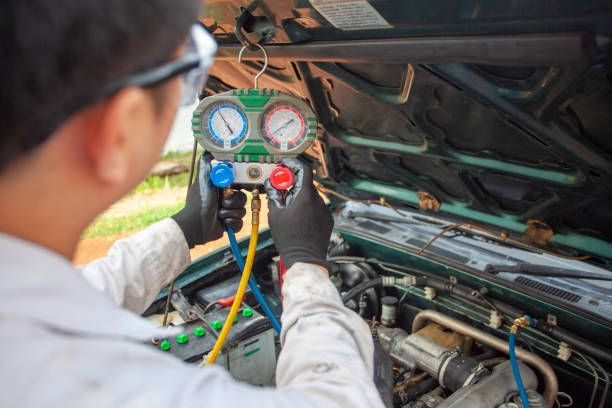
Low refrigerant is one of the most common causes of A/C problems. While a professional recharge is always recommended, you can use a low-pressure gauge to get a general idea of the refrigerant level. These gauges are available at most auto parts stores and are relatively inexpensive. Connect the gauge to the low-pressure port (usually located on the accumulator or receiver/drier) and read the pressure. The gauge typically has a color-coded scale indicating the optimal pressure range. Be cautious when working with refrigerant, as it can cause frostbite.
Important: Adding refrigerant without addressing the underlying leak is only a temporary fix. The leak will continue, and the system will eventually lose refrigerant again. It's crucial to identify and repair the leak to ensure long-term A/C performance.
Evaporator Temperature Check
The evaporator is located inside the dashboard and is responsible for cooling the air that blows into the cabin. A simple test involves placing a thermometer in the center vent and checking the temperature after the A/C has been running for a few minutes. A properly functioning A/C system should produce air that is significantly cooler than the ambient temperature, typically between 40 and 50 degrees Fahrenheit. If the air is not cooling adequately, the evaporator might be frozen over due to a faulty expansion valve or low refrigerant.
Electrical System Checks
Use a multimeter to check for voltage at the A/C compressor clutch connector when the A/C is turned on. If there's no voltage, the problem could be a blown fuse, a faulty relay, or a problem with the A/C control module. Consult your vehicle's wiring diagram for the location of the fuse and relay. Replacing a fuse or relay is a simple and inexpensive fix.
When to Call a Professional
If you've performed these checks and are still unable to diagnose the problem, it's time to consult a qualified automotive A/C technician. They have the specialized tools and expertise to accurately diagnose and repair complex A/C issues, such as refrigerant leaks, faulty compressors, and evaporator problems. They can also perform a proper vacuum and recharge of the system to ensure optimal performance.
Remember, regular maintenance, including cabin air filter replacement and periodic A/C system inspections, can help prevent costly repairs down the road. Understanding the basics of your car's A/C system will empower you to diagnose minor issues and communicate effectively with your mechanic, ensuring you stay cool and comfortable on the road.