
How To Check The Throttle Position Sensor
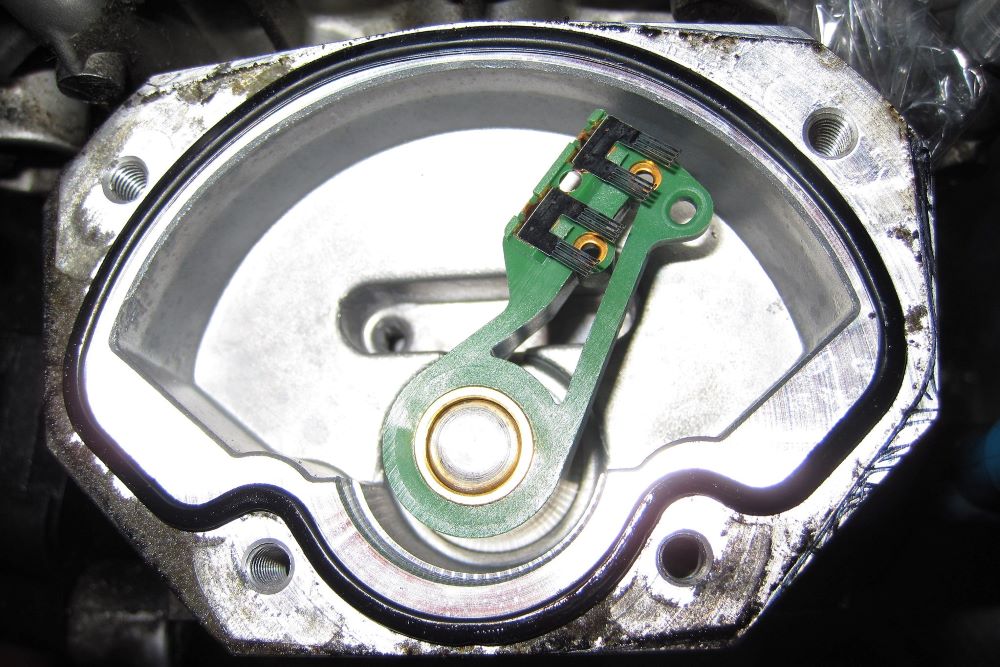
Understanding and Checking Your Throttle Position Sensor (TPS)
The throttle position sensor (TPS) is a crucial component in your vehicle's engine management system. Its primary function is to monitor the position of the throttle plate and relay this information to the engine control unit (ECU). The ECU then uses this data to adjust fuel injection timing and other engine parameters, optimizing performance and fuel efficiency. When a TPS malfunctions, it can lead to various drivability issues, including rough idling, hesitation, poor acceleration, and even stalling. Understanding how to check your TPS can save you time and money by allowing you to diagnose the problem yourself or providing valuable information to your mechanic.
What Does a Throttle Position Sensor Do?
To fully grasp the importance of checking your TPS, it's essential to understand its role in your vehicle's operation. The TPS is typically located on the throttle body, directly connected to the throttle plate shaft. As you press the accelerator pedal, the throttle plate opens, allowing more air into the engine. The TPS detects this movement and sends a corresponding voltage signal to the ECU. This signal represents the throttle plate's angle, from fully closed (idle) to wide open throttle (WOT).
Based on the TPS signal, the ECU adjusts the fuel mixture, ignition timing, and other engine settings to ensure optimal combustion. This process is crucial for smooth acceleration, fuel efficiency, and overall engine performance. A faulty TPS can disrupt this process, leading to noticeable performance problems.
Symptoms of a Failing Throttle Position Sensor
Recognizing the symptoms of a failing TPS is the first step in diagnosing the problem. Here are some common indicators:
- Rough Idling: The engine may idle erratically or stall, especially when coming to a stop.
- Hesitation or Stumbling: The engine may hesitate or stumble during acceleration, especially at lower speeds.
- Poor Acceleration: The vehicle may feel sluggish or lack power when accelerating.
- Stalling: The engine may stall unexpectedly, particularly when decelerating or idling.
- Check Engine Light: The check engine light may illuminate, and diagnostic trouble codes (DTCs) related to the TPS may be stored in the ECU. Codes such as P0120, P0121, P0122, P0123, and P0125 are commonly associated with TPS issues.
- Surging: The engine may surge or accelerate unexpectedly, even without pressing the accelerator pedal.
- Decreased Fuel Economy: A faulty TPS can lead to inefficient fuel combustion, resulting in reduced fuel economy.
- Transmission Problems (Automatic Transmissions): In some vehicles with automatic transmissions, a faulty TPS can cause erratic shifting or difficulty shifting gears.
If you experience any of these symptoms, it's advisable to check your TPS as soon as possible to prevent further damage to your engine and ensure safe driving.
Tools You'll Need to Check Your TPS
Before you begin checking your TPS, gather the necessary tools and equipment. You'll typically need the following:
- Multimeter: A digital multimeter is essential for measuring voltage and resistance.
- Wiring Diagram: A wiring diagram for your vehicle's TPS is helpful for identifying the correct terminals. This information can often be found in your vehicle's repair manual or online.
- Screwdrivers: You may need screwdrivers to access the TPS and disconnect its electrical connector.
- Socket Set or Wrenches: These may be necessary to remove the TPS if replacement is required.
- Pen and Paper (Optional): For recording voltage readings.
- Safety Glasses: To protect your eyes.
How to Check Your Throttle Position Sensor: A Step-by-Step Guide
Here's a detailed guide on how to check your TPS using a multimeter:
- Locate the TPS: The TPS is usually mounted on the throttle body, near the throttle plate shaft. Refer to your vehicle's repair manual or online resources to find its exact location.
- Disconnect the Electrical Connector: Carefully disconnect the electrical connector from the TPS. Be sure to note the orientation of the connector for reassembly.
- Identify the Terminals: Using your wiring diagram, identify the terminals on the TPS connector. You'll typically find a power (usually 5V), a ground, and a signal wire. If you don't have a wiring diagram, a little online research, including searching online forums specific to your make and model of vehicle, should provide the information you need.
- Test the Power Supply: Turn the ignition key to the "ON" position (but do not start the engine). Set your multimeter to DC voltage mode. Connect the black lead of the multimeter to a known good ground (such as the vehicle's chassis) and the red lead to the power wire terminal on the TPS connector. You should read approximately 5 volts. If you don't, there may be a problem with the power supply to the TPS. This is a crucial step to eliminate voltage supply issues.
- Test the Ground Connection: With the ignition still in the "ON" position, connect the black lead of the multimeter to the ground wire terminal on the TPS connector and the red lead to a known good 12V power source (such as the positive battery terminal). You should read approximately 12 volts. Alternatively, set your multimeter to measure resistance (Ohms). Disconnect the negative battery terminal. Connect one lead of the multimeter to the ground wire terminal on the TPS connector and the other lead to the vehicle's chassis ground. You should read close to 0 Ohms, indicating a good ground connection. A high resistance reading indicates a poor ground connection.
- Test the Signal Wire: This is the most important part of the test.
- Voltage Sweep Method: Connect the TPS connector back to the TPS. With the ignition "ON" but engine off, back-probe the signal wire on the TPS connector using a multimeter probe. Set the multimeter to DC voltage mode. Slowly open the throttle plate by hand, from fully closed to wide open. Observe the voltage reading on the multimeter. The voltage should increase smoothly and linearly as you open the throttle, without any sudden jumps or dropouts. The voltage range typically varies from approximately 0.5 volts at idle to 4.5 volts at wide open throttle. A smooth, linear voltage increase is key.
- Resistance Sweep Method (Less Common, Requires Disconnecting the TPS): Disconnect the TPS connector from the TPS. Set your multimeter to measure resistance (Ohms). Connect the multimeter leads to the signal wire terminal and the ground terminal on the TPS itself (not the connector). Slowly open the throttle plate by hand. The resistance should change smoothly and linearly as you open the throttle. Look for any sudden jumps, dropouts, or inconsistencies in the resistance reading.
- Interpret the Results:
- No Voltage Reading: If you don't get any voltage readings on the signal wire, there may be a problem with the TPS itself, the wiring, or the ECU.
- Erratic Voltage Readings: If the voltage readings are erratic or jump around, the TPS is likely faulty and needs to be replaced.
- Consistent Voltage Readings: If the voltage readings are consistent and increase smoothly as you open the throttle, the TPS is likely functioning correctly.
- Out of Range Voltage: Voltages dramatically outside the range of 0.5V to 4.5V likely mean the TPS is defective.
- Reassemble and Test Drive: If the TPS appears to be functioning correctly, reconnect the electrical connector, start the engine, and test drive the vehicle to see if the symptoms have been resolved. If the symptoms persist, further diagnosis may be necessary.
When to Replace Your Throttle Position Sensor
If your TPS fails any of the tests described above, or if you continue to experience drivability issues after checking the TPS, it's likely time to replace it. Replacing a TPS is generally a straightforward process, but it's essential to follow the manufacturer's instructions carefully. You'll typically need to remove the old TPS, install the new one, and adjust its position to ensure proper operation. Some TPS units need to be calibrated after installation using a scan tool. Always consult your vehicle's repair manual for specific instructions.
Preventative Maintenance
While TPS failure isn't always predictable, some preventative maintenance can help extend its lifespan. Regularly cleaning the throttle body can prevent buildup that might interfere with the TPS operation. Also, ensure all wiring connections to the TPS are secure and free from corrosion. Periodically inspecting the TPS connector for damage can also help identify potential problems early.
Conclusion
Checking your throttle position sensor is a relatively simple process that can help you diagnose and resolve common drivability issues. By understanding the function of the TPS, recognizing the symptoms of a failing sensor, and following the steps outlined in this guide, you can save yourself time and money by either fixing the problem yourself or providing valuable information to your mechanic. Remember to always consult your vehicle's repair manual for specific instructions and safety precautions. If you're not comfortable performing these checks yourself, it's best to consult a qualified mechanic.