
How To Flush Auto Air Conditioning System
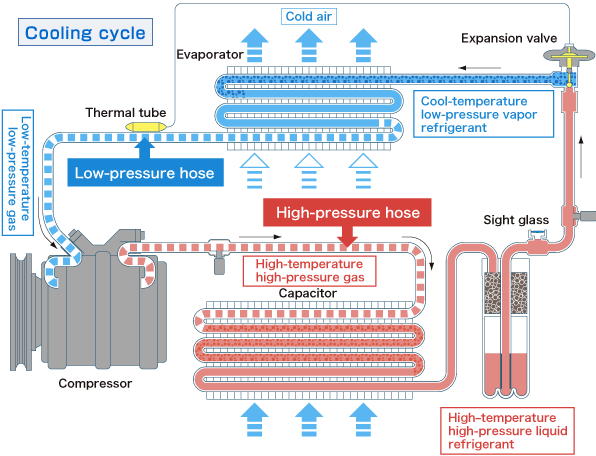
Flushing an automotive air conditioning (A/C) system is a critical procedure often required after a compressor failure, contamination, or when converting to a different refrigerant. This process aims to remove debris, oil, and other contaminants that can compromise the performance and longevity of the A/C system. While seemingly straightforward, a thorough understanding of the technical aspects, engineering considerations, and proper execution is crucial for automotive professionals.
Why Flush an A/C System?
The primary reason for flushing is to eliminate contaminants. Compressor failure is a common cause, releasing metal shavings and debris into the system. Another significant source of contamination is oil breakdown, where the lubricant loses its viscosity and forms sludge. In addition, incorrect refrigerant charging or the presence of non-condensables (air, moisture) can lead to corrosion and reduced cooling efficiency. If these contaminants aren't removed, they can damage other components like the expansion valve, condenser, and evaporator, leading to premature failure and costly repairs.
Flushing Methods: A Comparison
Several methods exist for flushing an A/C system, each with its own advantages and disadvantages:
- Solvent Flushing: This involves using a dedicated A/C flush solvent circulated through the system using specialized equipment.
- Refrigerant Flushing: Utilizing the refrigerant itself as the flushing agent, this method pushes out contaminants but requires a robust recovery system.
- Nitrogen Purging: Employing dry nitrogen to blow out loose debris and moisture. This is often used as a supplementary step alongside solvent or refrigerant flushing.
- Component Replacement: In severe cases of contamination, particularly after a catastrophic compressor failure, replacing key components like the condenser, receiver-drier (or accumulator), and expansion valve may be more effective and reliable than attempting a flush.
Solvent Flushing: Details and Considerations
Solvent flushing is arguably the most common and effective method. Modern A/C flush solvents are designed to dissolve oil and debris without harming the internal components. However, it's critical to select a solvent compatible with the system's refrigerant type (R-134a or R-1234yf) and the materials used in the A/C system's construction (aluminum, copper, rubber hoses). Improper solvent selection can lead to corrosion, seal damage, and even component failure. The process involves disconnecting components like the compressor and expansion valve (which are typically bypassed) and connecting the flushing machine to the remaining lines. The solvent is then circulated under pressure, dislodging and removing contaminants. A crucial step is ensuring all solvent is completely removed from the system before reassembling and charging with refrigerant.
Pros: Highly effective at removing oil and debris; relatively fast. Cons: Requires specialized equipment and solvents; risk of solvent residue if not properly evacuated; potential for material incompatibility if the wrong solvent is used.
Refrigerant Flushing: Details and Considerations
Refrigerant flushing utilizes the system's own refrigerant as the flushing agent. While seemingly simple, this method relies heavily on a powerful recovery system to capture the contaminated refrigerant. It's less effective than solvent flushing at removing stubborn deposits but can be a viable option for lightly contaminated systems. Proper recovery and recycling of the refrigerant are essential to comply with environmental regulations. Furthermore, this method may not be suitable for severely contaminated systems as the large volume of refrigerant required can be costly.
Pros: Uses existing refrigerant; less equipment required. Cons: Less effective than solvent flushing; requires a robust recovery system; not suitable for heavily contaminated systems; can be environmentally damaging if refrigerant is not properly recovered.
Nitrogen Purging: Details and Considerations
Nitrogen purging is primarily used to remove moisture and loose debris after solvent or refrigerant flushing. Dry nitrogen is introduced into the system under low pressure, forcing out any remaining contaminants. It's crucial to use dry nitrogen, as moisture can contribute to corrosion and icing problems within the A/C system. Nitrogen purging is a valuable supplementary step but not a replacement for comprehensive flushing methods.
Pros: Effective at removing moisture and loose debris; relatively inexpensive. Cons: Not effective at removing oil or stubborn deposits; only a supplementary step.
Component Replacement: Details and Considerations
In cases of severe contamination, especially after a catastrophic compressor failure, replacing the condenser, receiver-drier/accumulator, and expansion valve is often the most reliable solution. These components are particularly susceptible to trapping debris and are difficult to thoroughly clean. While more expensive upfront, component replacement ensures a clean and reliable A/C system and prevents recurrence of contamination-related issues.
Pros: Guarantees a clean system; eliminates the risk of residual contamination; potentially more reliable in the long run. Cons: Most expensive option; requires more labor.
Reliability, Maintenance, and Future Trends
The reliability of a flushed A/C system depends heavily on the chosen flushing method, the severity of the contamination, and the technician's skill. Proper evacuation and charging of the system after flushing are crucial for optimal performance and longevity. Regular A/C system maintenance, including refrigerant level checks and visual inspections, can help prevent future contamination issues.
Future trends in A/C flushing involve the development of more environmentally friendly solvents and more efficient flushing equipment. The increasing adoption of R-1234yf refrigerant, with its lower global warming potential, also necessitates specialized flushing procedures and equipment to ensure proper handling and prevent cross-contamination. Furthermore, advances in sensor technology and diagnostic tools will likely enable more precise identification of contamination sources and severity, allowing for more targeted and effective flushing strategies.
Conclusion
Flushing an automotive A/C system is a complex procedure requiring a thorough understanding of the technical principles, available methods, and potential pitfalls. Automotive professionals must carefully consider the specific circumstances, including the severity of contamination and the system's refrigerant type, to choose the most appropriate flushing strategy. By adhering to best practices and staying informed about emerging technologies, technicians can ensure the reliable and efficient operation of automotive A/C systems, contributing to customer satisfaction and environmental responsibility. The automotive industry is rapidly evolving, with electric vehicles (EVs) and hybrid electric vehicles (HEVs) becoming increasingly prevalent. This shift presents new challenges and opportunities for A/C system maintenance and repair, requiring technicians to adapt their skills and knowledge to the unique requirements of these vehicles, including the use of electrically driven compressors and specialized refrigerants.