
How To Get Throw Up Smell Out Of Your Car
Ah, the joys of car ownership. The open road, the wind in your hair (or meticulously styled coif, depending on your ride), the throaty rumble of the engine...and the occasional, unavoidable, olfactory nightmare of vomit. Let's face it, whether it's a spontaneous kid eruption, a seasickness-prone passenger, or a *slightly* overzealous celebration, throw-up happens. But lingering puke aroma? Unacceptable. Getting that lingering scent eradicated requires a strategy, and frankly, some cars are inherently easier to de-spew than others. This isn't just about air fresheners; we're talking deep cleaning, folks.
The Interior Battlefield: Material Matters
The first battleground is your interior material. This significantly impacts the ease (or agony) of cleanup. Let's break it down:
Leather vs. Cloth
Leather, especially properly treated leather, offers a significant advantage. It's generally less porous than cloth and more easily wiped clean. Think of a BMW M3 with Merino leather versus a Honda Civic with standard cloth seats. The M3's leather, while requiring specialized cleaning products, will resist absorption much better. Spill happens? Immediate wipe-down is your best friend. Let it linger, and you're still in trouble, but the recovery odds are vastly improved.
Cloth interiors, on the other hand, are sponges. They soak up everything. The deeper the fibers, the worse it gets. Think of that plush, luxurious carpeting in a Lexus LS460. While incredibly comfortable, that deep pile is a haven for lingering odors. The Honda Civic's fabric, while less luxurious, might actually be easier to treat simply because it's a tighter weave.
Spec Table: Material Showdown
| Feature | Leather (e.g., BMW M3 Merino) | Cloth (e.g., Honda Civic Standard) |
|---|---|---|
| Porousness | Low (with proper treatment) | High |
| Cleanability | Easier (wipe-down), requires specialized products | More difficult, requires deep cleaning |
| Odor Retention | Lower | Higher |
The Engine Analogy: Deep Cleaning Techniques
Think of your car's interior like an engine. You wouldn't just spray some WD-40 on a seized piston, right? You need to get deep down and clean the gunk. Here are a few "engine cleaning" techniques for puke remediation:
- The Initial Scrub: This is your first line of defense. Use paper towels (lots of them) to soak up as much of the offending material as possible. Don't rub, blot!
- Enzyme Cleaners: These are your carb cleaner. Enzyme cleaners break down the organic compounds causing the smell. They're especially effective on cloth. Always test a small, inconspicuous area first to ensure colorfastness. Brands like Nature's Miracle (often used for pet messes) are excellent choices.
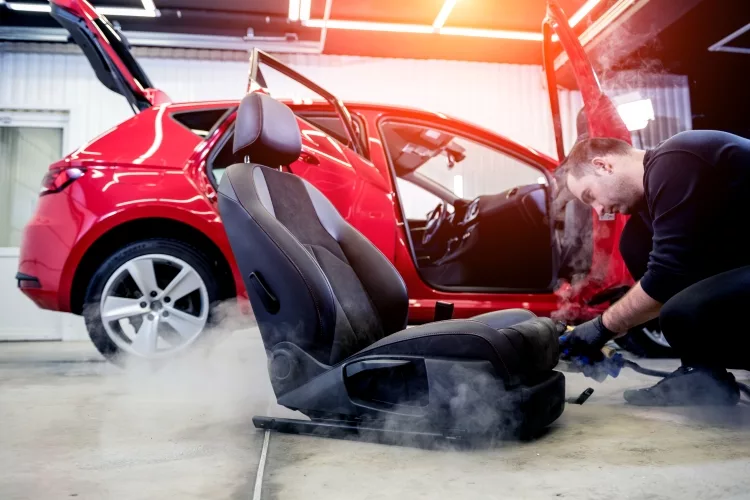
- Steam Cleaning: This is like decarbonizing your engine. Steam penetrates deep into fibers, lifting dirt and odors. A handheld steamer with upholstery attachments is a worthwhile investment. Be careful with delicate materials.
- Baking Soda: The age-old absorbent. Sprinkle liberally over the affected area, let it sit overnight (or longer), and vacuum thoroughly. This helps draw out residual odors. Think of it as soaking up oil spills with kitty litter.
- Ozone Generators: This is the nuclear option. Ozone generators produce ozone gas, which neutralizes odors. *Use with extreme caution!* Ozone is harmful to breathe. Ensure the car is thoroughly ventilated after treatment. This is best left to professionals.
Driving Impressions: Real-World Scenarios
I recently had the (unfortunate) opportunity to test these methods in my 2018 Subaru Outback (cloth interior – sigh). A family road trip turned sour thanks to a particularly twisty mountain pass and a slightly overfed toddler. The initial scrub helped, but the lingering smell was…potent. Enzyme cleaner was essential, requiring multiple applications. The baking soda trick definitely reduced the odor, but I still had a faint whiff for weeks. The Subaru's ventilation system, while typically adequate, struggled to fully eliminate the smell. In contrast, a friend with a Tesla Model S (vegan leather interior) had a similar incident and was able to eliminate the smell with a simple wipe-down and some interior cleaner. The difference was night and day!
Pros and Cons: A Quick Reference
- Leather Interior Pros: Easier to clean, less odor retention, more durable.
- Leather Interior Cons: More expensive, requires specialized cleaning products, can be hot in summer.
- Cloth Interior Pros: More affordable, generally more comfortable in extreme temperatures.
- Cloth Interior Cons: Harder to clean, retains odors more easily, more susceptible to stains.
Model-Specific Considerations: Ventilation Systems
The effectiveness of your car's ventilation system also plays a role. A car with a recirculating air system might trap odors inside. Conversely, a car with a strong fresh air intake and a high-quality cabin air filter can help to dissipate smells more quickly. High-end cars like Mercedes-Benz often have sophisticated air filtration systems with activated charcoal filters specifically designed to remove odors and allergens. A simple cabin air filter replacement after a vomit incident is always a good idea, regardless of your car's make or model.
Remember, prompt action is key. The longer the vomit sits, the more difficult it will be to remove the smell. So, keep a stash of cleaning supplies in your car (paper towels, enzyme cleaner, and a small spray bottle) for those inevitable "oops" moments.
Ultimately, the best method for getting throw-up smell out of your car depends on the severity of the incident, the type of interior you have, and your level of dedication. But with the right tools and techniques, you can banish that lingering odor and restore your car to its former glory.
So, here's the debate starter: are those "new car smell" air fresheners really just masking the underlying smell of manufacturing chemicals, or are they actually formulated to neutralize common interior odors? Discuss!