
How To Jumpstart A Battery Without Cables
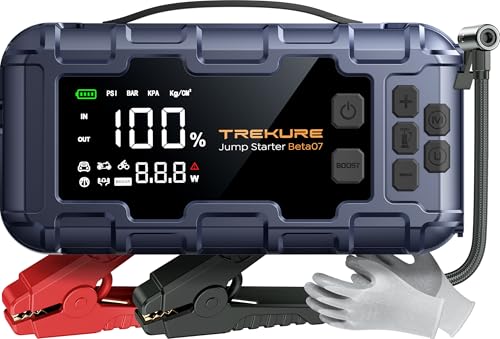
We've all been there. You turn the key, and… nothing. Just that soul-crushing click-click-click. A dead battery is a rite of passage for any car enthusiast, and while jumper cables used to be the only answer, technology has gifted us with some fascinating alternatives. Forget begging strangers in parking lots; we’re diving deep into the world of jumpstarting without cables.
The Cable-less Cavalry: Portable Jump Starters
First up, the undisputed champion of convenience: the portable jump starter. These little powerhouses pack a serious punch, offering enough amperage to crank over even larger engines. Think of them as a battery booster in your glove compartment.
How They Work: They utilize lithium-ion or lithium polymer batteries to store a significant amount of energy. When connected to your car's battery terminals, they deliver a controlled surge of power to overcome the voltage deficit and get the engine turning.
Spec Comparison: Popular Models
| Model | Peak Amps | Battery Type | Engine Compatibility (Approx.) | Additional Features |
|---|---|---|---|---|
| NOCO Boost Plus GB40 | 1000A | Lithium-ion | Up to 6.0L Gas, 3.0L Diesel | LED Flashlight, USB Power Bank, Reverse Polarity Protection |
| GOOLOO GP4000 | 4000A | Lithium Polymer | Up to 10.0L Gas, 8.0L Diesel | LED Flashlight, USB Power Bank, 15V/10A DC Output, Reverse Polarity Protection |
| Audew 2000A | 2000A | Lithium-ion | Up to 8.0L Gas, 6.0L Diesel | LED Flashlight, USB Power Bank, Reverse Polarity Protection |
Pros & Cons of Portable Jump Starters
- Pros:
- Highly Portable: Small and lightweight, easy to store.
- Self-Contained: No need for a second vehicle.
- Multi-Functional: Often include USB charging ports and flashlights.
- Relatively Safe: Built-in safety features like reverse polarity protection.
- Cons:
- Requires Charging: Needs to be periodically charged to remain effective.
- Limited Lifespan: Battery life degrades over time.
- Can Be Expensive: Higher-end models can cost a pretty penny.
- Amp Rating Critical: Must choose a model with sufficient amperage for your engine.
Driving Impressions: Using a NOCO Boost Plus GB40 on a stubborn BMW 328i with a 2.0L inline-four felt effortless. The connection was simple, the unit felt robust, and the car fired right up. However, attempting to use it on a friend’s old Ford F-250 with a 7.3L Powerstroke diesel proved to be a futile exercise. The jump starter simply didn’t have the grunt. Lesson learned: match the amperage to your engine's needs.
The Alternative: Integrated Jump Starting Systems
While less common, some manufacturers offer integrated jump-starting systems. These systems usually involve a secondary battery or a capacitor-based system that can provide a quick boost. These are usually found in hybrid vehicles or vehicles with advanced electrical systems.
How They Work: These systems typically use a high-capacity capacitor or a dedicated auxiliary battery to store energy. When the main battery is depleted, the system can discharge the stored energy to jumpstart the engine.
Examples and Notable Implementations:
- Some Hybrid Vehicles: Many hybrids have a system where the high-voltage battery can assist in jumpstarting the 12V system. Check your owner's manual for specific instructions.
- BMW i3: The i3 uses its high-voltage battery to maintain the 12V system, reducing the risk of a dead battery.
Pros & Cons of Integrated Systems
- Pros:
- Seamless Integration: No need for external devices.
- Potentially More Reliable: Designed specifically for the vehicle.
- Convenience: Always available when needed.
- Cons:
- Limited Availability: Only available on specific models.
- Complex System: Repairs can be costly and require specialized knowledge.
- May Not Be Suitable for All Situations: May not be able to jumpstart a completely dead battery.
Driving Impressions: Owning a hybrid with this feature is a game changer. Knowing you have a backup power source provides peace of mind, especially during cold winters. The system operates seamlessly, and you'll likely never even realize it's working until you need it. However, relying solely on this system isn't foolproof. Extremely cold temperatures or a severely damaged battery could still leave you stranded.
Beyond the Tech: Maintenance Matters
Regardless of which method you choose, remember that prevention is always better than cure. Regular battery checks, proper maintenance, and avoiding leaving lights on are crucial for preventing dead batteries in the first place.
Battery Health Checks: Invest in a battery tester to monitor the health of your battery. These devices can provide valuable insights into the battery's voltage, cranking amps, and overall condition.
Proper Terminal Cleaning: Corrosion on battery terminals can impede current flow, making it harder to start the engine. Clean the terminals regularly with a wire brush and a baking soda solution.
Avoid Deep Discharges: Leaving headlights or interior lights on overnight can deeply discharge the battery, shortening its lifespan. Be mindful of your electrical usage.
Ultimately, the best way to jumpstart your car without cables depends on your needs, budget, and vehicle type. Portable jump starters offer unparalleled convenience and versatility, while integrated systems provide seamless integration and peace of mind. Just remember to choose the right tool for the job and prioritize preventative maintenance to avoid those dreaded moments of silence.
Now, for the controversial bit: let's say you're stranded in the middle of nowhere with *both* a dead battery and a solar panel kit you use for camping. Could you, in theory, charge the battery enough with the solar panel to get a jump? Let the debate begin!