
How To Know If Front Wheel Bearing Is Bad
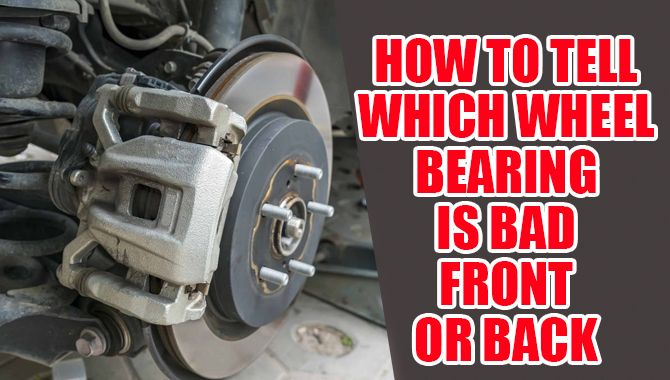
The humble wheel bearing. Often overlooked, yet utterly critical to a vehicle's smooth and safe operation. These seemingly simple components are subjected to immense stress, enduring constant rotation, impacts from road imperfections, and the full weight of the vehicle. Understanding how to diagnose a failing front wheel bearing is a valuable skill, allowing you to identify potential problems early, preventing more serious damage and ensuring a safer driving experience. This guide will delve into the telltale signs of a bad front wheel bearing, exploring the underlying causes and providing practical methods for diagnosis.
Understanding Front Wheel Bearing Function and Failure
At its core, a wheel bearing allows the wheel to rotate freely around the axle. Most modern vehicles use sealed hub assemblies, which integrate the bearing, hub, and sometimes even the ABS sensor into a single unit. These bearings typically consist of two sets of hardened steel races (inner and outer) separated by precision-engineered ball bearings or tapered roller bearings. A lubricant, usually grease, reduces friction and dissipates heat.
Wheel bearing failure is a gradual process, often starting with subtle symptoms that worsen over time. Common causes of failure include:
- Lack of Lubrication: Over time, the grease can degrade, become contaminated, or leak out entirely, leading to increased friction and heat.
- Impact Damage: Hitting potholes, curbs, or other obstacles can cause microscopic cracks or dents in the races or bearings, accelerating wear.
- Contamination: Dirt, water, and other contaminants can enter the bearing, acting as abrasives and damaging the internal components.
- Overloading: Regularly exceeding the vehicle's weight capacity puts excessive stress on the bearings.
- Improper Installation: Incorrect installation techniques can damage the bearing or hub, leading to premature failure.
Identifying the Symptoms: A Step-by-Step Guide
Recognizing the symptoms of a failing front wheel bearing early can prevent more extensive damage and costly repairs. Here's a breakdown of common indicators:
1. Noise: The Audible Clues
Noise is often the first and most noticeable symptom. Listen carefully for these sounds:
- Humming or Roaring: A low-frequency humming or roaring sound that increases with vehicle speed is a classic sign. This sound often becomes more pronounced when turning, especially when turning towards the side with the bad bearing. Why? Because turning shifts the weight of the vehicle, placing more load on the outer wheel bearing.
- Grinding or Growling: As the bearing deteriorates further, the humming may be replaced by a grinding or growling noise. This indicates significant damage to the bearing surfaces.
- Clicking or Popping: While less common, a clicking or popping sound, especially when turning at low speeds, can indicate a worn bearing or a damaged constant velocity (CV) joint. It's important to differentiate between these two, as the repairs differ significantly.
Pro Tip: Pay close attention to the frequency and intensity of the noise. Does it change with speed? Does it disappear when braking? Does it only occur when turning? These details can provide valuable clues about the source of the problem.
2. Vibration: Feeling the Problem
A failing wheel bearing can cause vibrations that you can feel through the steering wheel, floorboard, or seat. The intensity of the vibration often increases with speed. In severe cases, the vibration can be quite noticeable and even uncomfortable.
To diagnose the source of vibration, try the following:
- Vary Your Speed: Note how the vibration changes with changes in speed. A wheel bearing vibration will typically increase in frequency and amplitude as speed increases.
- Apply the Brakes: If the vibration disappears or changes significantly when braking, it could indicate a warped rotor or other brake-related issue.
3. Looseness and Play: The Physical Inspection
This method requires safely lifting the vehicle and supporting it on jack stands. Never work under a vehicle supported only by a jack.
- Lift the Vehicle: Securely lift the front of the vehicle using a jack and place jack stands under the frame rails.
- Grab the Tire: Grip the tire at the 12 o'clock and 6 o'clock positions.
- Rock the Tire: Attempt to rock the tire back and forth.
- Observe and Feel: Watch for any visible play in the wheel hub. Feel for any clunking or knocking sensations. A small amount of play may be normal, but excessive play indicates a worn bearing.
- Repeat at 3 o'clock and 9 o'clock: This position helps to diagnose tie rod end issues.
Important Note: When performing this test, be mindful of other suspension components, such as ball joints and tie rod ends, which can also exhibit play when worn. Differentiating between these issues requires careful observation and experience.
4. ABS Issues: The Electronic Indicators
In vehicles with integrated ABS sensors in the wheel hub assembly, a failing wheel bearing can sometimes interfere with the ABS sensor's signal. This can trigger the ABS warning light on the dashboard and potentially affect the ABS system's functionality.
While an ABS warning light can indicate numerous issues, it's worth considering a wheel bearing problem, especially if accompanied by other symptoms mentioned above. A diagnostic scan tool can help identify specific ABS sensor faults related to a particular wheel.
5. Uneven Tire Wear: The Visual Clues
While not a direct indicator, a bad wheel bearing can contribute to uneven tire wear. The play in the bearing can cause the tire to wobble slightly as it rotates, leading to feathering or cupping of the tire tread. Inspect your tires regularly for unusual wear patterns and consider a wheel bearing inspection if you notice any discrepancies. Note that this symptom is more prominent in severe cases of wheel bearing failure.
Further Diagnostics: Beyond the Basics
If you suspect a bad wheel bearing but are unsure, consider these additional diagnostic steps:
- Visual Inspection: Carefully inspect the wheel hub for any signs of grease leakage, rust, or damage.
- Heat Check: After driving for a while, carefully (without touching the brake rotor) feel the temperature of each wheel hub. A significantly hotter hub compared to the others can indicate a failing bearing. Caution: Brake components can be extremely hot.
- Professional Diagnosis: If you're still unsure, take your vehicle to a qualified mechanic for a professional diagnosis. They have specialized tools and expertise to accurately identify and address the problem.
Replacing a front wheel bearing can be a complex task, especially on vehicles with integrated hub assemblies. It often requires specialized tools and a thorough understanding of automotive repair procedures. If you're not comfortable performing the repair yourself, it's best to leave it to the professionals. Ignoring a bad wheel bearing can lead to further damage to the hub, axle, and other suspension components, ultimately resulting in more costly repairs and potentially dangerous driving conditions.