
How To Look Up Paint Code By Vin Number
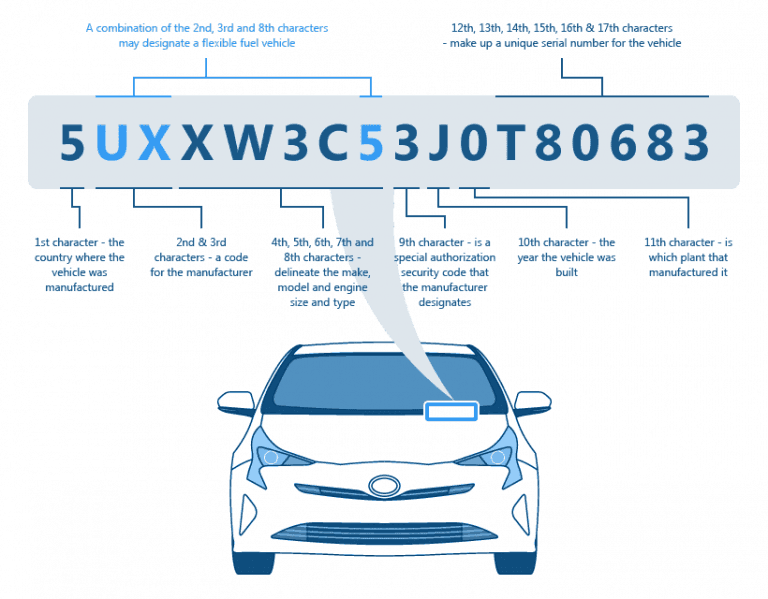
Identifying the correct paint code for a vehicle is crucial for accurate bodywork repairs, collision repair, and even aesthetic enhancements. While numerous methods exist for determining a vehicle's paint code, leveraging the Vehicle Identification Number (VIN) provides a relatively reliable and often convenient approach. This article delves into the technical aspects of paint code retrieval via VIN, comparing it to other methods, highlighting its advantages and drawbacks, and exploring its reliability, maintenance implications, and future trends within the automotive industry.
Decoding the VIN: A Gateway to Paint Information
The VIN, a unique 17-character alphanumeric code, acts as a vehicle's fingerprint. It encodes a wealth of information, including the manufacturer, model year, assembly plant, and, in some cases, the paint code. However, the direct encoding of the paint code within the VIN itself is not standardized across all manufacturers. Instead, the VIN serves as a key to access manufacturer-specific databases or online lookup tools that cross-reference the VIN with the corresponding paint code.
The process typically involves utilizing online VIN decoders or specialized automotive databases like those offered by paint manufacturers (e.g., PPG, BASF, Axalta) or aftermarket data providers. These platforms query their databases based on the provided VIN and return the associated paint code. Some manufacturers, particularly for newer vehicles, offer direct access to this information through their official websites or dealer networks. The complexity arises from the proprietary nature of these databases and the varying degrees of completeness and accuracy across different providers.
Alternatives to VIN-Based Paint Code Retrieval
Several alternative methods exist for determining a vehicle's paint code, each with its own set of pros and cons:
- Physical Inspection: Often, the paint code is physically stamped on a sticker or plate located on the vehicle. Common locations include the driver's side door jamb, under the hood, in the glove compartment, or on the firewall. This method is direct and avoids reliance on external databases, but the sticker may be missing, damaged, or faded, rendering the code illegible.
- Visual Matching: Using color charts or spectrophotometers to visually match the existing paint to a sample. Spectrophotometers, in particular, are highly accurate, measuring the spectral reflectance of the paint surface and identifying the closest matching paint code. However, this method requires skilled technicians and specialized equipment, and the accuracy can be affected by factors like paint fading and environmental conditions.
- Manufacturer Contact: Contacting the vehicle manufacturer directly with the VIN can sometimes yield the paint code, especially for older or less common vehicles. This approach relies on the manufacturer's record-keeping practices and can be time-consuming.
Pros and Cons of VIN-Based Lookup
Pros:
- Convenience: Can be performed remotely and often relatively quickly.
- Accuracy: When using reputable databases, the accuracy is generally high.
- Availability: Suitable for a wide range of vehicles, including those where physical identification is difficult.
Cons:
- Database Dependence: Relies on the completeness and accuracy of external databases, which may not always be up-to-date or comprehensive.
- Potential for Errors: Inputting the VIN incorrectly or relying on inaccurate database information can lead to incorrect paint codes.
- Cost: Some VIN decoders or database access may require a subscription fee.
Reliability, Maintenance, and Real-World Performance
The reliability of VIN-based paint code retrieval hinges heavily on the quality and maintenance of the underlying databases. Data providers must diligently update their databases with accurate information from vehicle manufacturers. In real-world scenarios, inconsistencies can arise due to special editions, custom paint jobs, or paint code changes during a model year. Therefore, it's crucial to cross-validate the VIN-derived paint code with other available information, such as visual inspection, if possible. Furthermore, discrepancies can occur if a vehicle has been repainted previously with a non-OEM color.
Regular maintenance, in this context, involves ensuring that the VIN decoding software or database being used is up-to-date. This ensures access to the latest vehicle information and paint code data. Automotive professionals should invest in reputable, commercially supported VIN decoding solutions to minimize the risk of errors.
Future Trends
The future of paint code identification is likely to be increasingly integrated with advanced technologies. Machine learning algorithms can be trained to analyze images of vehicles and automatically identify the paint code with high accuracy. AI-powered VIN decoders could also proactively identify potential data inconsistencies and flag them for manual review. Furthermore, blockchain technology could be used to create a transparent and immutable record of vehicle specifications, including paint codes, improving data integrity and reliability.
Forward-Looking Note
The automotive industry is undergoing a rapid transformation, driven by advancements in electrification, autonomous driving, and connected car technologies. As vehicles become increasingly complex, the need for accurate and accessible vehicle information, including paint codes, will only grow. Embracing innovative technologies and maintaining a commitment to data quality will be essential for automotive professionals to thrive in this evolving landscape. The integration of AI and blockchain could revolutionize how paint codes are identified and managed, leading to greater efficiency and accuracy in collision repair and vehicle customization.