
How To Replace Abs Wheel Sensor
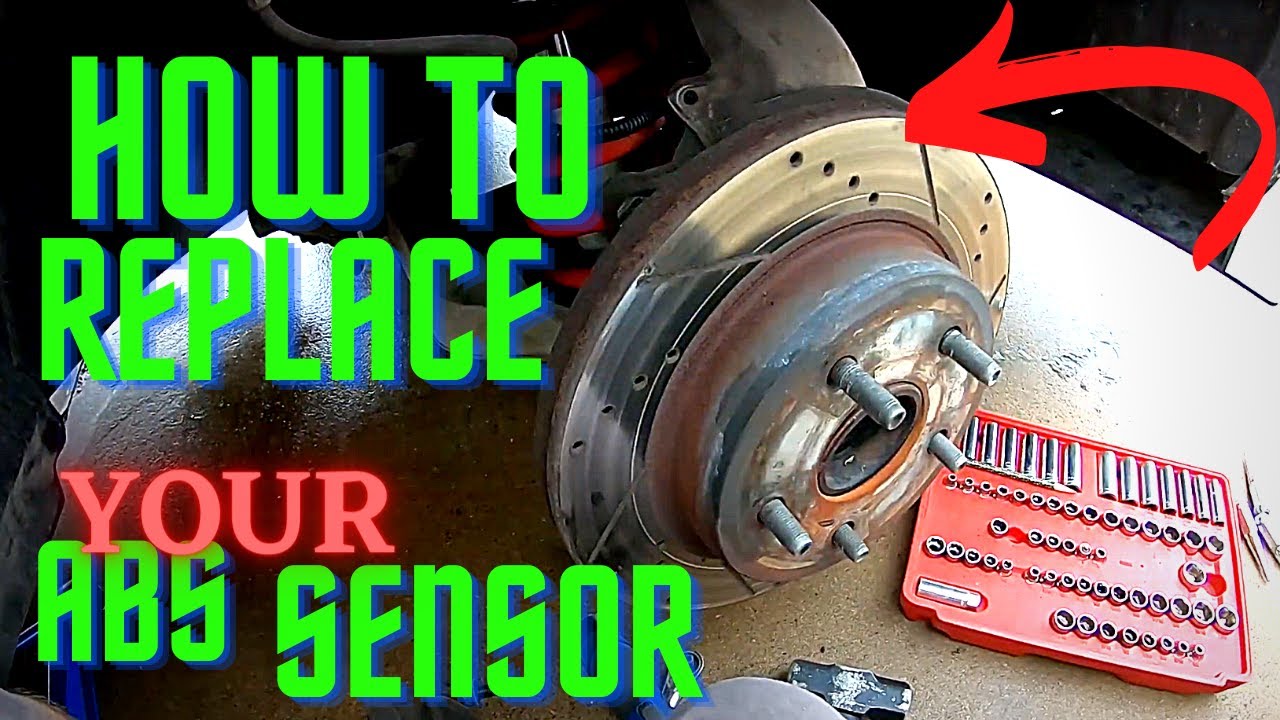
The humble ABS wheel speed sensor. It’s a component many drivers rarely think about, yet it plays a critical role in modern vehicle safety. While seemingly straightforward, understanding its function and replacement is becoming increasingly important as automotive technology advances. This article will explore the process of replacing an ABS wheel speed sensor, but more importantly, it will delve into the future of these sensors and their role in the evolving landscape of mobility, considering upcoming technologies, electric vehicles, and the complexities of smart automotive solutions.
Understanding the Basics and Beyond
At its core, an ABS wheel speed sensor monitors the rotational speed of each wheel. This information is transmitted to the vehicle's ABS (Anti-lock Braking System) module. If the system detects that one or more wheels are decelerating significantly faster than others (indicating impending wheel lockup), the ABS module modulates brake pressure to prevent skidding, allowing the driver to maintain steering control. This is a fundamental safety feature in virtually every modern vehicle.
Replacing an ABS wheel speed sensor is typically a DIY-friendly task for experienced mechanics. The procedure generally involves the following steps:
- Safely lifting and securing the vehicle.
- Removing the wheel.
- Locating the ABS wheel speed sensor (usually mounted near the wheel hub or behind the brake rotor).
- Disconnecting the electrical connector.
- Removing the sensor from its mounting point (often held in place by a bolt or clip).
- Installing the new sensor, ensuring proper alignment and secure connection.
- Reassembling the wheel and lowering the vehicle.
- Testing the ABS system to verify proper functionality.
While this process may seem simple, several potential challenges can arise. Corrosion can make removing the old sensor difficult, sometimes requiring specialized tools. Ensuring the new sensor is properly calibrated and compatible with the vehicle's ABS system is also crucial. Furthermore, diagnosing the actual cause of an ABS warning light can be complex, requiring specialized diagnostic equipment and knowledge.
The Coming Sensor Revolution
The future of ABS wheel speed sensors is not just about incremental improvements; it's about a radical transformation driven by the convergence of several key trends:
- Electric Vehicles (EVs): EVs rely heavily on regenerative braking, which recovers energy during deceleration. ABS wheel speed sensors play an even more critical role in coordinating regenerative and friction braking, ensuring smooth and efficient deceleration while maintaining safety. Precise and reliable sensor data is paramount for optimizing regenerative braking performance and preventing wheel lockup.
- Advanced Driver-Assistance Systems (ADAS): ADAS features such as adaptive cruise control, lane keeping assist, and automatic emergency braking rely on a suite of sensors, including ABS wheel speed sensors, to perceive the vehicle's environment and make informed decisions. The accuracy and reliability of these sensors are crucial for the safe and effective operation of ADAS.
- Autonomous Driving: Self-driving vehicles require an even more sophisticated understanding of their surroundings. ABS wheel speed sensors will be integrated with other sensor technologies, such as LiDAR, radar, and cameras, to create a comprehensive and redundant perception system. Redundancy is key in autonomous systems, and having multiple sources of wheel speed data ensures reliability even in the event of sensor failure.
- Smart Tires: Tire manufacturers are developing "smart tires" equipped with embedded sensors that can monitor tire pressure, temperature, and tread wear. These sensors can communicate with the vehicle's control systems, providing valuable data for optimizing vehicle performance and safety. Integrating smart tire data with ABS wheel speed sensor data can provide a more complete picture of the wheel's behavior, enabling more precise and effective braking control.
The Challenges of a Sensor-Rich Future
While the potential benefits of these advancements are significant, several challenges must be addressed:
- Data Security and Privacy: As vehicles become more connected and data-driven, ensuring the security and privacy of vehicle data is paramount. Protecting against hacking and unauthorized access to sensor data is crucial.
- Sensor Fusion and Data Processing: Integrating data from multiple sensors requires sophisticated algorithms and powerful computing resources. Developing efficient and reliable sensor fusion techniques is a complex challenge.
- Cost and Complexity: Adding more sensors and sophisticated electronics can increase the cost and complexity of vehicles. Balancing performance with cost-effectiveness is essential.
- Reliability and Durability: Sensors must be robust and reliable, capable of withstanding harsh environmental conditions and operating reliably over the vehicle's lifespan.
- Standardization and Interoperability: Establishing industry standards for sensor communication and data formats is crucial for ensuring interoperability and facilitating innovation.
Electric Vehicles (EVs) present unique challenges for ABS systems. The instant torque delivery of electric motors can make wheel slip more abrupt, requiring faster and more precise responses from the ABS. Furthermore, the integration of regenerative braking adds complexity to the control algorithms. Optimizing ABS performance for EVs requires careful consideration of these factors.
Hybrid Systems and ABS Sensor Integration
Hybrid vehicles combine the advantages of both internal combustion engines and electric motors. This blending presents a unique challenge for the ABS system because the system must seamlessly coordinate regenerative braking from the electric motor with the traditional friction brakes. The ABS wheel speed sensors are critical for this process, providing the necessary data to determine when and how much regenerative braking can be applied without causing wheel lockup.
The complexity increases as the hybrid system dynamically switches between regenerative and friction braking, demanding highly accurate and responsive ABS wheel speed sensor data.Furthermore, as hybrid systems evolve to incorporate more advanced features like predictive energy management (using GPS and route data to optimize energy usage), the integration of ABS sensor data becomes even more crucial for maximizing efficiency and safety.
Smart Automotive Solutions: A Holistic Approach
The future of mobility is not just about individual components but about creating intelligent and interconnected systems. Smart automotive solutions will leverage data from ABS wheel speed sensors, along with other sensor data, to provide a more holistic view of the vehicle's state and its environment. This will enable a range of new applications, including:
- Predictive Maintenance: Analyzing sensor data to predict potential component failures and schedule maintenance proactively. For example, gradual degradation in an ABS wheel speed sensor signal could indicate an impending failure, allowing the vehicle owner to schedule a repair before the sensor completely fails.
- Personalized Driving Experience: Adjusting vehicle settings, such as braking sensitivity and traction control, based on the driver's preferences and driving conditions.
- Enhanced Safety Features: Developing new safety features that can proactively mitigate potential hazards based on real-time sensor data. For instance, if the system detects that the road surface is slippery, it could automatically adjust the ABS settings to provide optimal braking performance.
- Optimized Fleet Management: Using sensor data to monitor the performance of fleet vehicles, identify potential maintenance issues, and optimize fuel efficiency.
The integration of AI and machine learning will play a key role in enabling these smart automotive solutions. AI algorithms can analyze vast amounts of sensor data to identify patterns and anomalies that would be difficult for humans to detect. This can lead to improved safety, efficiency, and performance. However, it is crucial to ensure that these AI systems are robust, reliable, and transparent.
Beyond the Horizon: A Vision of Seamless Mobility
Looking further ahead, the future of mobility envisions a world where vehicles are seamlessly integrated into a smart transportation ecosystem. In this vision, vehicles communicate with each other and with infrastructure, sharing data about traffic conditions, road hazards, and weather conditions. ABS wheel speed sensors, along with other sensors, will play a crucial role in providing the real-time data that enables this ecosystem.
Imagine a future where vehicles automatically adjust their speed and braking based on real-time data about road conditions and traffic flow. This could significantly reduce traffic congestion and improve safety. Furthermore, autonomous vehicles could coordinate their movements to optimize traffic flow and minimize energy consumption. This requires a high degree of coordination and communication, and the accuracy and reliability of sensor data are paramount.
The journey towards this vision will be challenging, requiring significant investments in research and development, infrastructure upgrades, and regulatory changes. However, the potential benefits are enormous. By embracing innovation and working together, we can create a future where mobility is safer, more efficient, and more sustainable. The humble ABS wheel speed sensor, evolving into a smart, connected component, will be a vital part of this transformative journey.