
How To Replace Crank Angle Sensor
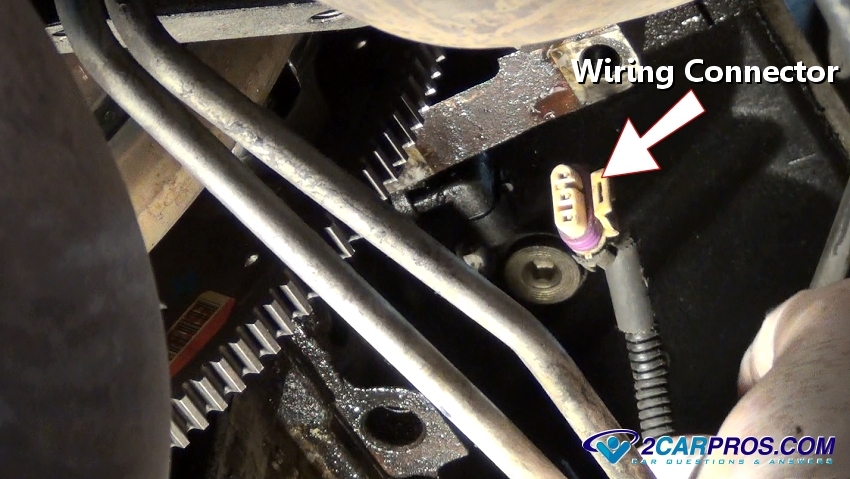
The Crank Angle Sensor (CAS), sometimes called a Crankshaft Position Sensor (CKP), is a vital component in your engine's management system. Think of it as the engine's internal GPS, constantly reporting the crankshaft's position and speed to the ECU. Without it, your car is likely to stall, misfire, or refuse to start altogether. While a visit to the mechanic is always an option, replacing the CAS is a task many enthusiasts can tackle themselves with a bit of know-how. Let's dive into the world of CAS replacements, highlighting the differences across various models and engines.
Understanding the Crank Angle Sensor
Before we get our hands dirty, let's understand what we're dealing with. The CAS works by reading the position of a toothed reluctor wheel attached to the crankshaft. As the crankshaft spins, the teeth pass by the sensor, generating a signal that the ECU interprets. This signal is crucial for determining ignition timing, fuel injection timing, and overall engine control.
Types of Crank Angle Sensors
- Hall Effect Sensors: These sensors use a magnetic field and a semiconductor to detect the passing teeth. They are generally more robust and less susceptible to interference.
- Magnetic Reluctance Sensors: These sensors generate a voltage pulse as the teeth pass by. They are simpler in design but can be more sensitive to variations in air gap and signal strength.
- Optical Sensors: Found less frequently in modern cars, these use a light beam and a photo-sensitive diode to detect the crankshaft's position. They are very accurate but also more susceptible to dirt and contamination.
The Replacement Process: A General Overview
The general process for replacing a CAS is similar across many vehicles, but specific details will vary. Always consult your car's repair manual for precise instructions.
- Disconnect the Battery: Safety first! Disconnect the negative terminal of your battery to prevent any electrical accidents.
- Locate the CAS: The CAS is typically located near the crankshaft pulley or the flywheel. Finding its precise location can be tricky, so consult your repair manual.
- Disconnect the Electrical Connector: Carefully disconnect the electrical connector from the CAS. Be gentle, as these connectors can become brittle with age.
- Remove the Old CAS: The CAS is usually held in place by one or two bolts. Remove the bolts and gently pull the CAS out of its housing.
- Install the New CAS: Install the new CAS, ensuring it is properly seated. Tighten the bolts to the specified torque.
- Reconnect the Electrical Connector: Reconnect the electrical connector to the CAS.
- Reconnect the Battery: Reconnect the negative terminal of your battery.
- Start the Engine: Start the engine and check for any error codes.
Model-Specific Considerations: Real-World Examples
Now, let's look at some specific examples and the nuances they bring to the table.
Example 1: Mazda Miata (NA/NB) - A Classic Roadster with a Tricky Sensor
The NA and NB Miatas (1990-2005) utilize a CAS mounted on the back of the engine, driven by the camshaft. This combined CAS and camshaft position sensor is unique. Replacing it requires careful attention to timing. Incorrect installation can lead to severe engine damage.
Spec Table:
| Component | Specification |
|---|---|
| Sensor Type | Optical |
| Location | Rear of Engine, Driven by Camshaft |
| Tools Needed | Wrenches, Socket Set, Timing Light (Optional) |
Pros: Relatively accessible once you know where it is. DIY-friendly with proper instructions.
Cons: Sensitive to improper timing. Requires more advanced knowledge compared to other CAS replacements.
Driving Impressions: A faulty CAS on a Miata can manifest as a sudden loss of power, misfires, or difficulty starting. Many owners report a "bucking" sensation at higher RPMs.
Important Note: When replacing the Miata CAS, it's highly recommended to double-check your ignition timing with a timing light after installation.
Example 2: Honda Civic (EG/EK) - Reliable but Prone to Heat Soak
The EG and EK Civic (1992-2000) often use a CAS integrated into the distributor. This makes replacement straightforward – usually just a matter of swapping the entire distributor. However, these cars are notorious for heat soak issues affecting the CAS, leading to intermittent stalling.
Spec Table:
| Component | Specification |
|---|---|
| Sensor Type | Hall Effect |
| Location | Inside Distributor |
| Tools Needed | Wrenches, Socket Set, Timing Light (Optional) |
Pros: Replacing the entire distributor is a simple and quick job.
Cons: Replacing the entire distributor is more expensive than replacing a standalone CAS. Heat soak can shorten the lifespan of the replacement.
Driving Impressions: A failing CAS on a Civic often results in random stalling, especially after the engine has reached operating temperature. The car might start again after cooling down for a while.
Important Note: Consider using a heat shield or wrapping the distributor with heat-resistant material to mitigate heat soak issues.
Example 3: Modern BMW (E90/F30) - Integrated and Electronically Sophisticated
Modern BMWs, like the E90 and F30, often use a crankshaft position sensor located near the flywheel. These sensors are typically more sophisticated and integrated into the engine management system. The replacement process can be more involved, often requiring specialized tools and diagnostic equipment.
Spec Table:
| Component | Specification |
|---|---|
| Sensor Type | Hall Effect |
| Location | Near Flywheel |
| Tools Needed | Wrenches, Socket Set, OBDII Scanner |
Pros: Typically very accurate and reliable.
Cons: Can be difficult to access. Requires specialized tools and diagnostic equipment for proper installation and calibration.
Driving Impressions: A faulty CAS on a modern BMW can trigger various warning lights on the dashboard and lead to reduced engine performance, rough idling, and stalling. The car might enter limp mode.
Important Note: After replacing the CAS on a modern BMW, it's crucial to clear any fault codes using an OBDII scanner and perform any necessary adaptations or calibrations as specified by the manufacturer.
General Tips and Tricks
- Use Quality Parts: Always use a high-quality replacement CAS from a reputable manufacturer. Cheap aftermarket parts can be unreliable and cause further problems.
- Clean the Area: Before installing the new CAS, clean the surrounding area to remove any dirt or debris.
- Apply Dielectric Grease: Apply a small amount of dielectric grease to the electrical connector to prevent corrosion.
- Double-Check Your Work: After completing the replacement, double-check all connections and ensure everything is properly tightened.
- Clear Error Codes: After starting the engine, use an OBDII scanner to clear any error codes that may have been triggered.
Troubleshooting After Replacement
Even after careful installation, problems can still arise. Here are a few common issues and their solutions:
- Engine Still Won't Start: Double-check the electrical connector and ensure it is securely attached. Verify that the new CAS is compatible with your vehicle.
- Error Codes Persist: Use an OBDII scanner to diagnose the specific error code and troubleshoot accordingly. It's possible the replacement sensor is also faulty, or there's another underlying issue.
- Rough Idle or Misfires: This could indicate a timing issue (especially on the Miata) or a faulty sensor. Check your ignition timing and consider replacing the sensor again.
Before condemning a new sensor, always check wiring and connections for damage or corrosion. Sometimes, the problem isn't the sensor itself, but rather a broken wire leading to it.
Conclusion
Replacing a Crank Angle Sensor is a manageable task for many car enthusiasts. By understanding the different types of sensors, the specific requirements of your vehicle, and following the proper procedures, you can save money and gain a deeper understanding of your engine. Remember to consult your repair manual, use quality parts, and double-check your work.
Now, for a bit of fun: Is it *really* worth spending extra on an OEM CAS, or is a reputable aftermarket brand just as good? Let the debate begin!