
How To Reset Tire Monitor System
Tire Pressure Monitoring Systems (TPMS) are now standard on almost all vehicles, designed to alert drivers when tire pressure drops significantly. Understanding how to reset your TPMS is crucial for maintaining optimal performance, safety, and avoiding annoying warning lights. This article will guide you through the process, explaining the underlying technology in a way that’s easy to grasp, regardless of your mechanical expertise.
Understanding TPMS Technology
At its core, a TPMS does exactly what its name suggests: it monitors the air pressure in your tires. There are two main types of TPMS: Direct and Indirect.
Direct TPMS
Direct TPMS uses pressure sensors inside each tire. These sensors, often integrated with the valve stem, directly measure the tire pressure and temperature. They transmit this data wirelessly to the vehicle's central computer (ECU). When the pressure in one or more tires falls below a pre-set threshold (typically around 25% below the recommended pressure), the system triggers a warning light on the dashboard.
Think of it like a tiny weather station inside your tire, constantly reporting back to headquarters (your car's computer). Examples of cars that commonly use direct TPMS include most modern BMWs, Mercedes-Benzes, and newer Honda Accords.
Indirect TPMS
Indirect TPMS is a bit more clever. Instead of directly measuring pressure, it relies on the vehicle's Anti-lock Braking System (ABS) wheel speed sensors. The system monitors the rotational speed of each wheel. A tire with lower pressure will have a slightly smaller diameter and therefore rotate at a slightly higher speed than the other tires. The ECU detects this difference in rotational speed and interprets it as a low-pressure condition, triggering the warning light.
Imagine a team of runners. If one runner is slightly shorter (analogous to a tire with lower pressure), they'll need to take more steps to keep up. The ABS sensors are like judges, counting the steps each runner (wheel) takes. If one runner is taking significantly more steps, the judge flags a problem.
Cars like older Volkswagen Golfs, some Audis, and early generation Mazda 3s often used indirect TPMS. While less precise than direct systems, indirect TPMS is typically less expensive and doesn't require specialized sensors inside the wheels.
Why Resetting Your TPMS is Necessary
Resetting your TPMS is essential in several scenarios:
- After Inflating Your Tires: If you've added air to your tires to bring them back to the recommended pressure, the TPMS light might remain on until you reset the system.
- After Rotating Your Tires: Rotating your tires changes their positions on the vehicle. Direct TPMS systems need to "learn" the new location of each sensor to accurately display tire pressures.
- After Replacing Tires or TPMS Sensors: When you install new tires or replace TPMS sensors, the system needs to be recalibrated to recognize the new components.
- False Alarms: Sometimes, the TPMS light can illuminate due to temporary fluctuations in temperature or minor pressure variations. Resetting the system can clear these false alarms.
How to Reset Your TPMS: A Step-by-Step Guide
The reset procedure varies depending on whether you have a direct or indirect TPMS.
Resetting Direct TPMS
Step 1: Inflate Your Tires: Ensure all tires are inflated to the recommended pressure specified on the tire placard (usually located on the driver's side doorjamb). This is the most crucial step. Use a reliable tire pressure gauge.
Step 2: Locate the TPMS Reset Button: The location of the reset button varies depending on the vehicle make and model. Consult your owner's manual. Common locations include:
- Glove compartment
- Under the steering wheel
- In the center console
Step 3: Perform the Reset: Here's the general procedure (but always consult your owner's manual for specific instructions):
- Turn the ignition key to the "ON" position (but don't start the engine).
- Press and hold the TPMS reset button until the TPMS warning light blinks a few times.
- Release the button.
- Start the engine and drive for a few minutes (usually 10-20 minutes) at a speed above 20 mph. This allows the system to relearn the tire pressures.
Example: BMW – Many BMWs require you to navigate through the iDrive system to reset the TPMS. You typically find the option under "Vehicle Settings" or "Tire Pressure Monitor." Follow the on-screen prompts. After initiating the reset, you'll need to drive for a short period for the system to relearn the tire pressures.
Example: Honda – Some Honda models have a TPMS reset button located near the driver's side knee. The process involves pressing and holding the button until the TPMS light blinks.
Resetting Indirect TPMS
Resetting an indirect TPMS is usually simpler because it doesn't require individual sensor readings. The reset process essentially tells the system to re-establish its baseline for wheel speed comparisons.
Step 1: Inflate Your Tires: As with direct TPMS, ensure all tires are inflated to the recommended pressure.
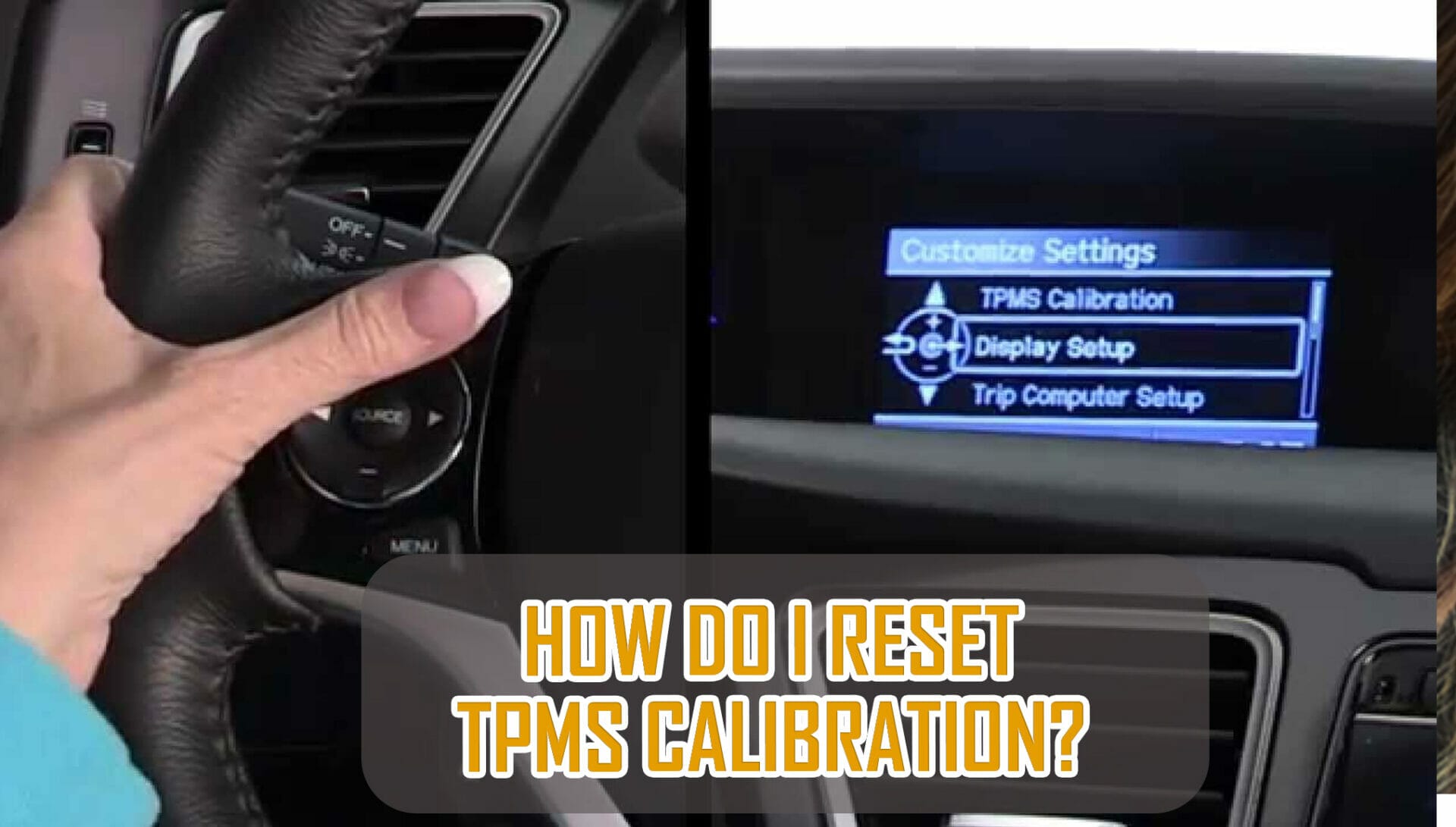
Step 2: Access the TPMS Reset Menu: The procedure typically involves navigating through the vehicle's infotainment system or driver information display. Consult your owner's manual for the exact steps. Common menu locations include:
- "Settings"
- "Vehicle"
- "Tire Pressure"
Step 3: Initiate the Reset: Select the "Reset" or "Calibrate" option within the TPMS menu. The system might display a confirmation message.
Step 4: Drive the Vehicle: After initiating the reset, drive the vehicle for a short period (usually 10-20 minutes) at a moderate speed (around 30-50 mph). This allows the system to learn the new wheel speed baselines.
Example: Volkswagen – In many VW models, you can access the TPMS reset menu through the infotainment system. Navigate to the "Car" or "Vehicle" menu, then select "Tires" or "Tire Pressure." You should find an option to "Set" or "Store" the current tire pressures. Select this option and confirm your choice. Then drive the vehicle as instructed.
Example: Mazda – Older Mazda 3s with indirect TPMS often have the reset option within the driver information display, accessible through the steering wheel controls. Navigate to the TPMS menu and select the reset option.
Troubleshooting TPMS Issues
If the TPMS light persists after attempting to reset the system, consider these troubleshooting steps:
- Check for Leaks: Inspect your tires for punctures, sidewall damage, or valve stem leaks. A slow leak can cause pressure to drop gradually, triggering the TPMS warning.
- Sensor Malfunction: A faulty TPMS sensor can provide inaccurate readings or fail to transmit data. This is more common with direct TPMS. You might need to visit a tire shop or dealership for sensor diagnosis and replacement.
- Low Sensor Battery: Direct TPMS sensors have batteries that eventually deplete. A low battery can cause intermittent or complete sensor failure. Battery replacement often requires replacing the entire sensor.
- ECU Issues: In rare cases, the vehicle's ECU (engine control unit) might have a problem communicating with the TPMS sensors. This usually requires professional diagnosis and repair.
- Interference: Occasionally, strong radio frequency (RF) interference can disrupt the signal between the TPMS sensors and the ECU. This is usually a temporary issue.
Practical Takeaways
- Know Your TPMS Type: Determine whether your vehicle uses a direct or indirect TPMS. This will influence the reset procedure. Consult your owner's manual.
- Regular Tire Pressure Checks: Don't rely solely on the TPMS. Manually check your tire pressures regularly (at least once a month) using a reliable gauge.
- Consult Your Owner's Manual: The owner's manual is your best resource for specific TPMS reset instructions for your vehicle.
- Professional Assistance: If you're unable to reset the TPMS or suspect a sensor malfunction, don't hesitate to seek professional assistance from a qualified mechanic or tire shop.
- Proper Inflation is Key: Maintaining proper tire inflation is crucial for safety, fuel efficiency, and tire longevity. The TPMS is a helpful tool, but it's not a substitute for regular tire maintenance. Underinflated tires are a leading cause of tire failure.
By understanding how your TPMS works and how to reset it, you can keep your vehicle running safely and efficiently. Remember to prioritize regular tire maintenance and consult your owner's manual for specific instructions related to your car's make and model. Happy driving!