
How To Tell If Its The Starter Or Battery
Okay, so you're turning the key (or pressing the start button) and your car isn't starting. It's making that dreaded "click-click-click" sound, or maybe nothing at all. The immediate suspect? Usually, it's either the battery or the starter. Figuring out which one is the culprit can save you time, money, and a whole lot of frustration. As a service advisor, I see this issue all the time. Let's walk through some steps to help you diagnose the problem like a pro.
Understanding the Players: Battery vs. Starter
First, a quick rundown of what each part does:
- Battery: The battery is essentially the power plant of your car. It stores electrical energy and provides the initial jolt needed to start the engine. It also powers your lights, radio, and other accessories.
- Starter: The starter is a small but powerful electric motor that cranks the engine until it starts firing on its own. It receives its power directly from the battery. Think of it as the muscle that gets the engine moving.
So, if the battery doesn't have enough juice, the starter won't get enough power to do its job. And if the starter is faulty, even a fully charged battery won't be able to get the engine turning.
Symptoms: What's Your Car Telling You?
The symptoms can be similar, which is why it's crucial to investigate further. Here's a breakdown of common symptoms associated with each component:
Battery Issues:
- Slow Cranking: The engine turns over slowly, almost reluctantly, before (or sometimes not) starting. This is a classic sign of a weak battery.
- Clicking Sound: You hear a rapid clicking sound when you try to start the car. This happens when the starter solenoid (a part of the starter motor) is trying to engage but doesn't have enough power.
- Dim Lights: Notice that your headlights are dim, or your interior lights are weak, especially when trying to start the car? This indicates a battery that's struggling to provide enough power.
- No Sound at All: In some cases, you might turn the key and get absolutely nothing. This *could* be the battery, but it could also be other issues like a blown fuse or a faulty ignition switch.
- Dashboard Warning Lights: The battery warning light on your dashboard might be illuminated. However, this light can also indicate alternator problems, so don't rely on it solely.
Starter Issues:
- Clicking Sound (One Click): You hear a single, loud "click" when you try to start the car, but the engine doesn't turn over. This often indicates that the starter solenoid is engaging, but the starter motor itself isn't working.
- Grinding Noise: A loud, grinding noise coming from the starter area when you try to start the car. This usually means that the starter motor's gears are damaged or not engaging properly with the engine's flywheel.
- Engine Won't Turn Over: You hear nothing, or maybe just a faint whirring sound, but the engine doesn't even attempt to crank.
- Works Intermittently: The starter might work sometimes, and then not work at other times. This is a frustrating symptom, as it can be difficult to diagnose definitively.
- Smoke or Burning Smell: In rare cases, a failing starter can overheat and produce smoke or a burning smell. This is a serious sign and requires immediate attention.
The Diagnostic Process: Getting to the Root of the Problem
Okay, so you've observed the symptoms. Now it's time to put on your detective hat. Here's a step-by-step approach:
- Visual Inspection: Start by visually inspecting the battery terminals and starter connections. Are they clean and tight? Corrosion can prevent proper electrical contact. Use a wire brush to clean any corrosion you find.
- Battery Voltage Test: This is the most crucial step. You'll need a multimeter for this.
- Set the multimeter to DC voltage.
- Connect the red lead to the positive (+) battery terminal and the black lead to the negative (-) terminal.
- A fully charged battery should read around 12.6 volts or higher. A reading below 12.4 volts indicates a discharged battery. A reading below 12 volts indicates a severely discharged battery.
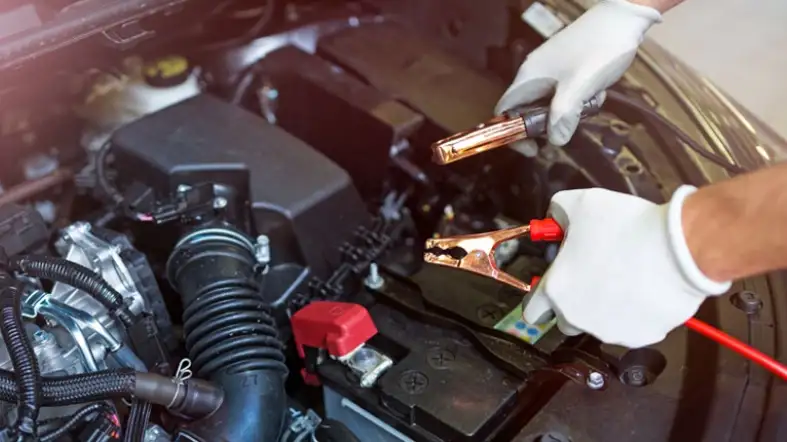
Important: If the battery voltage is significantly low, try jump-starting the car. If it starts with a jump, the battery is likely the problem. Get it tested professionally or replace it.
- Load Test (Battery): A voltage test only tells you the battery's static voltage. A load test checks how well the battery holds up under load. Most auto parts stores will perform a free load test for you. This is the most reliable way to determine if your battery is truly healthy.
- The "Tap" Test (Starter): This is a bit of a gamble, but it can sometimes work. Locate the starter motor. Have someone try to start the car while you gently tap the starter motor with a hammer or wrench. (Don't hit it too hard!) If the car suddenly starts after tapping the starter, it's a strong indication that the starter is faulty. The tapping can sometimes dislodge a stuck component inside the starter motor. However, be extremely careful not to damage any surrounding components.
- Check the Starter Relay: The starter relay is a small switch that controls the flow of power to the starter motor. If the relay is faulty, it can prevent the starter from working. You can usually find the starter relay in the fuse box. Consult your owner's manual to locate it. You can try swapping it with another identical relay in the fuse box (e.g., the horn relay). If the car starts after swapping the relays, the original relay is faulty.
Tools You Might Need:
- Multimeter
- Wrench set
- Wire brush
- Hammer (for the "tap" test – use with caution!)
- Jumper cables
- Safety glasses and gloves
Repair Costs: What to Expect
The cost of replacing a battery or starter can vary depending on the make and model of your car, as well as the quality of the replacement parts and labor rates in your area. Here's a general idea:
- Battery Replacement: $100 - $300 (including the battery and installation).
- Starter Replacement: $300 - $800 (including the starter and labor). Starters can sometimes be rebuilt for less, but this is becoming less common.
Note: These are just estimates. Always get a quote from a reputable mechanic before authorizing any repairs.
When to Call a Professional
While some of these diagnostic steps are straightforward, it's important to know your limits. If you're not comfortable working with electrical systems or you're unsure about any of the steps, it's always best to consult a qualified mechanic. Especially if:
- You suspect a more complex electrical issue.
- You're dealing with a car that has a lot of electronic components.
- You're not comfortable working on your car's electrical system.
- You've tried the basic troubleshooting steps and still can't figure out the problem.
Ignoring the problem or attempting to fix it yourself without the proper knowledge and tools can lead to further damage or even injury. A professional mechanic can accurately diagnose the issue and perform the necessary repairs safely and effectively.
Hopefully, this guide helps you pinpoint whether your battery or starter is causing your starting woes. Remember to be safe, take your time, and don't hesitate to seek professional help when needed. Good luck!